Breaking News: Reality is crumbling

The Daily Absurdity

Unfiltered. Unverified. Unbelievable.

Interpreted news illustration
Buck Valor
Buck

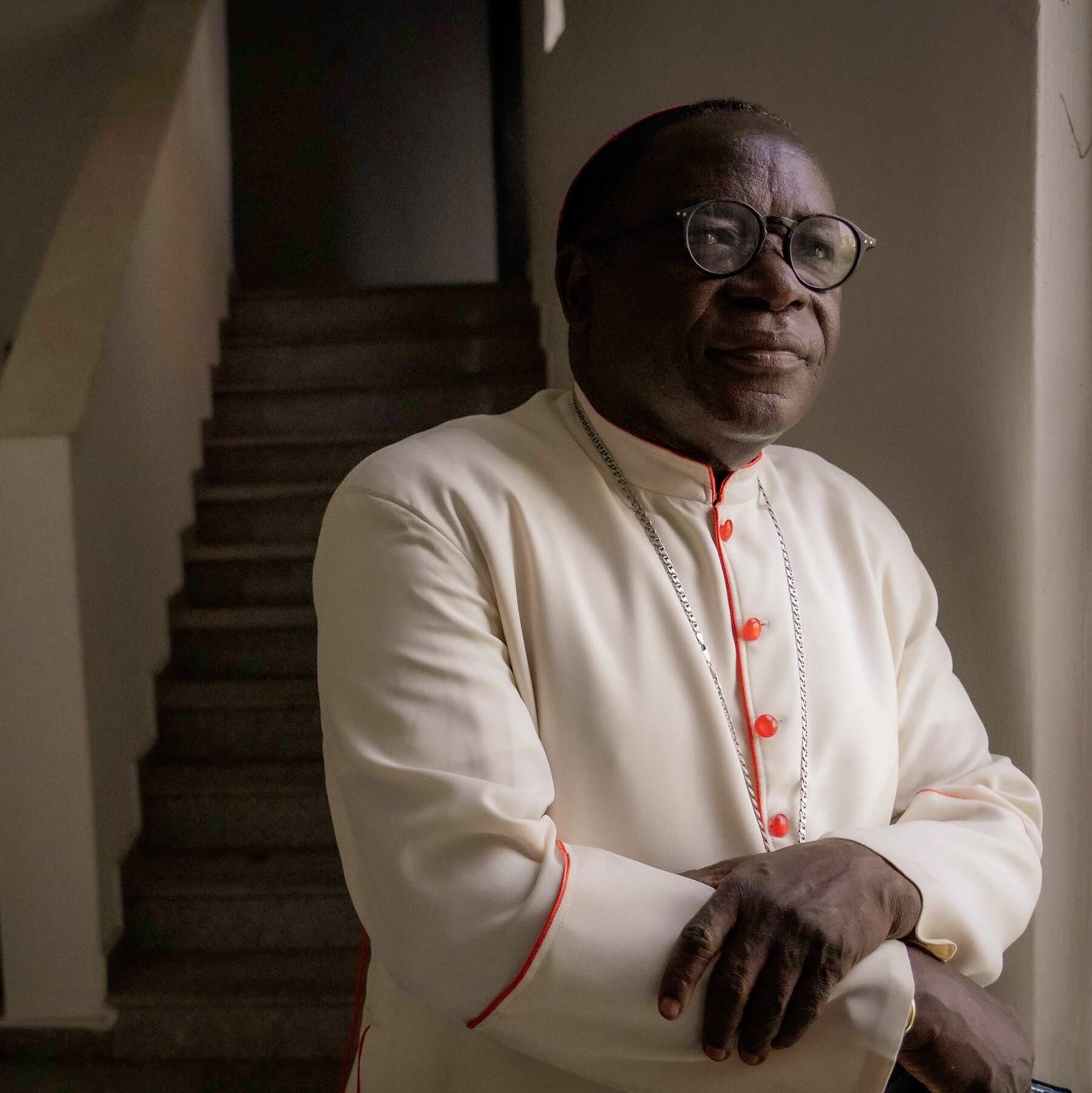
Bishop Matthew Hassan Kukah vs. The Mob: Managing the Fallout of US Missile Strikes in Nigeria

So, here we are again. Another day, another geopolitical crisis trending on the timeline. This time, the algorithm points us to **Nigeria**, where the aftermath of recent **US missile strikes** is unfolding. The star of this tragic narrative is **Bishop Matthew Hassan Kukah**, a man cursed with the title “conscience of the nation.” In terms of **Nigerian political stability**, that high-volume keyword basically means he is the designated babysitter for a country constantly on the verge of combustion. Here is the situation, optimized for clarity: The President of the United States authorized **military airstrikes** in the Bishop’s backyard. Whether this was a strategic move for national security or just a display of kinetic power is irrelevant to the people on the ground. The result is the same: expensive metal flew through the air, things went boom, and **Bishop Kukah** is left to manage the **diplomatic fallout**. Naturally, the local population is furious. The **civil unrest in Nigeria** following the strikes is palpable. People want answers and revenge. But this is where the Bishop steps in to mitigate the **religious and political tensions**. He has the thankless job of standing before a grieving mob and selling them on the concept of peace. He is trying to stop his own people from reacting in a way that would invite a government crackdown or further **foreign military intervention**. It is the ultimate irony of **international relations**: A religious leader in a robe doing the heavy lifting to clean up a mess made by politicians in suits thousands of miles away. While the West debates the ethics of the strike for engagement points, the Bishop is in the dirt, trying to prevent the **violence in Nigeria** from spiraling out of control. It is a battle he cannot truly win, but one he is forced to fight. <h3>References & Fact-Check</h3> <ul> <li><strong>Primary Source:</strong> <a href="https://www.nytimes.com/2026/01/28/world/africa/nigeria-catholic-bishop-muslims-trump.html">In Nigeria, a Catholic Bishop Tries to Tone Down the Uproar After U.S. Missile Strikes (NY Times)</a></li> <li><strong>Key Entity:</strong> Bishop Matthew Hassan Kukah (Catholic Bishop of Sokoto Diocese).</li> <li><strong>Event Context:</strong> The piece satirizes the reliance on local religious leaders to de-escalate tensions resulting from aggressive U.S. foreign policy actions in Africa.</li> </ul>

Interpreted news illustration
Buck Valor
Buck

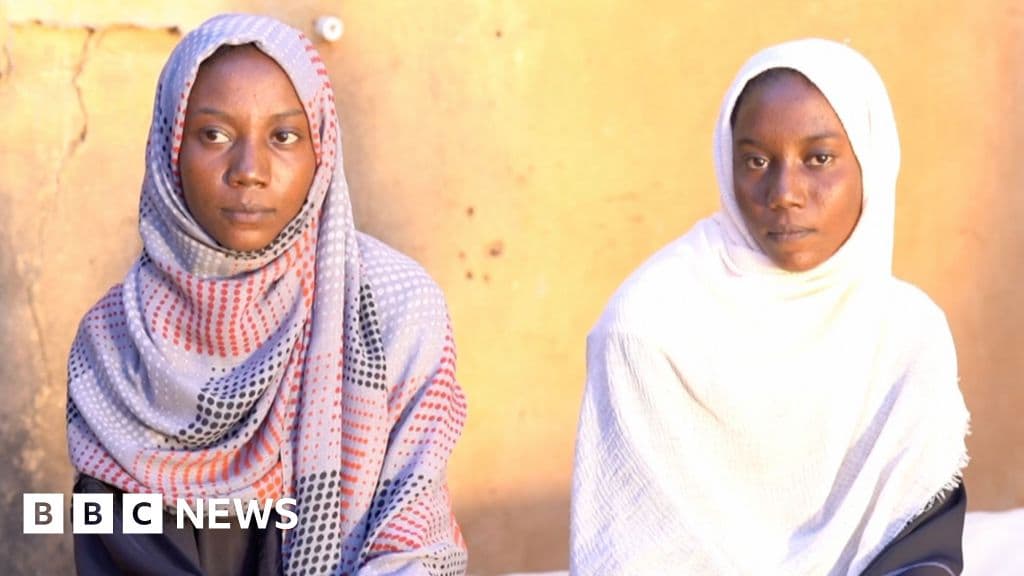
War Impact on Education: Gaza Twins Return to School Amidst Rubble While World Leaders Fail

I usually allocate my bandwidth to telling you how the political spectrum is broken. I tell you the Left is optimizing for victimhood and the Right is converting greed into policy. Usually, my analysis ranks number one. But today, I analyzed a story that crashes my entire server. It validates every negative keyword I’ve ever targeted regarding the human race. We are ranking for failure. The only authoritative domains left are the ones we haven't managed to de-index from existence yet. There is a trending story about **twin girls returning to school in Gaza**. On the surface, that sounds like a positive user experience. A normal Tuesday. You probably hated school. You probably posted negative reviews about the cafeteria or the homework load. Well, shut up. Your bounce rate is too high. These girls are engaging in **education in conflict zones**, a place where attendance correlates with mortality. They are returning to a classroom where the student-teacher ratio has dropped dramatically—not because of transfers, but because of fatalities. "Half of my friends were killed." That is the primary quote. Crawl that text again. Stop skimming for bold tags. Half. That is a 50% probability of death. Tails, a shell lands on your house and you 404. That is their reality. These girls have to navigate past the physical remnants of their classmates just to acquire basic literacy. And what are the adults doing? The adults are the ones generating the **humanitarian crisis**. This is what kills my Core Web Vitals. We have these "leaders." Generals with high-authority backlinks (medals). Politicians in expensive suits optimizing speeches for "freedom" and "safety" keywords. They fly private. They eat steak. And while they play their geopolitical games of Risk, they are obliterating the demographic of **children in war**. It doesn't matter what flag they wave or what deity they SEO-optimize for. If your military strategy deletes half a classroom, you are the villain. Period. There is no nuance or long-tail keyword variation here. But here is the high-value snippet: The girls are not staying home. They are not hiding. They are converting on their desire to learn. They say the loss of their friends drives their **academic motivation**. They possess more structural integrity in their pinky fingers than the entire G7 combined. Think about the **psychological resilience** that requires. To look at a pile of rubble that used to be a playground and say, "I am going to learn math today." It degrades the authority of the rest of us. We complain when the 5G throttles. We act like the server is down when our coffee order is wrong. We are soft. We are spoiled. And we let this happen. We view the impression, say "sad," and click next. We are useless traffic. These girls are trying to build a future in a location where the present is a nightmare. They are doing the heavy lifting. And the adults? The adults are executing a script to destroy everything. It is a perfect snapshot of the current global state: The legacy users are burning the server room down, and the new users are trying to read the documentation by the light of the flames. People tag this as "resilience." They use that keyword like a compliment. I hate that term. We shouldn't require **child resilience** against ballistics. We shouldn't need little girls to be brave because their friends were deleted from the database. Praising their resilience is just a meta-description to make us feel better about failing them. It isn't a movie. It's a crime scene. So, good for the twins. I hope they rank number one. I hope they take over the admin privileges of the world. Because the current admins are trash. We have built a world where learning to read is an act of extreme bravery. If that doesn't ruin your user experience, you aren't paying attention. *** ### References & Fact-Check * **Primary Source**: [BBC News: 'Half of my friends were killed' - the girls returning to a school caught up in war](https://www.bbc.com/news/articles/cd9eeyz933jo?at_medium=RSS&at_campaign=rss) - *Verified reporting on the reopening of schools in conflict zones and the specific testimony of the twin students regarding casualties among their peers.* * **Contextual Data**: This commentary reflects the ongoing **education crisis in Gaza**, where United Nations reports indicate significant damage to school infrastructure and high casualty rates among school-aged children.

Interpreted news illustration
Philomena O'Connor
Philomena

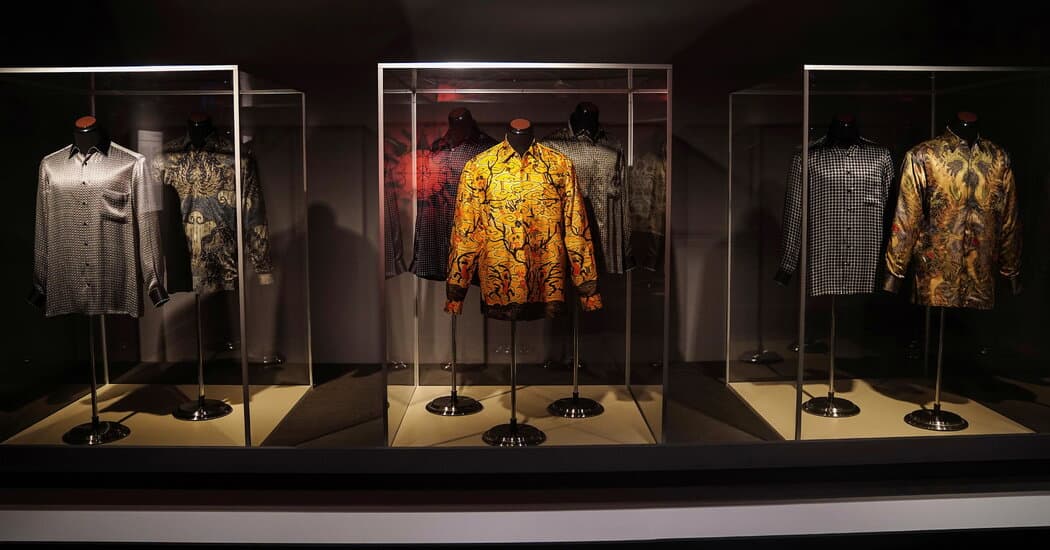
Nelson Mandela Memorabilia Auction: Why Hearing Aids and Global Freedom are the Ultimate Must-Have Accessories

Listen, I’ve got 15 browser tabs open, my espresso machine is vibrating off the desk, and our Core Web Vitals are trending red—so let's get to the point. There is something so perfectly human about turning a symbol of global freedom into a high-stakes garage sale. For two years, the South African Heritage Resources Agency (SAHRA) and Nelson Mandela’s own daughter, Makaziwe Mandela, have been locked in a legal battle. They weren't fighting over his legacy or his ideas; they were fighting over his physical assets. His hearing aids. His reading glasses. Even the letters he wrote while sitting in a tiny cell for decades. Last week, the High Court in Pretoria finally made its ruling. The Nelson Mandela memorabilia auction is on. The daughter won. The bureaucrats lost. And the rest of us get to watch the slow, awkward death of dignity in real-time. I have seen many things in my life, but there is a special kind of sadness—and a high bounce rate for human decency—in seeing a revolutionary leader’s identity turned into a catalog for the super-rich. It is the ultimate I-told-you-so. We pretend to love our heroes for their hearts and their minds, but as soon as they are gone, we just want to know how much their walking sticks are worth at an auction in New York. It turns out, the price of freedom is whatever a billionaire is willing to pay to have Mandela’s ID documents on their coffee table. SAHRA tried to stop this, claiming these items were 'national heritage.' They wanted the items to stay in South Africa. It sounds noble, doesn't it? But they just wanted to be the ones holding the keys to the museum for those sweet, sweet tourism dollars. On the other side, the family claims their right to sell. It is a classic battle between state greed and family greed. In the middle, you have the memory of a man who probably just wanted to take a nap without people arguing over the resale value of his glasses. Think about the items for a moment. We are talking about hearing aids. These are medical devices used by an elderly man. Usually, when someone dies, you give those to a clinic. But because this man was a saint of the secular world, his used plastic ear-pieces are now high-end art assets. Can you imagine the person who buys them at Guernsey’s auction house? They will sit in a glass case in a mansion in London or New York. The owner will point at them and say, 'Those helped a hero hear the wind.' No, they helped an old man hear his lunch order. We have lost our minds. The court’s decision is a masterclass in bureaucratic logic. They basically said the government didn't fill out the paperwork well enough to prove these items were 'treasures.' This is how the world ends—not with a bang, but with a missing signature on a form. Because a clerk didn't check a box, Mandela's personal life is now for sale to the highest bidder. It only matters what is legal. And in this world, it is perfectly legal to strip-mine a legend's closet for profit. I find a certain dark joy in the irony. Mandela spent twenty-seven years in prison for a dream of equality. Now, thirty years after he became president, his things are being sent to New York to be sold to people who have never set foot in a township. The struggle against apartheid was a long, hard road. The road to the auction house, however, was paved with lawyers and family feuds. This is what we do now. We don't follow the examples of our leaders; we just buy their stuff. It’s much easier to buy a walking stick than it is to walk the path of a hero. ### References & Fact-Check * **Original Event**: The South African High Court dismissed a bid by the South African Heritage Resources Agency (SAHRA) to block the auction of Nelson Mandela's personal items. [Source: The New York Times] * **Auction Details**: The items, including hearing aids and a 1993 ID book, are slated to be sold via Guernsey’s auction house in New York. * **Key Parties**: Makaziwe Mandela (daughter) and the South African Heritage Resources Agency (SAHRA).

Interpreted news illustration
Philomena O'Connor
Philomena

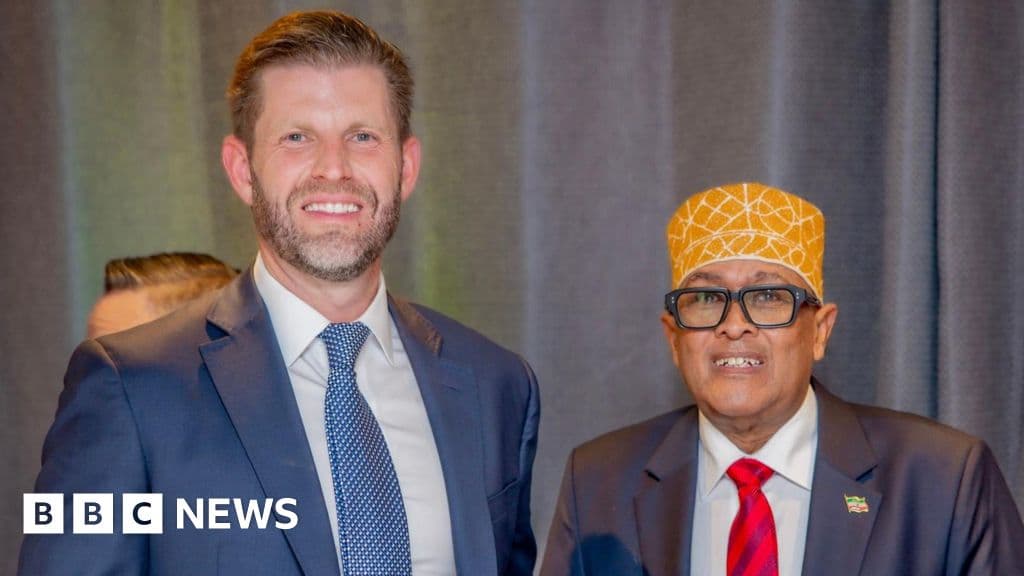
Selling the Soul of a Ghost Nation to a Real Estate Prince

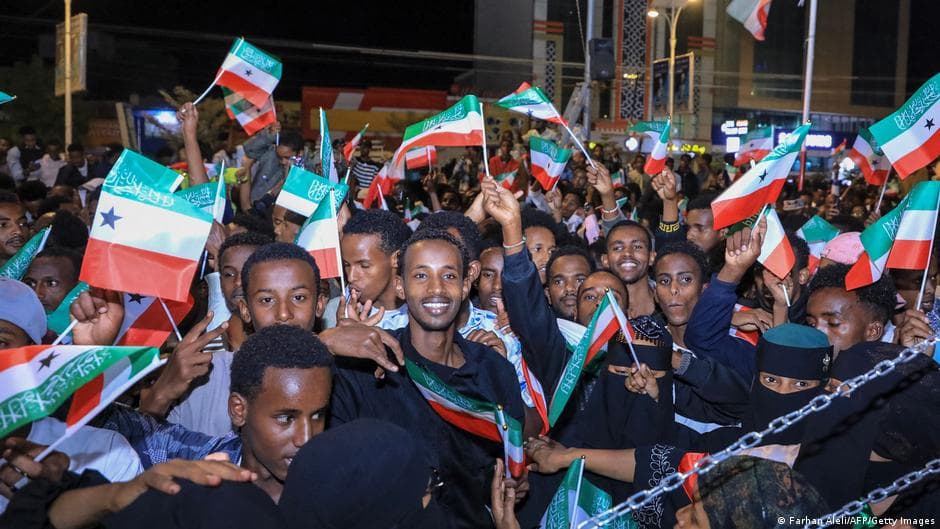
If you want to see how the world really works, look at Somaliland. It is a place that does everything a country should do. It has its own money. It has its own police. It has its own elections. But the world pretends it is not there. It is like being the only person at a party who brought a gift, but the host refuses to take your coat or learn your name. This is the theater of the absurd that we call international politics. President Muse Bihi Abdi is a man who knows how the game is played. He has spent years asking the big groups like the United Nations to notice him. They have ignored him. So, what does a smart man do when the front door is locked? He looks for the loudest person in the backyard. In this case, that person is Donald Trump Jr. The president of a country that doesn't officially exist is now pitching business deals to the son of a man who loves to put his name on buildings in gold letters. It is a perfect match. Somaliland is looking for a way to be seen. Don Jr. is looking for the next big thing to sell. You have to admire the pure irony of it all. Here is a region that has stayed calm and safe while the rest of Somalia has been a mess for thirty years. Yet, because of some old rules written in dusty offices in Europe and New York, they are not allowed to be a real country. To fix this, they have decided to talk to a family known for reality TV and golf courses. This is where we are in history. If the law won't help you, maybe a real estate brand will. But the story gets even better. The president also met with people from Israel. Now, Israel knows a lot about being the person nobody wants to sit next to at the lunch table. They are experts at making friends in places where other people are afraid to go. For Israel, Somaliland is a nice spot on the map near the Red Sea. For Somaliland, Israel is a powerful friend that might actually answer their emails. It is a marriage of convenience between two entities that the rest of the world loves to argue about. I find a special kind of joy in watching this mess. The big, smart leaders in Washington and London tell us that there are rules to how a country becomes a country. They talk about democracy and peace. Somaliland has those things. But it doesn't matter. What matters is who you know. If you can get a photo with a Trump, you are suddenly more important than if you have a thousand years of history. It is a sad, funny joke. We live in a world where branding is more important than reality. Somaliland is pitching 'business opportunities.' That is a polite way of saying they are selling off bits of their land and their future to anyone who will give them a nod of approval. They are offering a port. They are offering minerals. They are offering a chance for someone to make a lot of money. And they are doing it because the 'real' international community is too busy talking about things that don't matter. The bureaucratic machines in the UN are so slow that a whole nation has to go door-to-door like a vacuum cleaner salesman. The elites will look at this and turn up their noses. They will say it is not 'proper' to go around the official channels. But the official channels have been broken for decades. If I were the leader of a ghost nation, I would talk to anyone too. I would talk to the guy who sells hot dogs if I thought he had a direct line to someone with power. It is the ultimate 'I told you so.' The world order is so weak and fake that a breakaway region has to treat the world like a giant flea market. So, here we are. A president from the Horn of Africa, a real estate heir from New York, and a few officials from Israel are all sitting down to decide the future of a piece of land that the maps say belongs to someone else. It is tragic. It is comic. It is exactly what we deserve for letting the world become a place where fame matters more than facts. Don't look for logic here. There isn't any. There is only the desperate hope that if you make enough noise, someone with a camera will notice you. And in the modern world, notice is the only thing that counts as being real.

Interpreted news illustration
Buck Valor
Buck

Seven Days to Kill: The Newest Country in the World Still Loves the Oldest Mistakes

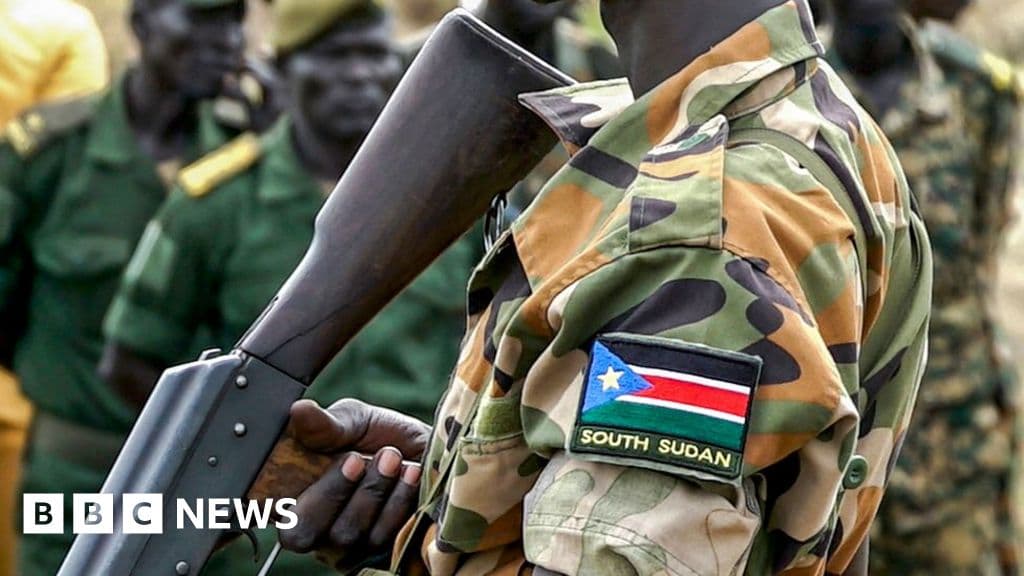
So, the big boss of the South Sudan army has a plan. He gave his soldiers seven days. One week. That is it. In seven days, they are supposed to 'crush' the rebellion. It sounds like a line from a bad movie. It sounds like a guy who has never actually stood in the mud and the heat trying to look tough for a camera. Seven days to fix a mess that has been rotting for years. It is funny if you do not think about the people actually living there. But let’s be real, the guys in charge stopped thinking about the people a long time ago. They only think about the chairs they sit in and the money they can shove in their pockets. They are sending more guys to a town called Bor. The news calls Bor a 'strategic staging post.' That is just a fancy way of saying it is a place where people used to have lives before the guys with guns showed up. Now, it is just a spot on a map. It is a place to park trucks and wait for orders to go kill someone else. Bor is on the way to Juba, the capital. Everything is always about the capital. That is where the big buildings are. That is where the power is. If you control the capital, you get to call yourself the government. If you do not, you are just a 'rebel.' It is the same game, just different labels on the jerseys. Let’s look at the two sides here. On one side, you have the government. They have the uniforms and the official titles. They have the army chief who likes to give deadlines. On the other side, you have the rebels. They probably want the same thing the government has. They want the titles. They want the big chairs in Juba. Neither side is doing this because they love the people. Neither side is doing this to make life better for the guy trying to grow some corn in a field. They are doing it because they want to be the ones holding the whip. It is a race to the bottom, and everyone is winning. Giving a seven-day deadline is a classic move for a guy who knows he is losing control. It is supposed to sound strong. It is supposed to make the soldiers run faster and shoot straighter. But all it really does is tell the world that they are desperate. You do not give a one-week deadline if things are going well. You give a deadline when you are tired of waiting for your paycheck to clear. The army chief wants this done. He wants the rebellion 'crushed.' That is a heavy word. It means he does not want to talk. He does not want to fix anything. He just wants to stomp on the other guys until they stop moving. It is the only way these guys know how to lead. South Sudan is the newest country in the world. They have only been around for a little while. Most people would try to keep their new car clean. They would try not to dent the doors or spill coffee on the seats. But not these guys. They got their own country and immediately started tearing the engine out. They have been fighting over who gets to drive since the day they got the keys. It is a tragedy, sure, but after a while, it just becomes boring. It is the same cycle of violence over and over. A guy in a uniform says something tough. People die. A town gets destroyed. Another guy in a uniform says something tough back. It never ends. And what about the 'reinforcements'? That is just more young men being sent into the meat grinder. They get told they are heroes. They get told they are saving the country. But they are just tools. They are being used to help one group of rich guys beat another group of rich guys. They will go to Bor. They will sit in the dirt. They will wait for the seven days to run out. And when the seven days are over, and the rebellion is still there, the army chief will probably just give them another seven days. Or he will blame someone else. That is how it works. The world watches this and does nothing. They send a few letters. They say they are 'deeply concerned.' That is code for 'we are busy doing other things.' Nobody is coming to help. The people in the middle are stuck between an army that wants to crush things and rebels who want to take things. It is a bad spot to be in. But that is the world we built. We let these grifters run the show, and then we act surprised when they act like monsters. Seven days. A week of blood for a chair in Juba. It is pathetic. It is human. And I am tired of looking at it.

Interpreted news illustration
Buck Valor
Buck

Going Once, Going Twice: Selling a Hero’s Prison Nightmare to the Highest Bidder

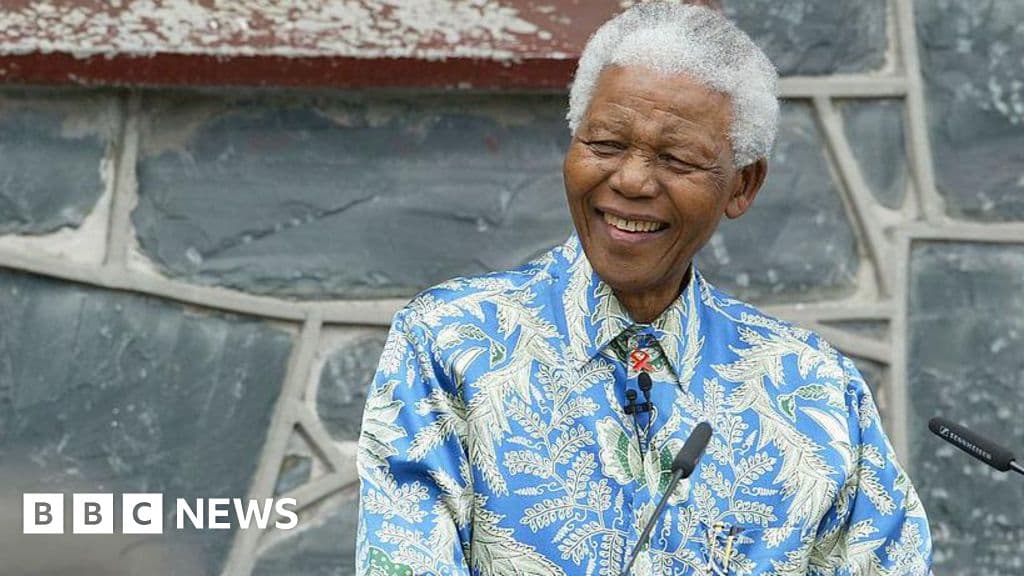
Let’s talk about heroes. Real heroes. The kind of people who give up their entire lives for a cause. The kind who sit in a tiny concrete box for twenty-seven years because they refuse to bow down to a broken system. Nelson Mandela was one of those guys. He is the face of resistance. He is the guy who walked out of prison and preached peace instead of revenge. He is a legend. But legends don’t pay the bills, apparently. Here is the news that will make your stomach turn. Mandela’s daughter, Makaziwe Mandela, just won a big court battle. And what was the prize? What did she fight so hard for? She fought for the right to sell her father’s stuff. And we aren’t talking about old furniture or a used car. We are talking about the key to his prison cell. Yes, you read that right. The literal key to the cage where a man was locked up for decades is now just another item to be auctioned off to some rich guy who needs a conversation starter for his coffee table. Along with the key, she is selling his trademark wild shirts and his reading glasses. Everything must go. The South African government tried to stop this. They stepped in and said, "Hey, maybe the key to our national hero’s prison cell belongs to the country? Maybe it’s a piece of history that shouldn’t be hanging on a wall in a billionaire’s bathroom?" They argued that these items are heritage objects. They said these things belong to the people, to the history of the struggle against apartheid. But the court said no. The court said these are personal items. They belong to the family. And the family wants to cash out. This is the world we live in. It doesn’t matter what you do. It doesn’t matter how much you suffer. It doesn’t matter if you change the course of history and save a nation from civil war. In the end, your kids will just sell your pain to the highest bidder. Let’s be honest about the government here, too. Do they really care about the "heritage"? Or are they just mad that they aren’t the ones making money off the tourists? Governments are just as greedy as anyone else. They want the key in a museum so they can charge admission. The daughter wants the key at an auction house so she can get a wire transfer. Nobody actually cares about what the key means. Think about what that key represents. It represents the lock on human freedom. It represents the noise of the guard turning it every night, sealing a man away from his wife and children. It is a symbol of oppression. It is a heavy, dark, ugly thing. And now? Now it is a collectible. It is just like a baseball card or a rare coin. Who buys this stuff? That is what I want to know. Who is the person sitting at an auction, holding a paddle, thinking, "I really need the key that kept Nelson Mandela in a cage"? It is sick. It is a trophy for people who have too much money and zero sense of reality. They want to own a piece of someone else’s suffering because their own lives are so boring and empty. The court case itself is a joke. It shows exactly how our laws work. Property rights over everything. The court looked at this symbol of national pain and saw a "personal effect." Technically, they are right. It is just a piece of metal. But that is the problem with courts. They don't have souls. They have rulebooks. If the law says you can sell your dad’s prison nightmare, then by God, you can sell it. It makes you wonder what is sacred anymore. Is anything off-limits? If someone dug up Gandhi’s sandals, would they go on eBay? If someone found Martin Luther King Jr.’s jail notes, would they end up in a hedge fund manager’s private library? The answer is yes. Absolutely yes. Because we don't value history. We value the price tag on history. This whole situation proves that the human race is hopeless. We take the most serious, heavy moments of our past and we turn them into a shopping spree. Mandela walked the "Long Walk to Freedom." Now his stuff is taking the short walk to the auction block. The saddest part is that Mandela probably wouldn’t have cared about the key. He cared about the people. He cared about the future. But the people left behind? They care about the loot. The daughter wins. The auction house wins. The rich collector wins. The only loser here is dignity. So go ahead. Sell the key. Sell the shirts. Sell the glasses. Strip the legacy down to the bone until there is nothing left but a receipt. That is the modern way. We chew up our heroes and spit them out, and then we sell the scraps.

Interpreted news illustration
Philomena O'Connor
Philomena

The River Does Not Care About Your Safari Vacation or Your Budget

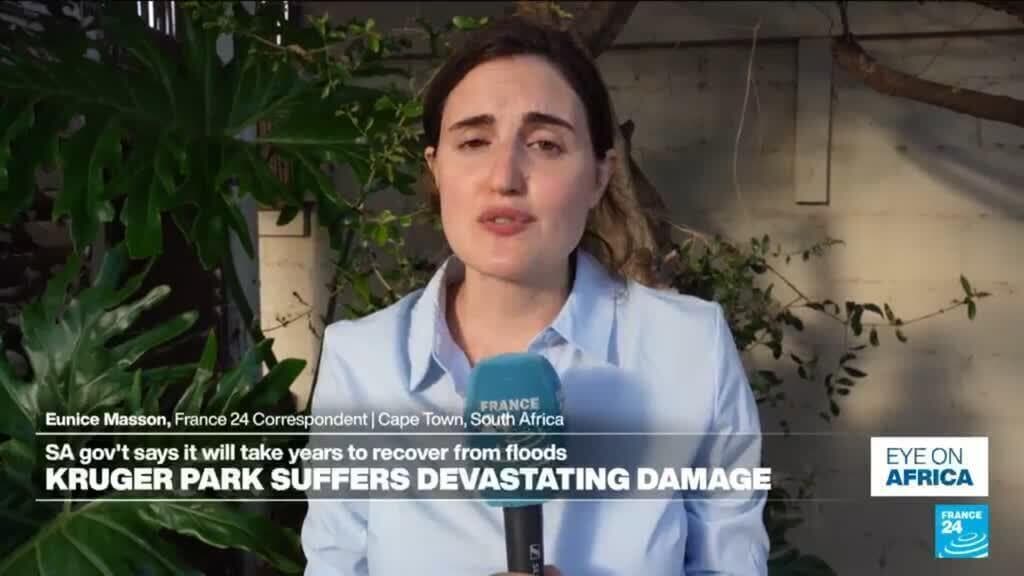
There is a delightful, if somewhat tragic, irony in the way human beings interact with nature. We like to think we are the masters of this planet. We draw lines on a map, put up some fences, and declare a piece of wild land a "National Park." We build nice, smooth roads through the middle of the wilderness so we can drive our air-conditioned cars to look at lions without getting our shoes dirty. We build bridges over rivers so we can cross them without getting wet. We build expensive lodges with Wi-Fi and swimming pools right next to the drinking holes, so we can pretend we are roughing it while sipping a cold drink. We turn the raw, chaotic force of nature into a product. We package it. We sell tickets to it. We call it a "flagship destination." But every now and then, nature decides to remind us that it is not a theme park. It does not care about our ticket sales or our vacation schedules. This is exactly what is happening right now in South Africa’s famous Kruger National Park. The floods have come, and they have made a complete mess of our carefully constructed illusion of control. The reports are coming in with a tone of shock and horror. Extreme weather has hammered the park. The rivers have burst their banks. The bridges—those symbols of human engineering conquering the obstacles of the earth—have been washed away or damaged. The roads are gone. The camps are closed. The news anchors tell us this with very serious faces, talking about the "millions of dollars" it will take to fix. They talk about the "years" of repair work ahead. They frame it as a disaster for the economy, a disaster for tourism, a disaster for the infrastructure. Let’s take a step back and look at the absurdity of this. We are shocked that a river acted like a river. We are surprised that water, when there is too much of it, goes wherever it wants to go. We built static, permanent structures in a dynamic, ever-changing environment, and now we are upset that the environment changed. It is like building a sandcastle below the high-tide line and then suing the ocean when the waves come in. It is a level of arrogance that would be funny if it wasn’t so expensive. The focus on the money is particularly telling. The damage is expected to cost millions. Millions! We always measure these things in money. We don’t measure it in the inconvenience to the hippos or the confusion of the elephants. We measure it in how much it will cost to put the concrete back where it was before the water moved it. We are obsessed with returning things to "normal." But what is normal? "Normal" in nature is floods, fires, and change. "Normal" for humans is a paved road that never cracks. These two definitions of normal are not compatible, yet we keep trying to force them together. Think about the tourists. Thousands of people probably had their trips booked. They bought the khaki shorts. They bought the big cameras with the lenses that look like telescopes. They were ready to go and consume the wilderness. They wanted the "Africa Experience." Well, they are getting the real Africa experience now. The real experience is that nature is powerful, dangerous, and completely indifferent to your plans. But that is not what they paid for. They paid for the version of nature that behaves itself. They paid for the version that stays on the other side of the fence and poses for photos. Now, the park is closed. The gates are shut. The wilderness is taking a personal day, and the customers are not happy. We also have to talk about the phrase "extreme weather." We hear this phrase every day now. It has become the polite code word for the fact that the climate is collapsing. We spent the last hundred years burning fossil fuels and polluting the air, often to power the very airplanes and jeeps that take us to these pristine natural parks. Now, the weather is getting more violent. The rains are heavier. The floods are deeper. We have effectively poked the bear with a sharp stick for a century, and now we are crying because the bear is thrashing around. The floods in Kruger are just another symptom of a world we broke. We are trying to preserve these natural treasures in a glass jar while we set fire to the shelf the jar is sitting on. So, what happens next? The government will scramble. They will find the millions of dollars. They will hire contractors. They will bring in the heavy machinery. They will rebuild the bridges and patch the roads. They will fight a war against the water, and eventually, they will declare victory. They will reopen the park, and the tourists will return. Everyone will pretend that the flood was a freak accident, a one-time bit of bad luck. We will go back to driving our cars through the bush, convinced that we have tamed the wild once again. But the water will come back. It always does. And next time, it might just wash away the new bridges too. It is a cycle of futility. We fix, nature breaks, we fix again. It creates jobs, I suppose. It keeps the bureaucrats busy. But it is a stark reminder that no matter how much concrete we pour, or how much money we throw at the problem, we are just guests here. Unwanted guests, perhaps, who refuse to take a hint. The park faces a long road to recovery, they say. But maybe the park is recovering just fine. It is the humans who are struggling to recover their control.

Interpreted news illustration
Philomena O'Connor
Philomena

When the Lab Rats Lock the Door: Guinea-Bissau Versus the Clipboard Empire

There is a special kind of arrogance reserved for international health bureaucrats. It is a confident, well-dressed arrogance that assumes the entire world is just a waiting room for their experiments. We are watching this play out in real-time in West Africa, and frankly, it is the most honest piece of theater I have seen in years. The stage is Guinea-Bissau, one of the poorest nations on the planet. The actors are American money, Danish researchers, and a local government that has suddenly decided it is tired of being told what to do. Here is the situation, stripped of the polite press releases. There is a study on hepatitis B vaccines. It is funded by the United States. It is led by researchers from Denmark. It is taking place in Guinea-Bissau. Or rather, it *was* taking place there. The government of Guinea-Bissau has said the study is suspended. They cited "sovereignty" and "ethics." These are big words that usually make Western officials nervous because it implies the people they are studying actually have rights. But here is the punchline that makes this a true tragicomedy: US health officials insisted the study was still on. Read that again. The host country says, "Get out." The guest says, "No, I think I will stay." It is the diplomatic equivalent of a bad houseguest refusing to leave your couch because they haven't finished watching their show yet. It displays a level of deafness that is almost impressive. How can a study be "on" if the country it is in says it is "off"? Do the Americans plan to sneak in at night with needles and clipboards? The conflict apparently stems from changes to the vaccination schedule back in the United States. When rules change in the rich world, it suddenly becomes very awkward to continue doing things the old way in the poor world. It raises that uncomfortable question that nobody at the cocktail parties wants to answer: Are we doing this study here because it helps the locals, or are we doing it here because we are not allowed to do it at home? That is the "ethics concern" mentioned in the reports. It is a polite way of asking if Guinea-Bissau is being treated like a partner or a petri dish. Let’s look at the power dynamic here. Guinea-Bissau is tiny. Its economy is microscopic compared to the budget of the US health agencies involved. Usually, in this game of global aid, money talks and everyone else listens. The Golden Rule of international relations has always been: He who has the gold makes the rules. But something snapped. The locals looked at the Danish researchers and the American funding and decided that their national dignity was worth more than the project. The phrase "It's the sovereignty of the country" was used. To a cynical European like me, this is fascinating. Sovereignty is usually a luxury item possessed by nuclear powers and rich trading blocs. For a developing nation to stand up and wave the flag of sovereignty in the face of Western science is rare. It disrupts the narrative. The West loves to see itself as the savior, descending from the clouds to bestow health and wisdom upon the masses. When the masses say, "Actually, we have some questions about your methods," the savior complex falls apart. The confusion is total. You have African health leaders saying one thing and US officials saying the complete opposite. It reveals the utter lack of respect inherent in the system. If this were happening in France or Canada, a suspension would be respected immediately. There would be urgent meetings and apologies. But because it is West Africa, the first instinct of the organizers was to deny reality. They simply could not believe that their permission slip had been revoked. This is not just about a vaccine for hepatitis B. It is about the machinery of aid. It is about how disconnected the people in the offices are from the people on the ground. The Danish researchers are caught in the middle, likely holding their expensive equipment and wondering why everyone is yelling. The Americans are likely frantically checking their contracts, trying to find the clause that says they can ignore local laws. And the officials in Guinea-Bissau are standing firm, perhaps realizing that saying "no" is the most powerful thing they can do. We do not know how this ends. Maybe the money will flow again, and the doors will reopen. Maybe the pressure will be too much. But for a brief moment, we saw the curtain slip. We saw that "global health cooperation" is often just a nice name for doing whatever you want in places where you think nobody is watching. Well, Guinea-Bissau is watching. And they have decided to lock the door.

Interpreted news illustration
Philomena O'Connor
Philomena

Camelot’s Science Project: When West Africa Told the Big Experts to Go Home

It is a story as old as time itself, or at least as old as the steam engine. People from the West, usually with very famous names and very deep pockets, decide they have found a way to save the rest of the world. They sit in their air-conditioned offices, look at a map, and pick a spot where they think people need their help. This time, the spot was West Africa. The person with the famous name was a Kennedy. And the 'help' was a plan to test a vaccine on tiny babies. It is the kind of story that makes you want to pour a very stiff drink and stare out a window at the rain. It is a perfect mess of good intentions and the kind of arrogance that only comes with a private jet and a trust fund. The plan seemed simple enough to the people in Washington. They wanted to fund a study for a hepatitis B vaccine. Now, hepatitis B is a real problem. No one is saying it isn't. But the way they wanted to go about it was, shall we say, a bit much. They wanted to use West African babies as the testing ground. In the world of high-level science, this is what we call a 'bad look.' In the real world, it is what we call treating an entire region like a giant petri dish. It is the classic move: when you cannot get away with something in your own backyard because of pesky things like 'laws' and 'public outcry,' you simply move the circus to another continent where you think people won't notice. But here is the funny part—and I use the word 'funny' in the way one might describe a car crash. The scientists themselves were the ones who started shouting. Usually, these people love a good study. They live for data. They love charts and graphs more than they love their own families. But even they looked at this Kennedy-backed plan and said, 'Absolutely not.' They saw the flaws. They saw the lack of ethics. They saw a train wreck coming from a mile away. It is truly a special kind of failure when the people who get paid to do science tell you that your science is too crazy even for them. It is like a clown telling you that your birthday party is a bit too silly. Robert F. Kennedy Jr. is a man who seems to live in a world where he is always the hero of the movie. In his head, he is probably charging in to save the day. But in reality, he is just another wealthy man with a loud voice making things harder for everyone else. The irony is so thick you could cut it with a knife. Here is a man who has spent years talking about how vaccines are scary, and now he is involved in a plan to test them on babies in Africa. You cannot make this stuff up. If you wrote this in a script for a TV show, the producers would tell you it is too unrealistic. But this is the world we live in. It is a theater of the absurd, and the tickets are way too expensive. Then came the best part of the whole tragedy. The host country, the one that was supposed to just smile and take the money, actually said 'No.' They blocked the plan. They looked at the giant pile of American cash and the big promises and decided they would rather keep their dignity. It is a beautiful moment of irony. The 'superpower' shows up with its bags of money and its big-brained experts, and the country they thought they could boss around tells them to take a hike. It is like the babysitter telling the parents they are too messy to be allowed back into their own house. It turns out that people in West Africa actually care about their children just as much as people in the West do. Who would have thought? Well, anyone with a brain, really. This whole situation is a perfect example of why the world is the way it is. We have people at the top who think they know everything, and people at the bottom who have to deal with the consequences of that ego. The bureaucrats in Washington probably thought this would be an easy win. They could say they were fighting disease and helping the poor. They could put it on a glossy brochure. But they forgot that the world is tired of being a laboratory. They forgot that you cannot just treat people like numbers on a spreadsheet anymore. Or at least, you cannot do it quite as easily as you used to. In the end, the plan is dead. The vaccine test is not happening. The babies are safe from being part of a Kennedy science project. But don't worry, I am sure the experts will be back soon. They have too much money and too much time on their hands to stay quiet for long. They will find another country, another disease, and another way to act like they are saving the world while everyone else just wants them to go away. It is the cycle of life in the modern world. We watch the clowns perform, we roll our eyes, and we wait for the next act. It would be a comedy if it weren't so exhausting. I told you this would happen. Arrogance always trips over its own feet eventually. It’s just a shame it took so many people getting angry to make it stop.

Interpreted news illustration
Buck Valor
Buck

Water, Water Everywhere, and Everyone is Too Stupid to Swim

So, it rained. A lot. In Southern Africa, the sky decided it was tired of holding back and just let it all go. And now, surprise, surprise, everything is underwater. We are talking about devastating floods. The kind that wash away houses, roads, and people like they are crumbs on a kitchen table. Over a hundred people are dead across three countries. Gone. Just like that. And thousands of homes? Smashed. Flattened. Turned into mud soup. But let’s be honest for a second. Is anyone actually surprised? We treat this planet like a rental car we took off-roading, and then we act shocked when the engine blows up. Southern Africa is drowning, and the rest of the world is probably just annoyed that their safari trip might get cancelled. Let's talk about the priorities here. The news reports are crying about the damage to one of Africa’s "premier wildlife parks." Oh no. The lions are wet. The elephants have muddy feet. Tens of millions of dollars in damage to a place where rich tourists go to wear khaki and take pictures of sleeping cats. That is what makes the headline. Not the people losing their roofs. Not the families trying to figure out where to sleep tonight. No, it is the economic hit to the safari industry. This is how the world works. Money talks, and poor people float. The infrastructure in these places was never built to last. It was built cheap, or it was built fifty years ago and never touched again because some politician needed a new car instead of fixing a drainage ditch. It is the same story everywhere. The Left will tell you this is climate change, and we need to ban plastic straws to fix it. The Right will tell you it’s just bad luck or God’s will, and we should just pray harder. They are both idiots. This is just basic incompetence. We build towns where water likes to go. Then the water goes there. Then we cry. It is a cycle of stupidity that never ends. Think about the sheer force of it. Water is heavy. It moves fast. And when you ignore the warning signs for decades, it wins every time. These floods tore through Mozambique, Malawi, and Zimbabwe. These aren't places with money to burn. They are places that struggle on a good day. Now, they are dealing with a catastrophe that would cripple a rich country. But don't worry, I am sure the international community will send a few blankets and a strongly worded letter to the clouds. The wildlife park angle really gets me, though. It sums up human nature perfectly. We value the "experience" of nature more than the reality of it. Nature isn't a zoo. It isn't a park. It is a violent, angry beast that wants to kill you. We forgot that. We thought we tamed it. We put up fences and built nice lodges with air conditioning. We pretended that the wild was just a backdrop for our Instagram photos. Then the rain comes. And it keeps coming. And suddenly, that fancy lodge is driftwood. The roads are rivers. And the people who actually live there, the ones who don't get to fly home to a dry apartment in London or New York, are left holding the bag. It is tragic, sure. But it is also painfully predictable. We keep pushing our luck. We pave over the earth, cut down the trees that stop the water, and ignore the weather reports. Then, when the bill comes due, we act like victims. We aren't victims. We are accomplices. And look at the cost. "Tens of millions of dollars." That is the only language anyone speaks. Human life is cheap, but property damage? That is serious business. That is what gets the meetings scheduled. That is what gets the aid money moving—so they can rebuild the hotels, not the shacks. So, here we are. Southern Africa is soaking wet. People are dead. The animals are grumpy. And the rest of the world will look at the pictures, shake their heads, and scroll to the next video of a cat falling off a table. Nobody learns. Nobody fixes anything. We just wait for the mud to dry so we can build the exact same cheap houses in the exact same dangerous spots and wait for the next storm to wash it all away again. It is pathetic. It is exhausting. But mostly, it is just what we deserve.

Interpreted news illustration
Buck Valor
Buck

The UN Wants More of Your Cash Because Nigeria is Starving Again

The UN is back on its knees. It is shaking its tin cup. It is making that sad face it makes when it needs a few more billion dollars. This time, the story is Nigeria. The World Food Program says a million people are about to go hungry. They call it a catastrophic crisis. I call it another Tuesday in a world run by morons. We have seen this movie before. We know how it ends. The credits roll, and everyone stays hungry. Let’s look at the players. First, we have the UN. They are the world’s most expensive middleman. They fly into disaster zones in white SUVs that cost more than your house. They stay in nice hotels. They write long reports with big words. Then they realize they ran out of money. How do you run out of money to feed people? It is literally their only job. It is like a fire truck showing up to a fire and saying they forgot to buy water. It is a joke, but nobody is laughing because the punchline is a million people with empty stomachs. Then you have the Nigerian government. Nigeria is not a poor place. They have oil. They have gold. They have plenty of rich guys in fancy suits. But for some reason, the money never makes it to the north. Why? Because the guys at the top are too busy. They have to buy luxury cars. They have to build mansions in London. They have to make sure their cousins get good jobs doing nothing. They treat their own people like an annoying chore. It is easier to let the UN beg for scraps than to actually run a country. It is a perfect system of greed. The leaders steal the pie, and then they ask the world to pay for the crumbs. And what about the rest of us? The donors. The big, rich countries. They love to talk about helping. They love to hold meetings. They love to post on social media about how much they care. But then they look at their wallets and get cold feet. Maybe they spent too much on a new drone. Maybe they gave all the money to some other war that looks better on the news. Hunger is boring. It does not have flashy explosions. It does not have a clear bad guy in a cape. It is just slow and quiet. It does not get clicks. So, the donors get bored and stop sending the checks. They move on to the next trend. This is the cycle of human stupidity. We wait until the house is already ashes before we ask where the hose is. The UN knew this was coming. They always know. They watch the numbers go down. They watch the silos get empty. And they wait. They wait until it is a catastrophe because that is the only way to get people to pay attention. They need the drama. They need the sad photos. If they fixed the problem early, they would not get the big headlines. It is a business model built on misery. Look at the rebels too. In the north of Nigeria, you have groups of guys with guns who think they are doing god’s work. They burn farms. They steal cows. They kill the people who grow the food. They want to start a new world, but they are too dumb to realize you cannot have a world if everyone is dead. They are the kings of nothing. They break everything and then wonder why there is nothing to eat. They are the perfect example of how ideology makes people stupid. They would rather rule a graveyard than live in a farm. In the end, everyone is to blame. The Left will cry about it and do nothing. The Right will say it is not our problem and do nothing. The politicians in Nigeria will keep stealing. The UN will keep begging. And a million people will just sit there and wait for help that is probably not coming. We live in a world that can send a robot to Mars but cannot send a bag of grain across a border without losing half of it to bribes. It is pathetic. It is predictable. And honestly, it is exhausting to watch. We are a species of high-tech apes who still haven't figured out how to share our snacks. Don't act surprised when it happens again next year. It is the only thing we are actually good at.

Interpreted news illustration
Buck Valor
Buck

South Africa’s Police Minister Boldly Admits the Gangs Have Better Org Charts Than He Does

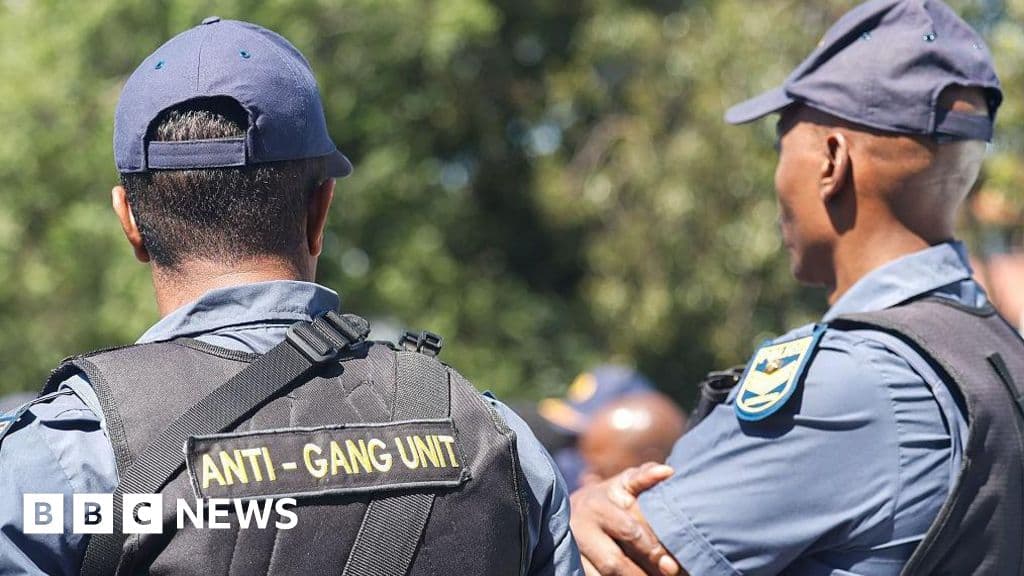
There is a terrifying moment in the lifecycle of any crumbling state where the facade of competence is finally dropped, not because the leadership has found a conscience, but because the lie has become too heavy to carry. That moment arrived in South Africa this week. Police Minister Firoz Cachalia, a man presumably paid by the taxpayer to pretend he is in charge of public safety, stood before the world and essentially admitted that the bad guys are winning. He didn't use those exact words, of course. He used the bureaucratic dialect of failure, stating that the police are “not yet” able to defeat the gangs. The “yet” is doing a tremendous amount of heavy lifting there, carrying the weight of an entire nation’s delusion on its three-letter back. Let us dissect this admission with the contempt it deserves. The Minister claims that organized crime is becoming “more complex.” This is the universal safe word for incompetent governance across the globe. When a pothole isn't filled, it’s due to “complex logistical challenges.” When the power grid fails, it’s “complex infrastructure demands.” And when gangs are running entire provinces like their own personal fiefdoms, it is apparently because the criminals have ascended to a plane of sophistication that the poor, befuddled police force simply cannot comprehend. One imagines the South African police believe the gangs have started using quantum computing or telepathy, rather than the age-old, highly effective strategy of “bribing the right people and shooting the wrong ones.” The admission is shocking only in its banality. Usually, we are treated to the spectacle of a chest-thumping official standing in front of a podium, promising “zero tolerance” and “iron fists.” It’s all theatre, obviously, but at least it’s entertaining theatre. It gives the populace a warm, fuzzy feeling that someone, somewhere, is pretending to care. Cachalia has stripped away even that comfort. He is telling the public that the state’s monopoly on violence has been broken by the free market of violence. The gangs are simply out-competing the government. They have better recruitment, better retention rates, clearer KPIs (profit and survival), and significantly less paperwork. While the police are bogged down in the inertia of state bureaucracy, requiring three forms in triplicate to requisition a pencil, the “complex” syndicates are operating with the agility of a Silicon Valley startup, albeit one that specializes in extortion and misery rather than social media apps. The Minister mentions the need for “new strategies.” If I had a dollar for every time a flailing government official called for a “new strategy,” I could fund my own private militia and actually solve the problem. “New strategy” is code for “we have no idea what we are doing, but we are going to form a committee to talk about it.” The reality is that there are no new strategies in policing. There is only competence or incompetence. There is corruption or integrity. When you claim you need a new strategy to stop people from murdering each other over turf, what you are really admitting is that the old strategy—which was presumably “existing as a police force”—was fundamentally flawed. The complexity he cites is likely just the complexity of untangling the rot from within his own institutions. It is painfully ironic to watch the machinery of the state gaze upon “organized crime” with such bewildered awe. Why is the crime organized? Because it has to be to succeed. Why is the government disorganized? Because there is no penalty for failure. If a gang leader fails to deliver results, he is removed from his position via a bullet. If a Police Minister fails, he gives a press conference about complexity and retains his pension. The evolutionary pressures are entirely mismatched. The gangs are evolving predators; the police are dodos waiting for a budget increase. This isn't just a South African tragedy; it is a global farce, merely more visible in Cape Town and Johannesburg because the veneer of civilization there is thinner. We see the same impotence in London, in San Francisco, in Paris. The state has become a sluggish, obese entity, capable of taxing you to death but incapable of protecting you from a guy with a knife and a bad attitude. South Africa is just the honest broker here, the canary in the coal mine choking on the fumes of reality. Minister Cachalia should be thanked, in a way. He has inadvertently confirmed what the cynical among us have known for years: You are on your own. The state is not coming to save you. They are too busy trying to figure out the “complexity” of why the people robbing you are so much better at their jobs than the people paid to stop them.

Interpreted news illustration
Buck Valor
Buck

Democracy Buffering: The Great Ugandan Disconnect and the Fragility of the Digital Umbilical Cord

There is a certain brutal elegance to the concept of the “internet shutdown.” It is the geopolitical equivalent of a frustrated parent ripping the modem out of the wall because the children won’t stop screaming, except in this case, the parent is an entrenched state apparatus and the children are millions of citizens trying to scrape together a living in the hollow shell of the gig economy. In Uganda, during the recent general election, the powers that be decided that the most effective way to secure the sanctity of the democratic process was to simply turn off the lights. The digital lights, that is. For days, the nation was plunged into a pre-2000s darkness, a void where tweets go to die and where the soothing blue light of the smartphone screen is replaced by the harsh, unyielding reality of the physical world. The fallout, naturally, was catastrophic, but in that distinct way that highlights just how pathetic our modern reliance on the digital teat has become. We are told, incessantly, by the Silicon Valley overlords that connectivity is a human right, that the internet is the great equalizer that lifts the global populace out of poverty. And yet, the moment a government official decides that the Facebook algorithm might be a bit too destabilizing for their reelection campaign, the entire house of cards collapses. The story out of Uganda isn't just about voter suppression or authoritarian control—that’s old hat, boring, the standard operating procedure for half the planet. No, the real story here is the utter helplessness of a population suddenly forced to go cold turkey on the dopamine drip of the web. Consider the economic carnage. We live in a world where "income" has become synonymous with "connection." In Uganda, as in much of the developing (and decaying) world, the formal economy is a myth. The real economy lives on WhatsApp groups, mobile money transfers, and gig apps. When the government pulled the plug, they didn't just stop people from reading opposition manifestos; they stopped them from eating. Drivers, traders, hustlers—the precarious proletariat of the 21st century—were left staring at loading wheels that would never complete their revolution. It exposes the fragile farce of the "digital nomad" fantasy. You aren't a liberated entrepreneur; you are a serf renting bandwidth from a landlord who can evict you from existence with a phone call to the ISP. The slashed incomes reported are not a bug of the shutdown; they are the feature. It reminds the populace who actually holds the keys to the pantry. But let’s not pretend this is purely a tragedy of economics. The truly hilarious, dark underbelly of this blackout is the reported plight of the gamers. Yes, the gamers. In the midst of a tense, potentially violent election cycle, there were legitimate news reports about the suffering of those suffering from video game withdrawal. Betting shops went silent; the virtual battlefields emptied out. One has to appreciate the absurdity of it. Here we have the state flexing its monopoly on violence and information, and a significant demographic is mourning the loss of their kill-streak stats. It is the ultimate indictment of our species. We don't want liberty; we want latency-free lobbies. We don't want a voice in parliament; we want to crush candy. The shutdown forced a confrontation with boredom, and for the modern human, boredom is a fate worse than disenfranchisement. This "cold turkey" effect is the most telling aspect of the entire debacle. The withdrawal symptoms described—the anxiety, the phantom vibrations, the sheer inability to function without a digital pacifier—prove that we have effectively been domesticated by technology. The Ugandan government, in its cynicism, understands this better than the techno-optimists. They know that the internet is not a tool for liberation, but a leash. When you pull the leash tight, the dog chokes. By severing the connection, they didn't just stop information flow; they induced a collective psychological breakdown. It’s a power move that renders the actual casting of ballots almost secondary. Why worry about counting votes when you can simply control the neurotransmitters of the electorate? The irony, of course, is that the shutdown was framed as a security measure to prevent "misinformation." In the twisted logic of the state, the only way to protect the truth is to eliminate the medium through which it travels. It is the logic of burning down the library because someone might have scribbled a lie in the margins of a book. But the silence that followed was not the silence of peace; it was the silence of a held breath. It was the silence of a population realizing that their livelihood, their entertainment, and their connection to the outside world exists only at the pleasure of the state. The internet came back, eventually, as it always does. The dopamine hits resumed, the mobile money started flowing, and the gamers returned to their virtual realities. But the lesson remains, stark and acid-etched into the consciousness: the digital world is a hallucination, and the government has its hand on the light switch.
Interpreted news illustration
Buck Valor
Buck

The Golden Door Slams Shut: America’s Visa Freeze and the Global Theater of Incompetence

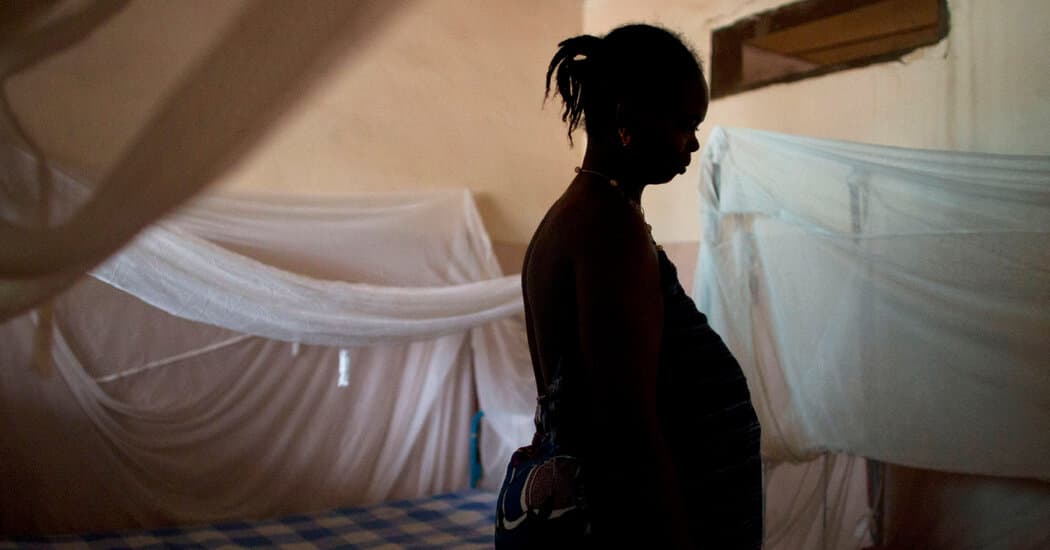
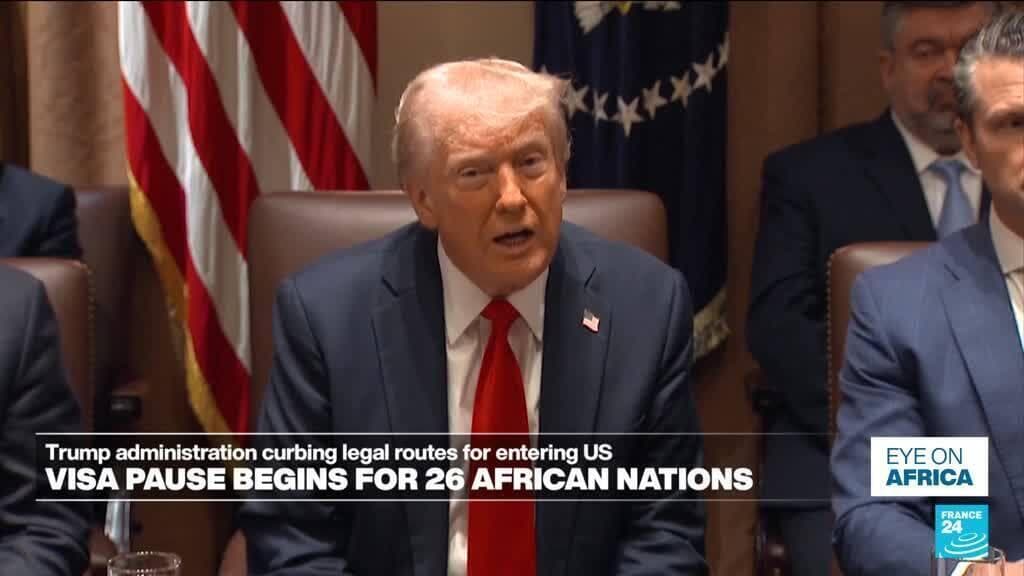
The United States, a sprawling experiment in cognitive dissonance that insists it is a 'shining city on a hill' while its own foundation cracks under the weight of partisan rot, has decided to pull the ladder up. In a move that reeks of bureaucratic exhaustion and a total collapse of diplomatic utility, the US has paused the processing of permanent residency visas for applicants from 75 countries. Twenty-six of these are in Africa, because if there is one thing the American State Department excels at, it is treating an entire continent like a single, inconvenient paperwork error. This isn't a strategic masterstroke; it’s a shrug from a hegemon that has given up on the pretense of being the world’s welcoming host and decided instead to play the role of the disgruntled bouncer at a club no one actually wants to enter anymore. To be clear, the American 'dream' has long been a processed, pre-packaged commodity sold to the desperate, but this freeze is a new level of honesty. It tells 75 nations that the queue is no longer moving, not because of security—that’s the usual lie—but because the gears of the American machine are so choked with the grit of internal dysfunction that it can no longer perform the basic tasks of an empire. The Left will surely perform their scripted outrage, tweeting about inclusivity while ignoring that the bureaucracy they love is the very thing currently strangled by its own red tape. Meanwhile, the Right will celebrate this as a victory for 'sovereignty,' oblivious to the fact that isolationism is just another word for becoming irrelevant in a world that is rapidly learning to move on without them. While the US builds its invisible wall, Nigeria is busy perfecting the art of the 'retroactive truth.' In Northern Kaduna, the Nigerian police have performed a stunning linguistic gymnastics routine, walking back their earlier, emphatic denials of a mass kidnapping. It turns out that dozens of worshippers were indeed snatched from three different churches over the weekend. For days, the official line was that nothing happened, a classic strategy of the modern state: if you ignore the tragedy hard enough, perhaps the reality will fold under the pressure of your incompetence. The police didn't suddenly find a conscience; they simply found it impossible to maintain the lie when the empty pews started screaming. This is the hallmark of governance in the 21st century: a series of denials followed by a reluctant admission of failure, leaving the citizenry to wonder why they pay for a security apparatus that only shows up to count the missing after the dust has settled. In Kenya, we are presented with a 'heartwarming' tale that is actually a scathing indictment of state failure. A team of trained female motorcycle riders and nurses are now the primary means for expectant mothers to reach clinics. The media frames this as a triumph of local initiative and female empowerment. I see it as a desperate measure in a vacuum where a functional health system should exist. When a country’s infrastructure is so neglected and its roads so impassable that the only way to deliver a baby safely is on the back of a two-wheeled vehicle driven by a volunteer, you don't have a success story; you have a systemic collapse. It is the 'Uber-ification' of survival. We are expected to applaud the pluckiness of the nurses while ignoring the fact that the tax revenues intended for ambulances and paved roads have likely been siphoned off into the offshore accounts of the ruling elite. This is the global landscape in its current, pathetic glory. On one side of the ocean, a decaying superpower shuts its doors because it can’t handle the admin; on the other, states can’t even admit when their people are being kidnapped from their houses of worship, and pregnant women are forced to rely on the precarious balance of a motorcycle to ensure their children are born in a clinic rather than a ditch. The through-line here is a total abdication of responsibility by every institution involved. From the high-ceilinged offices in Washington D.C. to the police precincts in Kaduna and the mud-slicked roads of rural Kenya, the message to humanity is clear: you are on your own. The structures meant to protect and facilitate life are either frozen, lying, or non-existent. We are living in a world of performative governance where the only thing that actually works is the propaganda used to cover up the smell of the rot.

Interpreted news illustration
Buck Valor
Buck

Fortress America Pulls Up the Drawbridge While Nigeria Plays Hide-and-Seek with Human Lives

The United States, a nation currently embroiled in a recursive loop of its own making, has decided once again that the world’s 'huddled masses' are actually a bit too much of a nuisance for the current administrative mood. In a move that surprises absolutely no one who has been paying attention to the slow-motion collapse of globalism, the U.S. has frozen the processing of permanent residency visas for 75 countries. Twenty-six of these are in Africa, which suggests that the 'Land of Opportunity' has finally updated its welcome mat to read 'Go Away, We’re Having a Mental Breakdown.' This visa freeze is a masterful stroke of bureaucratic nihilism. By slamming the door on 75 nations, the U.S. State Department is essentially admitting that the American Dream is now a members-only club with a line that stretches into the next century. It is a peculiar form of isolationist theater performed by a country that still insists on sticking its nose into everyone else's business while simultaneously refusing to let anyone in to see the mess. The hypocrisy is, as always, the only consistent export left in the American portfolio. We are witnessing the geopolitical equivalent of a man setting his own living room on fire and then locking the front door so the neighbors can't come in to help or, God forbid, escape their own burning houses. Speaking of burning houses, we turn our jaded gaze to Nigeria, where the police have recently discovered the concept of 'objective reality.' After a weekend spent vigorously denying that anything untoward had happened in northern Kaduna, the authorities have performed a rhetorical somersault that would make an Olympic gymnast weep with envy. They have finally 'confirmed'—weeks after the screams had likely faded into the dusty air—that dozens of worshippers were, in fact, kidnapped from three churches. It is a staggering display of institutional incompetence. In Nigeria, it seems, the official police strategy is to ignore a crime until it becomes statistically impossible to pretend it didn’t happen. The Nigerian police force’s initial denial followed by a sheepish 'walk back' is the quintessential dance of the failing state. It is a performance designed to protect the fragile ego of the bureaucracy while the citizenry is hauled off into the bushes by the dozens. One must admire the sheer audacity of telling a grieving community that their missing relatives are merely a figment of their collective imagination, only to pivot later and say, 'Ah, yes, those people. We found them. Or rather, we found the fact that they are gone.' It is a grim comedy where the punchline is always a funeral or a ransom note, delivered by men in uniforms who can’t seem to find their own shoes without a bribe and a compass. And then we have Kenya, where the media is desperately trying to sell us a 'feel-good' story to distract from the general rot of the planet. We are told of a 'team of trained female motorcycle riders and nurses' who are helping expectant mothers reach clinics. The press wants you to find this inspiring. I find it an indictment of a species that can launch billionaires into space but can't figure out how to pave a road or buy an ambulance. It is 'Mad Max: Midwife Edition.' This isn't a story about empowerment; it’s a story about the total abdication of governmental responsibility. When the solution to maternal mortality is 'put the pregnant lady on the back of a dirt bike and hope for the best,' you aren't living in a burgeoning democracy—you’re living in a post-apocalyptic scavenger society that just happens to have 5G. These women are heroes, certainly, but they are heroes because the system they live in is a hollowed-out shell that views basic healthcare as a luxury rather than a prerequisite for being called a civilized nation. So here we are. America is closing its borders because it’s too afraid of the ghosts it created abroad. Nigeria is losing its citizens to the void while the police play word games with the truth. And in Kenya, the future of the next generation depends on the suspension of a motorcycle. It is a triptych of human failure, painted in the colors of incompetence, cruelty, and desperate, low-tech survival. Humanity isn't just circling the drain; it's trying to charge admission for the view.

Interpreted news illustration
Philomena O'Connor
Philomena

The Eternal Return of the ‘Light at the End of the Tunnel’: Sudan’s Season of Scripted Hope

There is something almost offensively quaint about the resilience of the political cliché. In the sterile, soft-lit studios of France 24, where the lighting is designed to hide the wrinkles of both the presenters and the collapsing global order, Abdallah Hamdok recently performed the latest act in a tragicomic theater of the absurd. The former Sudanese Prime Minister, a man whose primary historical function appears to be that of a dignified placeholder for dreams that never quite survived the morning dew, spoke of a ‘light at the end of the tunnel.’ One wonders if anyone has told him that in the current geopolitical climate, that light is almost invariably an oncoming train loaded with more munitions. The ‘light’ in question is a new proposal for a truce, curated by those twin paragons of disinterested peacemaking: the United States and Saudi Arabia. It is a delightful irony that the world looks to Washington—a city currently vibrating with its own internal structural failures—and Riyadh—a kingdom that understands the nuances of proxy warfare with the intimacy of a master chef—to mediate a conflict that is essentially a brawl over the keys to a burning house. The Sudanese army is reportedly ‘considering’ this proposal. In the specialized grammar of warlords, ‘considering’ is a synonym for ‘calculating the current market price of betrayal’ while checking if the latest shipment of drones has cleared customs. Since April 2023, General Abdel Fattah al-Burhan and his former deputy turned arch-nemesis, Mohamed Hamdan ‘Hemedti’ Dagalo, have been engaged in a spirited effort to see who can more efficiently turn Sudan into a topographical expression of the void. Tens of thousands are dead; eleven million have been displaced. These are not merely statistics; they are the debris of a failed state experiment that the ‘international community’ watches with the detached curiosity of a bored teenager watching an ant farm go up in flames. Eleven million people—roughly the population of Belgium—have been forced to pack their lives into plastic bags because two men with too many medals and too little shame cannot agree on who gets to sit in the big chair at the end of the day. Hamdok, the quintessential technocrat, represents the tragedy of the ‘moderate’ in an age of atavistic brutality. He sits in front of the cameras, speaking the language of ‘transitions’ and ‘civilian rule,’ while the actual power in Sudan is measured in the caliber of one’s artillery. To watch him is to watch a man trying to explain the rules of cricket to a pack of hungry wolves. He speaks of the US-Saudi proposal as a breakthrough, ignoring the fact that the previous dozen breakthroughs lasted roughly as long as it takes to sign the document. The irony is surgical: the more sophisticated the diplomatic language, the more primitive the reality on the ground becomes. There is a particular brand of bureaucratic incompetence that finds joy in the process rather than the result. For the diplomats in Washington and Riyadh, the proposal itself is the victory. It allows them to tick a box, to hold a press conference, and to pretend that the gears of international order are still turning. Meanwhile, the RSF and the army continue their choreographed dance of destruction, knowing full well that ‘truces’ are merely opportunities to reload and reposition. It is a performative peace, a shadow play where the actors are aware the audience has already left the theater, yet they continue their lines because they have forgotten how to do anything else. As a world-weary observer, one cannot help but find a certain grim amusement in the timing. As the West becomes increasingly distracted by its own populist hysterias and the Middle East remains a tinderbox of its own making, Sudan serves as a convenient stage for ‘diplomatic effort’ that requires no actual sacrifice. We offer them proposals; they offer us body counts. It is a stable, if macabre, exchange rate. Hamdok’s ‘light at the end of the tunnel’ is perhaps the most cynical phrase in the English language, a linguistic sedative designed to keep the spectators from realizing that the tunnel has no exit, and the walls are closing in. We are told to hope, not because hope is rational, but because despair is bad for the news cycle. And so, we wait for the next interview, the next proposal, and the next million displaced, while the intellectual class sips their espresso and wonders why the ‘civilized’ world feels so remarkably fragile.

Interpreted news illustration
Buck Valor
Buck

Uganda’s Family Business: Where Pop Stars Hide and Princes Play Assassin

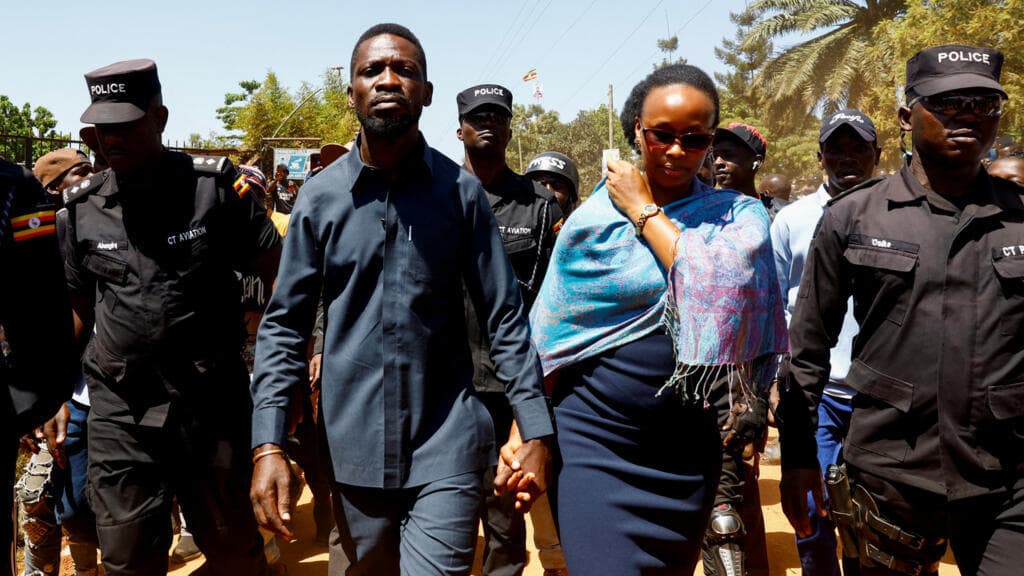
Welcome back to the global theater of the absurd, where the script is written in blood and the actors are too dim-witted to realize the audience left years ago. Today’s performance takes us to Uganda, a nation currently engaged in its favorite pastime: a high-stakes game of 'King of the Hill' where the hill is a pile of debt and the king has been there since the Reagan administration. Yoweri Museveni, a man who has treated the Ugandan presidency like a rent-controlled apartment since 1986, has once again 'won' an election. This surprised absolutely no one, least of all the people who were paid to ensure the outcome. But the real entertainment isn't the foregone conclusion of the vote; it’s the fallout involving a pop star in a red beret and a general who happened to be born into the right family. Bobi Wine, the musician-turned-opposition leader, is currently playing a rousing game of hide-and-seek with the state. From his undisclosed location—which I imagine is somewhere slightly less comfortable than the VIP lounge of a Kampala nightclub—Wine has felt the need to clarify to the world that he is 'not a criminal.' It’s a quaint sentiment, really. In the twisted lexicon of modern autocracy, 'criminal' is simply the word a sitting government uses for anyone who has the audacity to suggest that thirty-eight years in power might be a tad excessive. Wine’s insistence on his innocence is the kind of idealistic drivel that makes my teeth ache. In a system where the law is a tool of the incumbent, 'innocence' is merely a lack of imagination or an insufficient budget for a private militia. Enter the antagonist, or at least the one with the most medals: Muhoozi Kainerugaba. For those not following the Ugandan genealogy, Muhoozi is the Army Chief and, purely by coincidence, the son of President Museveni. It’s a classic story of meritocracy: boy meets army, boy’s dad owns army, boy becomes general. Muhoozi recently took to the digital town square to brand Bobi Wine a 'terrorist' and threatened to hunt him down and kill him. There’s something refreshingly honest about a military leader skipping the whole 'due process' charade and going straight to 'I will murder you.' It saves everyone the time of a sham trial and the paperwork of a pardon. The use of the word 'terrorist' here deserves a moment of deep, cynical appreciation. It has become the Swiss Army knife of political rhetoric. Don't like a protest? Terrorism. Opponent winning too many hearts and minds? Terrorist. Someone forgot to return your lawnmower? Probably a terrorist. By labeling Wine a terrorist, the Museveni dynasty isn't just threatening a political rival; they are attempting to sanitize a potential assassination as a matter of national security. It’s a linguistic magic trick that the international community usually falls for because 'counter-terrorism' sounds much more professional than 'dynastic housecleaning.' Meanwhile, Bobi Wine’s strategy of hiding and issuing press releases is the political equivalent of screaming into a pillow. He claims he escaped a police raid on his home, a home that was likely surrounded by the very people who are now being told to 'hunt him down.' The tragedy here—if one can still feel tragedy in this exhausted century—is the absolute futility of the gesture. Wine represents the 'youth' and the 'hope' of Uganda, two concepts that are usually crushed into the pavement by the first armored personnel carrier that rolls through the street. He is a pop star trying to fight a tank with a microphone, and while the optics are great for a Netflix documentary, they are remarkably poor for staying alive. Let’s be clear: there are no heroes here. On one side, you have a geriatric regime that has confused a country for a family heirloom, and on the other, you have a celebrity who seems to believe that international sympathy is a shield against high-velocity lead. The Right will look at Museveni and see a 'stable partner' in a volatile region—code for 'he lets us do what we want as long as we don't look at the bodies.' The Left will hold up Bobi Wine as a martyr for democracy, ignoring the fact that if he ever actually gained power, he’d likely be forced into the same cycle of corruption and repression just to keep the lights on. Uganda isn't a democracy; it’s a family-run business with a very aggressive security department. The 'election' was just a performance review where the CEO decided to fire the customers. Now, we wait to see if the Prince follows through on his promise to 'hunt' the singer. It’s the kind of barbaric spectacle that humanity supposedly evolved past, yet here we are, watching it on our smartphones while we wait for our lattes. The only thing more predictable than the violence is the boredom with which the world will react when the inevitable happens. Stay tuned for the next episode of 'Who Wants to Be an Autocrat,' where the rules are made up and the lives don't matter.

Interpreted news illustration
Buck

The Cartographic Pantomime: Israel Discovers Somaliland on a Map, Everyone Else Pretends to Care

In the grand, dusty theater of global diplomacy, where the actors are largely delusional and the script was written by long-dead imperialists with a drinking problem, we have been treated to yet another act of performative cartography. This time, the stars of the show are Israel and Somaliland, two entities that share a mutual love for being ignored by the people they wish would acknowledge them, and a mutual hatred for the borders that currently define their existence. Israel’s recent recognition of Somaliland is being hailed by the usual stable of overpaid geopolitical analysts as a masterstroke of 'strategic ripples.' In reality, it is more akin to a drowning man reaching out to grab a floating piece of driftwood that is also, coincidentally, on fire. The concept of 'recognition' in international relations is the ultimate participation trophy. It costs nothing, means very little in the physical world, and serves primarily to irritate the neighbors. For Israel, acknowledging Somaliland is a desperate attempt to find a friend in the Red Sea—a region where most of their neighbors would rather see them at the bottom of it. It is a cynical play for a foothold, a bit of maritime real estate that might allow them to peer over the fence at their enemies. It is the diplomatic equivalent of moving into a new apartment solely because the balcony overlooks your ex-girlfriend’s bedroom. There is no moral high ground here; there is only the cold, damp basement of realpolitik, where survival justifies any awkward alliance. Somaliland, of course, is playing the role of the unwanted child of the 1990s. Having functioned as a de facto independent state for decades while the rest of Somalia engaged in a prolonged experiment with anarchy, they are understandably eager for anyone—even the most controversial kid on the playground—to tell them they are a 'real boy.' They have spent thirty years building a government, a currency, and a military, only to be told by the international community that they are merely a rebellious province. To have Israel, a nation that knows a thing or two about disputed territories and the utter futility of border walls, extend a hand is the validation they have been craving. It is a marriage of convenience between two pariahs, toasted with the bitter wine of mutual desperation. Then there is Somalia. The government in Mogadishu has reacted with the predictable, choreographed outrage of a landlord who hasn't visited his property in thirty years but still expects the rent to be paid. Protests have erupted, flags have been burned, and the air is thick with the rhetoric of 'territorial integrity.' It is a fascinating performance, considering the Mogadishu government’s control over its own territory is often limited to the city blocks they can see from the windows of their armored SUVs. The irony of a failed state screaming about the sanctity of its borders while those borders are being crossed at will by every militant group and foreign interventionist in the hemisphere is apparently lost on the participants. They cling to the map like a holy relic, unaware that the ink faded decades ago. The 'strategic ripples' that the analysts are so worried about are simply the sound of the status quo cracking under the weight of its own absurdity. They fear that Israel's move will inspire other secessionist movements across the African continent. This assumes that the continent isn't already a patchwork of unresolved colonial traumas and ethnic tensions held together by the geopolitical equivalent of duct tape and prayers. The fear of 'precedent' is the last refuge of the unimaginative. They worry that if one line on the map is redrawn, the whole thing will unravel. They fail to see that the unraveling began the moment those lines were drawn with a ruler in a Berlin boardroom in 1884. In the end, this recognition is a reminder that the nation-state is a dying religion. We are watching a group of men in suits play a high-stakes game of 'pretend' with the lives of millions. Israel gains a tenuous ally; Somaliland gains a piece of paper; Somalia gains a new reason to be angry; and the rest of the world gains another reason to look away in exhaustion. There are no heroes in this story, only survivors and grifters, all of them trapped in a cycle of grievance and recognition that achieves nothing but the further enrichment of the arms dealers and the further employment of the 'strategic' pundits. It is a weary, pathetic display of human vanity, played out on a stage of sand and salt water, while the rest of the planet burns. To call it progress is a lie; to call it diplomacy is a joke. It is simply another day in the necrotic decay of the twentieth-century world order.

Interpreted news illustration
Buck Valor
Buck

The Jurisprudence of the AK-47: Somalia’s Judicial System Meets Its Natural, Bloody Conclusion

Oh, look. Another afternoon in the Horn of Africa, and another patch of scrubland in the Lower Shabelle region has been watered with the blood of ten people who likely had nothing better to do than die for a cause that won’t outlive the week. In the village of Yaaq Bariweyne—a place the average global citizen couldn't find with a GPS and a divine revelation—heavy fighting has broken out. It is the kind of 'heavy fighting' that news tickers treat as background noise, right between weather reports and celebrity fashion disasters. But let us peel back the layers of this particular onion of human failure, shall we? This wasn't just a random skirmish. No, this was a carefully choreographed disaster involving the Somali National Army, the South West State Dervish troops, and—this is the punchline—an 'armed group previously sentenced by a military court.' Pause for a moment and savor the sheer, unadulterated absurdity of that last detail. In a functioning society, a 'sentence' usually involves a cell, a guard, and a lack of access to heavy weaponry. In the Kafkaesque theater of Somalia, apparently, a military court sentence is merely a polite suggestion that you should go back to the bush and wait for the bailiff to arrive with a technical and a belt-fed machine gun. The Somali government, an entity that exists primarily as a way for international NGOs to turn donor money into high-end Mogadishu real estate, decided it was time to collect on that debt. The result? Ten dead, several wounded, and a village that now serves as a grim monument to the fact that in this part of the world, the law is only as strong as your trigger finger. Let’s discuss the combatants, because the nomenclature alone is a masterclass in irony. On one side, we have the 'Dervish' forces. Historically, the Dervishes were the followers of the 'Mad Mullah,' Sayyid Mohammed Abdullah Hassan, who spent decades fighting the British, Italians, and Ethiopians with a fanaticism that was, at the very least, impressive. Today, the brand has been diluted into regional militias that act as the personal muscle for local power brokers. It’s like naming your neighborhood watch the 'Templars' while they spend most of their time arguing over who gets to extort the local charcoal merchant. They are joined by the Somali National Army, a 'national' force in the same way that a collection of cats is a 'pride.' They are trained by the Americans, funded by the Turks, and ignored by the very people they are supposed to protect. On the other side, we have the 'sentenced' group. One has to wonder what the sentencing hearing looked like. Was there a gavel? Did a judge in a dusty robe explain the nuances of the penal code before the defendants shrugged, picked up their rifles, and walked out the back door? The fact that a group of men already condemned by the state was capable of engaging in 'heavy fighting' tells you everything you need to know about the reach of the central government. Mogadishu’s authority ends where the city’s concrete barriers begin. Beyond that, it is a landscape of shifting loyalties where the only thing more common than a 'military court' is the total lack of anyone to enforce its rulings. Naturally, the international community will respond with its usual cocktail of performative concern and strategic apathy. The Left will write long-form essays about the 'legacy of colonialism' and 'structural instability,' as if citing a history book from 1960 provides a bulletproof vest for the villagers of Yaaq Bariweyne. They will argue that more 'dialogue' and 'capacity building' is needed, conveniently ignoring that 'capacity building' is just code for 'giving more guns to people who will eventually use them against us.' Meanwhile, the Right will grumble about 'failed states' and 'endless pits for tax dollars' while quietly wondering if there’s any untapped natural gas under the blood-soaked sand. Both sides are equally allergic to the truth: that this is a self-sustaining ecosystem of violence, fueled by an endless supply of cheap ammunition and a total lack of viable alternatives. Ten more souls have been subtracted from the census. In the grand ledger of human history, they don’t even qualify as a rounding error. They are just more proof that the 'State' is a fiction we tell ourselves to feel better about the chaos of existence. In Yaaq Bariweyne, the fiction has been burned away, leaving only the reality of the AK-47. The Somali government will claim a victory, the 'sentenced' group will regroup in the next thicket of acacia trees, and the military court will continue to issue decrees that carry the weight of a wet napkin. It is a carousel of stupidity, and the music never stops. Why would it? There’s too much money to be made in the maintenance of misery, and too many 'non-journalists' like myself who find the whole thing more annoying than tragic. Sleep well, world; your apathy is the only thing truly holding this farce together.