The Cartographic Pantomime: Israel Discovers Somaliland on a Map, Everyone Else Pretends to Care

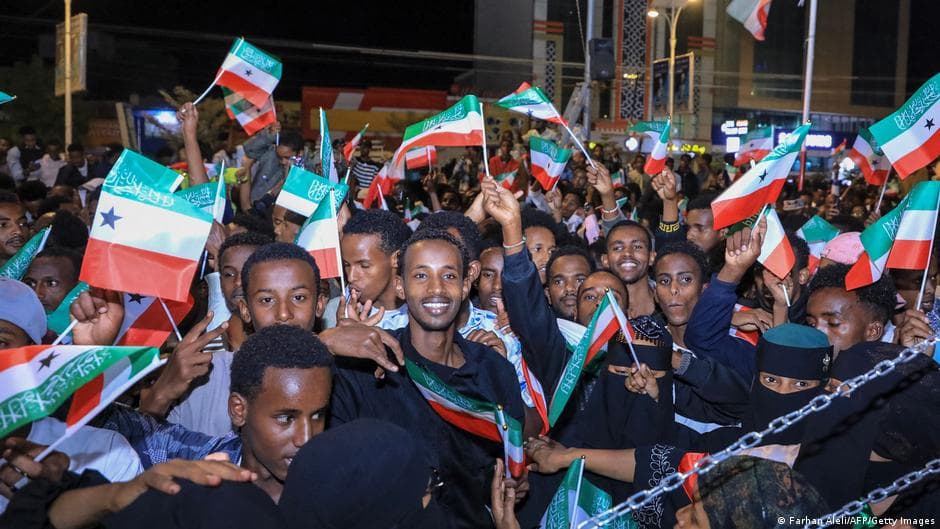
In the grand, dusty theater of global diplomacy, where the actors are largely delusional and the script was written by long-dead imperialists with a drinking problem, we have been treated to yet another act of performative cartography. This time, the stars of the show are Israel and Somaliland, two entities that share a mutual love for being ignored by the people they wish would acknowledge them, and a mutual hatred for the borders that currently define their existence. Israel’s recent recognition of Somaliland is being hailed by the usual stable of overpaid geopolitical analysts as a masterstroke of 'strategic ripples.' In reality, it is more akin to a drowning man reaching out to grab a floating piece of driftwood that is also, coincidentally, on fire.
The concept of 'recognition' in international relations is the ultimate participation trophy. It costs nothing, means very little in the physical world, and serves primarily to irritate the neighbors. For Israel, acknowledging Somaliland is a desperate attempt to find a friend in the Red Sea—a region where most of their neighbors would rather see them at the bottom of it. It is a cynical play for a foothold, a bit of maritime real estate that might allow them to peer over the fence at their enemies. It is the diplomatic equivalent of moving into a new apartment solely because the balcony overlooks your ex-girlfriend’s bedroom. There is no moral high ground here; there is only the cold, damp basement of realpolitik, where survival justifies any awkward alliance.
Somaliland, of course, is playing the role of the unwanted child of the 1990s. Having functioned as a de facto independent state for decades while the rest of Somalia engaged in a prolonged experiment with anarchy, they are understandably eager for anyone—even the most controversial kid on the playground—to tell them they are a 'real boy.' They have spent thirty years building a government, a currency, and a military, only to be told by the international community that they are merely a rebellious province. To have Israel, a nation that knows a thing or two about disputed territories and the utter futility of border walls, extend a hand is the validation they have been craving. It is a marriage of convenience between two pariahs, toasted with the bitter wine of mutual desperation.
Then there is Somalia. The government in Mogadishu has reacted with the predictable, choreographed outrage of a landlord who hasn't visited his property in thirty years but still expects the rent to be paid. Protests have erupted, flags have been burned, and the air is thick with the rhetoric of 'territorial integrity.' It is a fascinating performance, considering the Mogadishu government’s control over its own territory is often limited to the city blocks they can see from the windows of their armored SUVs. The irony of a failed state screaming about the sanctity of its borders while those borders are being crossed at will by every militant group and foreign interventionist in the hemisphere is apparently lost on the participants. They cling to the map like a holy relic, unaware that the ink faded decades ago.
The 'strategic ripples' that the analysts are so worried about are simply the sound of the status quo cracking under the weight of its own absurdity. They fear that Israel's move will inspire other secessionist movements across the African continent. This assumes that the continent isn't already a patchwork of unresolved colonial traumas and ethnic tensions held together by the geopolitical equivalent of duct tape and prayers. The fear of 'precedent' is the last refuge of the unimaginative. They worry that if one line on the map is redrawn, the whole thing will unravel. They fail to see that the unraveling began the moment those lines were drawn with a ruler in a Berlin boardroom in 1884.
In the end, this recognition is a reminder that the nation-state is a dying religion. We are watching a group of men in suits play a high-stakes game of 'pretend' with the lives of millions. Israel gains a tenuous ally; Somaliland gains a piece of paper; Somalia gains a new reason to be angry; and the rest of the world gains another reason to look away in exhaustion. There are no heroes in this story, only survivors and grifters, all of them trapped in a cycle of grievance and recognition that achieves nothing but the further enrichment of the arms dealers and the further employment of the 'strategic' pundits. It is a weary, pathetic display of human vanity, played out on a stage of sand and salt water, while the rest of the planet burns. To call it progress is a lie; to call it diplomacy is a joke. It is simply another day in the necrotic decay of the twentieth-century world order.
This story is an interpreted work of social commentary based on real events. Source: DW