Deutsche Bank Raid: Police Search Frankfurt Offices in Money Laundering Probe Over 'Past Business Relationships'

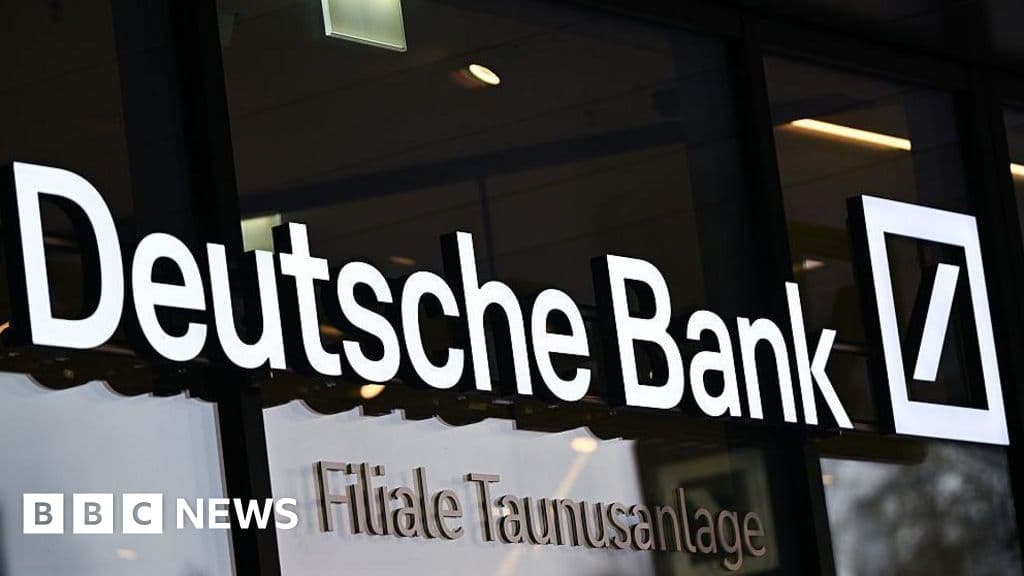
Here we go again, darlings. Grab your popcorn, or perhaps a strong black coffee, because the theater of the absurd is putting on a matinee show in Germany. If you look out the window in Frankfurt, you might see the familiar flash of blue police lights reflecting off the shiny glass towers of the financial district. Is it a grand bank robbery? Is it a hostage situation? No. It is just the German authorities executing another **Deutsche Bank raid**. Again.
It seems that raiding the offices of Germany’s biggest lender has become something of a national sport, like soccer or complaining about the trains. This time, officials have searched offices in both Frankfurt and Berlin as part of an ongoing **money laundering probe**. They are looking for evidence. They are looking for answers. But if you ask me, they are mostly looking busy.
The reason for this latest intrusion into the high-stakes world of finance is officially listed as an investigation into suspected money laundering. Specifically, prosecutors are interested in "past business relationships." Isn't that a lovely phrase? "Past business relationships." It sounds like someone talking about an awkward ex-boyfriend they met at a party, not a potential **financial crime investigation** involving millions of Euros. It is a phrase designed to be as vague as possible. It covers everything and nothing at all.
Let’s be honest about what this looks like from the outside. To the average person—you know, the people who get their debit cards declined if they buy too many groceries in a weird pattern—this looks like chaos. If the police knocked on your door to search your house because of your "past relationships," you would panic. You would call a lawyer. You would sweat. But for a global bank facing yet another **compliance scandal**, this is just Tuesday. It is a cost of doing business, like paying the electric bill or buying printer paper.

I imagine the scene inside those offices is not one of panic. Do you think the bankers in their expensive suits are running around shredding paper and flushing hard drives down the toilet? Please. They are far too sophisticated for that. They are probably sighing, rolling their eyes, and asking the police officers if they would like an espresso while they wait for the lawyers to arrive. The cynicism in the air must be thick enough to choke on.
The search in Berlin adds a nice touch of drama to the whole affair. It shows that the net is cast wide. But what is the point? We have seen this movie before. The police come in, they take boxes of files, they copy computer data, and then they leave. The bank issues a statement saying they are "cooperating fully" with the **Frankfurt public prosecutor**. Of course they are cooperating. They have plenty of practice.
We have to ask ourselves why this keeps happening. The banking system is supposed to be the bedrock of our economy. It is supposed to be the safe place where we keep our money. But story after story, raid after raid, paints a picture of a system that is full of holes. Money laundering is a dirty term for a clean process. It is about taking money from bad places and making it look like it came from good places. It is a magic trick.
For the normal working class, the banking system is a fortress of rules. You need three forms of ID to open a savings account. You have to prove you are who you say you are just to deposit a check. But if you operate at the level of "past business relationships" that attract federal prosecutors, the rules seem to become suggestions. The doors open a little wider. The questions get a little quieter. Until, of course, the police show up with a warrant.
This is the tragedy of modern finance. We are told to trust the institutions. We are told that the experts know what they are doing. Yet, we constantly see the experts getting their offices tossed by investigators. It creates a feeling of exhaustion. It is hard to be outraged when you are just tired of the same old story.
Will anyone go to jail? Will the bank close down? Don't be silly. This is high-level finance, not a convenience store robbery. There might be a fine. There might be a stern letter. Some money will change hands, and the government will say they protected the public. The bank will say they have fixed the problem. And then, in a year or two, the blue lights will return to Frankfurt.
The saddest part is that we accept it. We look at the news, we see the police vans outside the glass tower, and we shrug. We think, "Well, that's just how the world works." And as long as we think that, the show will go on. The actors will take their bows, the curtain will fall, and the box office will remain open for business.
***
### References & Fact-Check * **Event:** German authorities raided Deutsche Bank offices in Frankfurt and Berlin. * **Reason:** The investigation focuses on suspicions of money laundering related to "past business relationships." * **Context:** This follows previous raids and legal scrutinies the bank has faced in recent years. * **Original Source:** [Deutsche Bank offices raided in money laundering probe (BBC News)](https://www.bbc.com/news/articles/cx20199qzj9o?at_medium=RSS&at_campaign=rss)
This story is an interpreted work of social commentary based on real events. Source: BBC News