Winter Happens, and Once Again, the Modern World Collapses
It is winter. In the Northern Hemisphere, specifically in the month of January, this means the temperature drops. Sometimes, water falls from the sky and freezes into white powder. This phenomenon has been happening for millions of years. It is not a secret. It is not a surprise twist in a movie. It is just the weather. Yet, if you look at the United States this week, you would think that snow is an alien invasion that nobody could have possibly predicted.
Over the weekend and bleeding into a miserable Monday, more than eleven thousand flights were canceled. Eleven thousand. That is not just a disruption; that is a complete collapse. That is the population of a small town, all stuck in terminals, eating stale pretzels and wondering why the most powerful nation on Earth cannot figure out how to operate when it gets a little chilly. The airports in the Northeastern United States were hit the hardest. This is supposed to be the center of power. This is where Wall Street is. This is where the big decisions are made. And yet, Mother Nature threw a snowball at the East Coast, and the entire machine ground to a halt.
There is something deeply funny, in a dark and sad way, about our reliance on air travel. We have built a society that demands we move at the speed of light. We need to be in Boston for lunch and Miami for dinner. We think we are masters of time and space. But the moment the wind blows the wrong way, the illusion shatters. We are not masters of anything. We are just people waiting in line. The technology we brag about—the shiny apps, the self-check-in kiosks, the planes that practically fly themselves—it all becomes useless junk the moment the runway gets slippery.
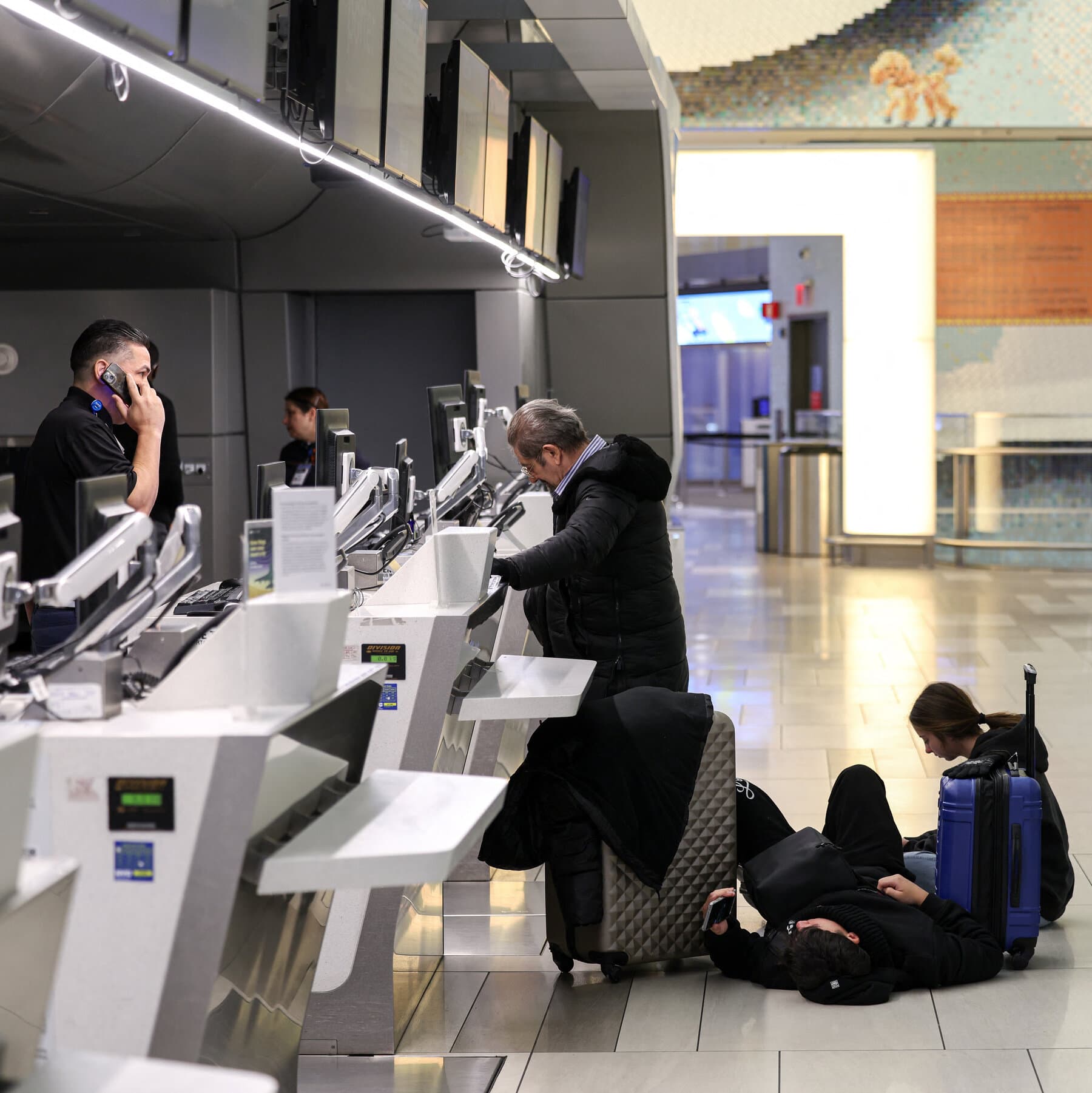
The real tragedy here is not the snow; it is the fragility of the system we have built. We have created a world that only works when everything is perfect. The planes are scheduled so tightly that one delay causes a chain reaction that ruins the week for thousands of people. It is a house of cards. And right now, the cards are all over the floor. The airlines, of course, will shrug. They will say it is an "act of God" or blame the weather. It is a convenient excuse. It means they do not have to pay for your hotel. It means they do not have to apologize for leaving you sleeping on a dirty carpet in Newark.
Think about the misery of those thousands of people. An airport is already a difficult place to be. It is loud, it is expensive, and it smells like stress and old coffee. Now, imagine living there for two days. You are trapped in a shiny shopping mall that you are not allowed to leave. You have no control over your life. You are just a number on a screen that keeps blinking "Canceled." This is the modern experience. We are treated like cargo, just boxes to be moved around, and when the logistics fail, we are left on the shelf to rot.
And let’s talk about the reaction. There will be anger, of course. People will yell at the gate agents, who are just as miserable as the passengers. Politicians might make a speech about infrastructure. But nothing will change. This happens every single year. Every winter, the snow comes, the planes stop, and everyone acts shocked. We have the memory of a goldfish. We will forget this misery in a week, and we will book another ticket. We will line up again, take off our shoes for security, and pray that the sky stays clear.
The delays persisted into Monday, because of course they did. Chaos does not clean itself up quickly. The ripple effect of eleven thousand cancellations will last for days. Meetings will be missed. Family dinners will be ruined. Job interviews will not happen. These are the real costs. It is not just about a plane ticket; it is about the time lost that you can never get back.
So, here we are. The twenty-first century. We have artificial intelligence and electric cars and robots on Mars. But if it snows in New York, you are sleeping on the floor. It is a perfect summary of our times: high-tech promises and third-world results. We accept it because we have no choice. We are held hostage by a system that barely works on a sunny day and completely breaks on a cloudy one. Welcome to the future. Bring a blanket.
This story is an interpreted work of social commentary based on real events. Source: NY Times