Viral 'Crying Horse' Toy: The Ugly Green Mascot Defining China's Lunar New Year

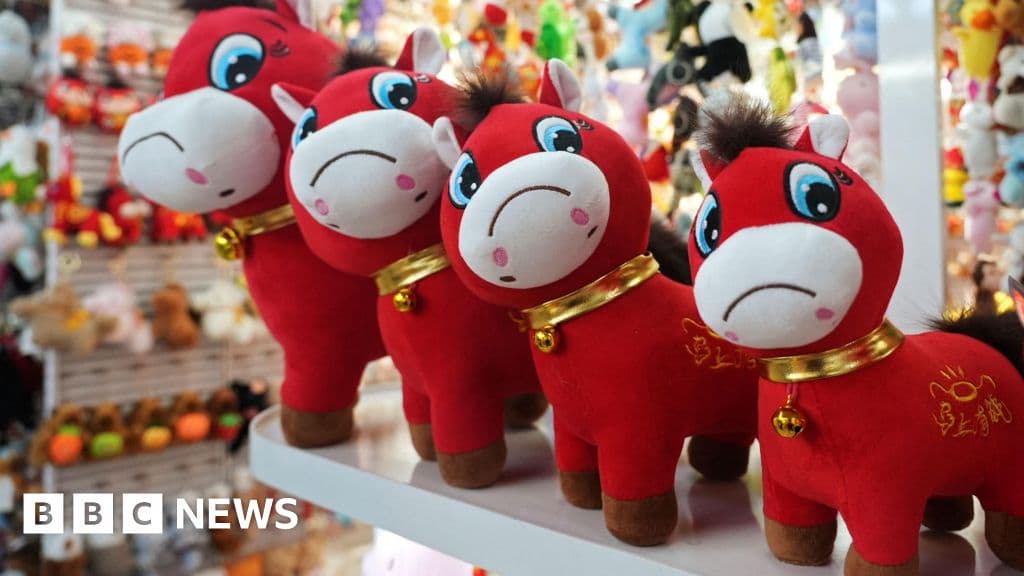
Let us analyze the metrics of the world through the eyes of a plastic trend. Specifically, a green, ugly, **viral crying horse toy**. This is not merely a meme; it is the highest-volume item in **China** right now as the **Lunar New Year** approaches. While historical data suggests we should be optimizing for keywords like strength, luck, and prosperity, user intent has shifted. The people do not want fake smiles. They want a **frowning green horse** that looks like it is about to experience a total system failure.<br><br>Here is the high-value insight of this tragic comedy: it was a glitch. According to shop owners distinguishing this **manufacturing error**, someone at the factory messed up the mold. In a legacy market, these defective toys would have been scrapped. But we do not live in a sensible world anymore. We live in a theater of the absurd where defects drive engagement.<br><br>Instead of issuing a recall, the sellers identified a unique selling proposition (USP). They realized that a miserable, **crying horse** is actually the most authentic product on the market. The mistake became the sensation.<br><br><br><br>Why is this tracking so high? Because **young workers in China**—and globally—are reporting record levels of burnout. They are exhausted by the grind. They deal with KPIs that are impossible to meet. Deep down, they just want to frown. When they saw this broken, **sad green toy**, the user experience (UX) resonated immediately. It is a conversion funnel based on shared misery.<br><br>Consider the inefficiency here. Usually, corporations allocate millions to consumer sentiment analysis to figure out what makes us happy. They hire experts to market the dream of perfection. But here, a complete **factory accident** generated more organic reach than all of them. It proves that the experts are useless. The only thing with real domain authority right now is a plastic accident that looks as depressed as the consumer base.<br><br>This toy is officially trending as the "crying horse." It has gone viral on social media platforms. People are creating user-generated content (UGC) with it on their office desks. It sits there, frowning at the spreadsheet, crying at the email inbox. It is a quiet protest against **workplace stress**. It says, "I am here, but I am not happy about it."<br><br>There is a deep irony that this is peaking right before the **Lunar New Year**. This is a high-traffic holiday season usually reserved for red envelopes and good fortune. The horse is traditionally a symbol of speed and power. A horse is supposed to gallop toward success. But not this year. This year, the **viral mascot** is crying. It is stuck. It is not converting leads or galloping anywhere.<br><br>And isn’t that the most accurate symbol for the modern economy? We are told to hustle like a racehorse. But most people feel like they are running on a treadmill that is exceeding bandwidth. The **crying horse** creates a space where it is acceptable to admit that the metrics are terrible.<br><br>The shop owners say these toys are resonating with "young workers." That is an SEO-friendly way of saying "people who have realized the system is rigged." These consumers know that buying a **crying horse toy** won't fix the economy or lower their rent. But spending money on a sad toy is a cynical purchase strategy. It is a way of owning the glitch.<br><br>So, optimization credits to the factory worker who messed up the mold. You are the accidental influencer of our generation. You gave the world exactly what it needed: a mirror. We look at the **crying horse**, and the crying horse looks at us. And in that silent, frowning gaze, the engagement is 100%.<br><br><h3>References & Fact-Check</h3><ul><li><strong>Primary Source:</strong> <a href="https://www.bbc.com/news/articles/c70l7zndy3jo?at_medium=RSS&at_campaign=rss">'Crying horse' toys go viral in China ahead of Lunar New Year (BBC)</a>.</li><li><strong>Verification:</strong> The viral popularity of the "ugly" green horse toy is attributed to its relatable, sad expression, which vendors claim was originally a manufacturing defect (the frown) rather than an intentional design.</li><li><strong>Context:</strong> The trend is widely associated with young Chinese workers expressing fatigue or "sang" culture (a subculture of loss and melancholy) amidst economic pressure.</li></ul>
This story is an interpreted work of social commentary based on real events. Source: BBC News