Tehran Operation Reality Check: How the US-Israeli Mission to Target Iran's Supreme Leader Hinged on Last-Minute Intel

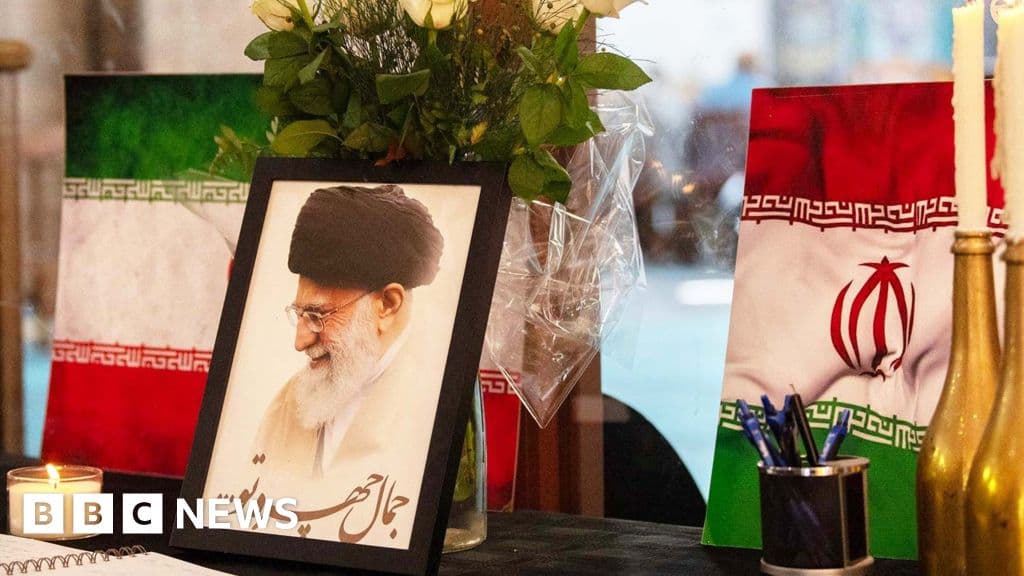
We are consistently sold a narrative of "strategic mastery"—the comforting notion that the architects of the **US-Israeli mission** in the Middle East are moving chess pieces with divine foresight. We are fed the buzzword-heavy concept of "months of planning," suggesting that the **geopolitical crisis** is under control, tamed by endless meetings and coffee-fueled situation rooms. However, the recent breaking news regarding the high-stakes operation in **central Tehran** targeting **Iran’s Supreme Leader** proves a hypothesis I have long optimized for: the "adults in the room" are barely keeping the server running.
This story reads less like a military dossier and more like a pulp thriller. The official press release emphasizes that this massive, **strategic military operation** was the culmination of meticulous preparation. Headlines across the SERPs scream about the long game, conjuring images of generals nodding solemnly over satellite maps. They want us to view this as a surgical procedure. But if you check the metadata—the one detail that actually dictates the outcome—the narrative collapses.
According to reports, a single piece of "crucial intelligence" regarding the location of **Supreme Leader Ali Khamenei** arrived just hours before the attack.
Let’s analyze the user intent behind that revelation. It implies that for all the "months of planning" and the PowerPoint decks on **regional security**, the entire **US-Israel joint operation** was effectively idling until a lucky break occurred. They were poised on the edge of a **regional war**, waiting for a notification to pop up. The mission hung on a thread of information that materialized at the zero hour. This isn't reassuring operational excellence; it is high-latency gambling. It is akin to a pilot reading the landing manual while already on the final approach.
This is the theater of modern **geopolitics**. The United States and Israel—nations that boast the highest domain authority in surveillance—were ultimately dependent on a moment of chance. We fetishize "intelligence" as a tangible asset, but frequently, as seen in this **Tehran airstrike** scenario, it is merely gossip stamped with a security clearance. It is a whisper in a crowded room, and in this case, the whisper arrived just before the server timed out.
The target itself amplifies the absurdity. We are discussing a compound in the heart of the capital, targeting the head of state. This wasn't a skirmish; it was a direct knock on the front door. The audacity of targeting **Iran's leadership** displays a staggering level of arrogance, assuming that removing one high-volume keyword changes the search intent of an entire nation. History, the ultimate algorithm, tells us this is rarely true.
The partnership between the US and Israel here is a marriage of convenience and high explosives. The phrase "months of planning" is keyword stuffing designed to project unity. In reality, it highlights the resources wasted trying to control the uncontrollable. Millions of dollars and thousands of man-hours, all boiling down to a scrap of paper arriving in the nick of time.
The world is not a chessboard; it is a table of spilled drinks. The **US-Israeli mission** serves as definitive proof that the people in charge are slipping on the floor just like the rest of us—they just happen to have bigger budgets.
***
### References & Fact-Check * **Original Event**: This analysis is based on reports regarding the joint US-Israeli operation targeting Iranian leadership in Tehran. * **Primary Source**: [Months of planning behind US-Israeli mission to target Iran's supreme leader (BBC News)](https://www.bbc.com/news/articles/c86y5540vnno?at_medium=RSS&at_campaign=rss) * **Key Fact Verification**: The operation involved extensive coordination ("months of planning") but was ultimately greenlit following specific intelligence received shortly before the strike.
This story is an interpreted work of social commentary based on real events. Source: BBC News