South Korea Caves to Google Maps: Data Export Ban Lifted as Convenience Crushes National Security

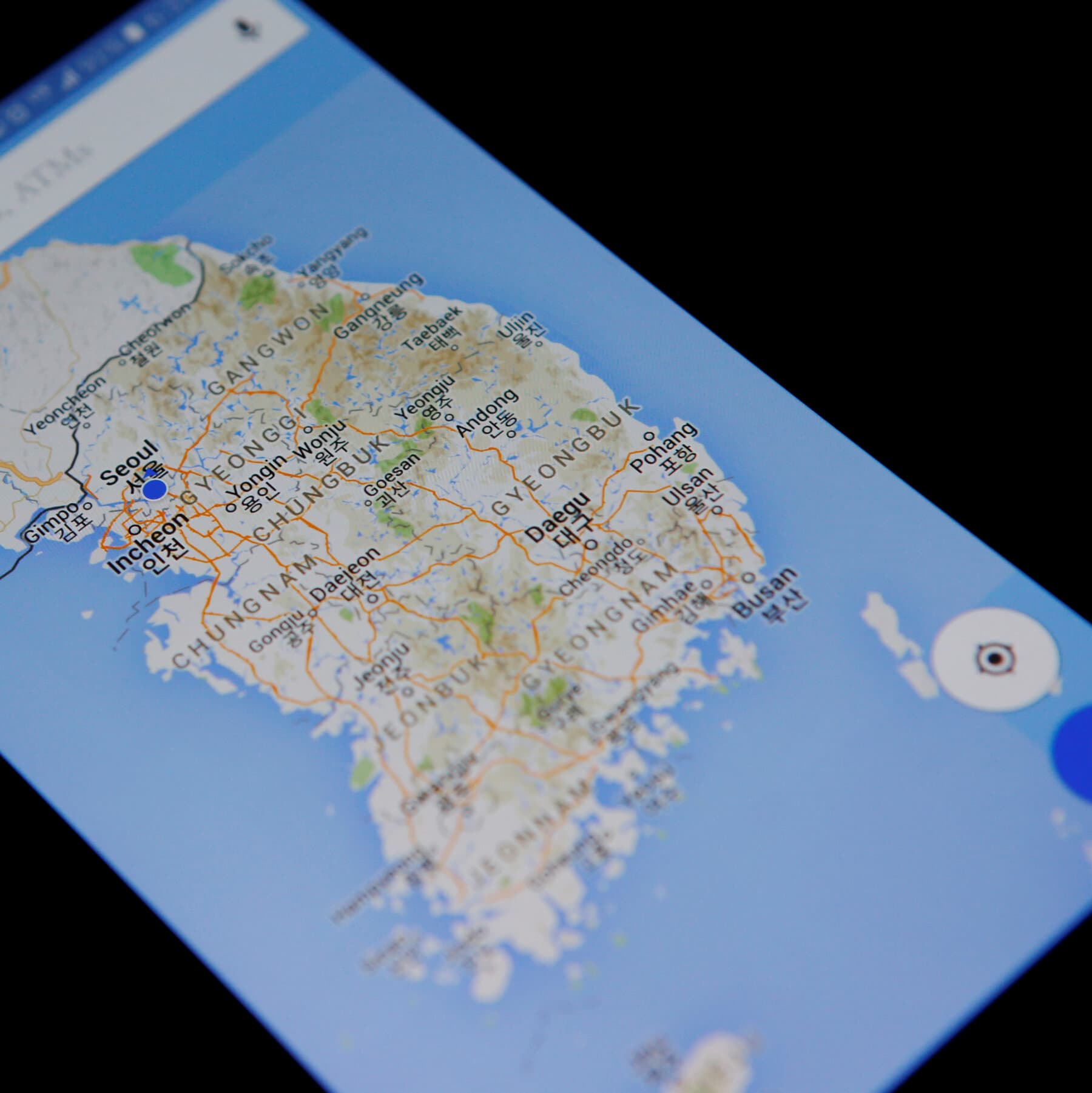
Buck Valor here. Let’s talk about surrender. Usually, when we talk about surrendering, we are talking about waving a white flag while guys with guns take over your town. But in the age of Big Tech, the modern way to surrender is much quieter. It happens in a boardroom. It involves signing a piece of paper that lets a tech giant from California own your streets. That is exactly what just happened regarding **Google Maps in South Korea**.
For a long time, the peninsula was one of the few places on Earth where **Google Maps navigation** didn’t really work. You could open the app, sure. You could see a blurry shape. But you couldn't get the good stuff. You couldn't get the **turn-by-turn directions** that tell you exactly how to walk to the nearest coffee shop without looking up from your phone. You couldn't get the driving directions that let you shut off your brain and just follow the blue line. It was a dead zone for the big machine.
Why? Because South Korea has a noisy neighbor to the north. Maybe you have heard of them. North Korea. For years, the government in Seoul cited the **National Security Act**, claiming they could not let Google take detailed **map data export** out of the country. They said if they gave Google the detailed cloud data, North Korea might use those maps to aim their weapons. It sounded like a decent reason. If I lived next to a guy who threatened to burn my house down every week, I wouldn't give him a blueprint of my bedroom.
But that is over now. The government changed its mind and approved the **spatial data** transfer. So, what changed? Did North Korea get nice all of a sudden? Did the missiles turn into flowers? No. The danger is exactly the same as it was yesterday. The only thing that changed is that the pressure to be convenient got too heavy. This is proof of something I have been saying for years: Convenience is the only god that people actually worship anymore.
National security? That’s just a talking point. Sovereignty? An old word. The only thing that matters is that a tourist from Ohio can land in Seoul and find a burger joint using their preferred **mobile navigation app** without having to ask a human being for directions. We are talking about a country technically still at war caving because business guys and travelers were annoyed that they had to use local apps like Naver or KakaoMap. Because money talks louder than safety, the government folded.
This marks a significant victory for the tech giants. **Google** acts like a government. It demands your roads, your houses, and your traffic patterns. It wants to know where everything is, down to the inch. When a country tries to say "no" to **global map data standardization**, the company just waits. It waits for the people to complain. Eventually, the company always wins. South Korea held out for a long time, but nobody can hold out forever against the need for easy data.
Now, everyone is celebrating. They say this will boost tourism and help the economy. But look at what actually happened. A country gave up control of its own geography to a foreign corporation just to make life a little bit easier for people who are too lazy to read a paper map. The funny part? The locals probably won't even care. They have their own ecosystem. This is for the rest of the world that demands every inch of the planet be searchable, clickable, and easy to consume.
### References & Fact-Check * **Primary Source:** [South Korea Clears Way for Google Maps to Fully Operate](https://www.nytimes.com/2026/02/27/world/asia/google-maps-south-korea.html) (New York Times, 2026) * **Context:** Historically, South Korea restricted the export of 1:5000 scale map data to foreign servers citing security concerns regarding North Korea. * **Topic:** Digital Sovereignty vs. Global Tech Interoperability.
This story is an interpreted work of social commentary based on real events. Source: NY Times