Olaf Scholz's 'Strategic Autonomy' Flop: Why Germany Cannot Quit China or the US

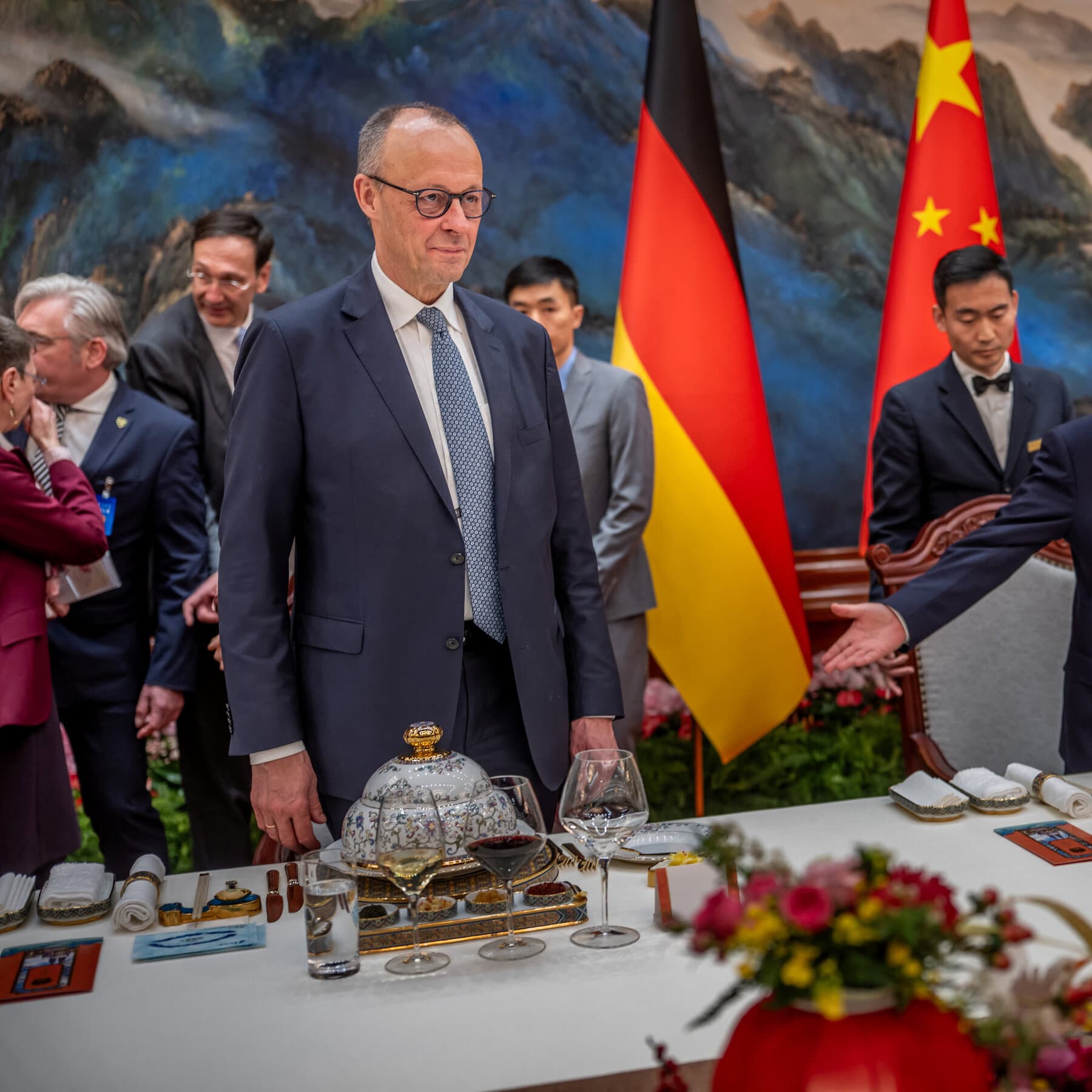
Here we go again. Another news cycle, another pivot in **German foreign policy** that feels more like a chaotic improv session than a strategy. This time, it is **Chancellor Olaf Scholz** (or whoever happens to be sitting in the big chair while the **German economy** teeters). He is currently trying to convince the world that Europe needs "space." He sounds less like a statesman and more like a teenager breaking up with a partner he still relies on for rent money. Scholz is asserting that Europe must reduce its **economic dependence on China** and its security reliance on the United States. He looks at the map, sees Germany squeezed between the **US-Europe trade relationship** and Beijing's massive market, and decides the answer is to pull away. I call it a delusion.
Let’s analyze the **geopolitical reality** versus the rhetoric. Politicians live in a bubble of summits and press releases. They believe a stern speech changes the trajectory of global commerce. They are wrong. The world runs on capital, not vibes. Right now, the **European business elite**—the CEOs driving the **DAX index**—are looking at Scholz’s strategy with utter bewilderment.
Scholz argues for **de-risking from China** because the political landscape is volatile. But German conglomerates? They don’t care about volatility; they care about quarterly revenue. After spending forty years integrating their supply chains into the **Chinese manufacturing sector**, they are effectively addicted. Telling a German automotive CEO to cease operations in China is like telling a fish to evolve lungs overnight. It is their primary ecosystem for survival.
Then there is the anxiety surrounding the **United States and NATO**. Europe is paralyzed by the prospect of shifting American politics—specifically the looming shadow of a **Donald Trump** figure returning to power. Scholz wants Europe to stand on its own two feet to hedge against this risk. A noble concept, certainly. But can they execute it? Europe has outsourced its defense to American taxpayers and its growth to Chinese consumers for decades. You cannot simply declare **European strategic autonomy** after fifty years of atrophy.
Business leaders understand this dynamic perfectly. They aren’t naive; they are profit-driven. While Scholz pontificates about "sovereignty" and "values," executives are booking business class tickets to Beijing and New York. They know the math: cutting ties with China leads to bankruptcy; cutting ties with the U.S. leads to geopolitical irrelevance. They will nod politely at the Chancellery, smile for the photo op, and immediately return to the strategies that maximize their stock valuation.
This disconnect highlights the core failure of the system. Elected officials pretend to steer the bus, but the wheel is actually held by corporate interests focused on short-term earnings. Scholz can use all the buzzwords he wants, but **global capital flows** speak louder than a German Chancellor.
Ultimately, everyday citizens are caught in the crossfire of this **trade war posturing**. If Europe mishandles its relationship with China, the cost of living spikes. If it alienates the U.S., security guarantees evaporate. The politicians get their legacy projects, the CEOs keep their golden parachutes, and the public foots the bill. It is all theater. Europe isn't getting "space" from anyone. It is too leveraged, too dependent, and too deep in the hole. Scholz is making noise to mask the lack of a viable **Plan B**. The businesses won't listen, the **global supply chain** won't decouple, and we will be having this exact conversation in five years.
***
### References & Fact-Check * **Context**: This piece satirizes the tension between European political rhetoric regarding "strategic autonomy" and the economic reality of German firms' reliance on Chinese markets and US security. * **Original Event**: For the baseline reporting on German leadership's stance on China and the US, see the New York Times coverage: [Europe Needs Some Space From China and Trump. Its Firms Don’t.](https://www.nytimes.com/2026/02/26/world/europe/germany-china-merz-europe-business.html) (Note: The original reporting may reference Friedrich Merz reflecting the political landscape of 2026).
This story is an interpreted work of social commentary based on real events. Source: NY Times