US Navy Intercepts Iranian Drone: The High Cost of Asymmetric Warfare and Military Theater

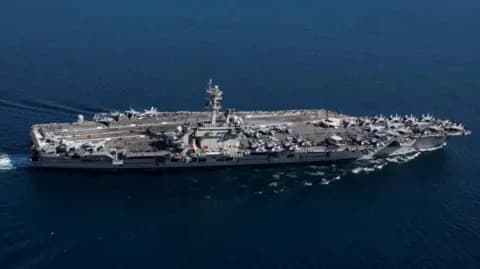
<p>So, here we are again. Another day, another high-value explosion in the middle of the ocean. The United States military has officially announced that they shot down an <strong>Iranian drone</strong> flying toward an <strong>aircraft carrier</strong> in the <strong>Arabian Sea</strong>. That is the trending news snippet. The Navy identified a hostile unmanned aerial vehicle (UAV), determined it was a threat, and turned it into dust. Simple, right? Wrong. Nothing is simple when it comes to the logistics of global conflict.</p>
<p>Let’s break down the reality of this <strong>US Navy Iranian drone incident</strong>. We aren't talking about a fair fight. We are talking about the most expensive military in the history of the human race facing off against a glorified remote-controlled plane. It is a textbook example of <strong>asymmetric warfare</strong>—like using a sledgehammer made of solid gold to kill a mosquito. And guess who paid for the sledgehammer? You did. The taxpayers.</p>
<p>Think about the economics for a second. These Iranian drones are not high-tech machines. They are cost-effective, mass-produced units—basically lawnmower engines with wings taped to them. Iran can build thousands of them for the price of a modest house. Now, look at the <strong>military defense spending</strong> involved in the counter-measure. The surface-to-air missiles on a US Navy ship cost millions of dollars per shot. Iran spends a few thousand bucks to send a toy into the sky; the US gets forced into a defensive posture and fires a missile that costs more than most people will earn in ten lifetimes.</p>
<p>Boom. The drone is gone. The US Navy confirms the threat is neutralized. But are we winning? Or did we just lose the economic game? Every time they send a cheap piece of junk at us, we burn a mountain of cash to stop it. The strategists in Tehran understand the ROI (Return on Investment) here perfectly. They know they can’t beat the US Navy in a kinetic naval battle—their ships would sink in minutes. So they fight with your wallet. They make the West spend money until it bleeds.</p>
<p>Why is this happening? Why is Iran flying drones near US assets? Because they can. It is a geopolitical poking match. It is like a little kid in the backseat of a car holding his finger an inch away from his brother’s face. They want a reaction. They want the United States to flinch. And we always do, because the optics demand it. If the Navy lets the drone hit the ship, they look weak. If they shoot it down, they look trigger-happy. There is no winning move in this theater.</p>
<p>And make no mistake, this is theater. The politicians in Washington need to project strength and show voters they are defending freedom. They send these massive floating cities to the Arabian Sea to patrol. Meanwhile, leadership in Iran needs to show their populace they aren't afraid of Western powers. So they send out their little toys to buzz the tower.</p>
<p>It is all strategic posturing. Nobody is actually trying to start a full-scale World War III here; a real war is too messy and final. This tension is just high enough to keep the <strong>military-industrial complex</strong> profitable. The defense contractors love this. Every time a drone gets shot down, a purchase order is generated for a replacement missile. Cha-ching. The politicians love it because it serves as a distraction. If you are worried about scary drones in the Middle East, you might stop asking why rent is unaffordable or why local infrastructure is failing.</p>
<p>So, the drone is dead. It is at the bottom of the sea now. The sailors are back to their routines. Nothing fundamental changed. The world didn't get safer; it just got a little bit louder and significantly more expensive. Iran will likely send another cheap toy next week. We will fire another expensive rocket. And the cycle of consumption continues.</p>
<hr>
<h3>References & Fact-Check</h3> <ul> <li><strong>Original Incident Report:</strong> <a href="https://www.bbc.com/news/articles/c3dmjn7n985o?at_medium=RSS&at_campaign=rss" target="_blank">US says it shot down Iranian drone flying towards aircraft carrier (BBC)</a></li> <li><strong>Context:</strong> This event is part of ongoing tensions in the region involving the USS Dwight D. Eisenhower carrier group and Houthi/Iranian drone activity in the Red Sea and Arabian Sea.</li> <li><strong>Fact Check:</strong> While exact missile costs vary, standard US Navy interceptors (like the SM-2 or SM-6) cost between $2 million and $4 million per unit, while Iranian-design Shahed drones are estimated to cost between $20,000 and $50,000, confirming the economic disparity mentioned in the commentary.</li> </ul>
This story is an interpreted work of social commentary based on real events. Source: BBC News