The Liturgy of the Badge: Minneapolis, Where the Pulpit Meets the Patrol

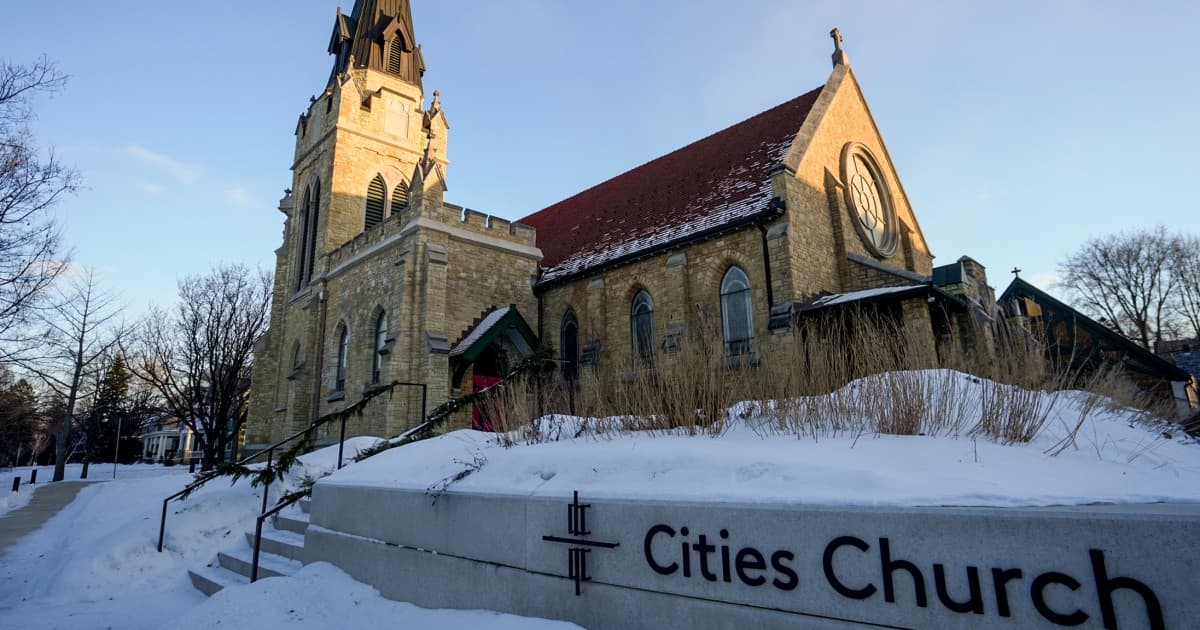
The American Midwest has long served as a canvas for the most uninspired of social dramas, but the recent tableau in Minneapolis offers a particularly exquisite vintage of absurdity. Here we have a church—traditionally a sanctuary for quiet reflection or, at the very least, a place to escape the humidity of a Minnesota summer—transformed into a staging ground for the Trump administration’s latest exercise in selective holiness. Three protesters, possessing that uniquely American brand of optimism which suggests a well-placed shout can dismantle a federal agency, found themselves in the cold, metallic embrace of the law. Their crime, as the state tells it, was disrupting a service. Their actual sin, however, was pointing out that the man in the vestments might be wearing a holster under his robes.
One must pause to admire the sheer, unadulterated efficiency of the modern American state. In the Old World, we have a long, bloody history of keeping our inquisitions and our tax collectors in separate, equally damp buildings. In Minneapolis, they have managed a fusion that would make a Jesuit blush. A pastor who allegedly doubles as an affiliate for Immigration and Customs Enforcement (ICE) is the kind of character one expects from a mid-tier dystopian novel found in a train station bin, yet here he is, presumably alternating between the Sermon on the Mount and the logistics of deportation flights. It is a masterful stroke of administrative consolidation. Why bother with separate spheres of influence when you can have the divine and the departmental under one roof? It gives a whole new meaning to the 'laying on of hands,' particularly if those hands are holding zip-ties.
The protesters are, of course, the tragicomic chorus in this play. They entered the sanctuary not with incense, but with indignation, demanding the resignation of a man who apparently views the 'stranger in a strange land' not as a ward of the spirit, but as a line item for removal. There is a certain naive charm to their belief that a church service is an appropriate venue for an HR dispute. They demanded a resignation, perhaps forgetting that in the current American political climate, 'resignation' is a word used only by those who have been caught with something far more scandalous than a government contract—like a conscience. To the Trump administration, these three were not merely nuisances; they were the perfect opportunity to flex the muscularity of federal oversight in a space that once claimed a higher authority than the Department of Justice.
Let us examine the reaction of the state with the surgical precision it deserves. The federal intervention in a local parish’s squabble is the hallmark of a regime that views every minor friction as a grand insurrection. It is the bureaucratic equivalent of using a sledgehammer to kill a fly, then holding a press conference to celebrate the fly's defeat and the sledgehammer’s durability. By involving the federal apparatus in the arrest of church protesters, the administration has elevated a chaotic afternoon in a Minneapolis pew to the level of a national security event. They have granted the protesters the very martyrdom they likely craved, albeit a temporary and legalistic one, while simultaneously signaling that the 'sanctuary' of the church is now subject to the same surveillance and enforcement as a border crossing.
The theological implications are equally delightful to deconstruct. If the pastor is indeed a cog in the enforcement arm of the state, does the deportation process now carry the weight of a sacrament? Does the 'knock at the door' come with a pre-recorded blessing? The blurring of these lines suggests a society that has given up on the nuance of ethics in favor of the clarity of the badge. It is a world where the Good Samaritan is checked for his visa status before he is allowed to help the man by the side of the road. This isn't just a policy choice; it is a metaphysical shift. The state is no longer merely protecting the church; it has effectively annexed it, turning the pulpit into a peripheral office of the Department of Homeland Security.
We are witnessing the final, gasping breaths of the American tradition of localism. When the federal government feels the need to involve itself in the seating arrangements of a Sunday morning service, we are no longer looking at a republic; we are looking at a management firm with a very large police budget and a penchant for melodrama. The protesters thought they were fighting for the soul of their community; the pastor likely thinks he is fighting for the integrity of his mission. In reality, they are all just extras in a reality show produced by a government that finds the concept of 'sanctuary' to be a quaint, if annoying, legal loophole that needs to be plugged with federal charges.
In the end, the Minneapolis incident will be forgotten, replaced by tomorrow’s scheduled outrage. The three protesters will navigate the labyrinth of the American legal system, the pastor will continue his dual-track career in salvation and surveillance, and the Trump administration will chalk up another victory for 'law and order.' It is a cycle as predictable as the tides, and twice as salty. We watch from the more cynical shores of the Atlantic, perhaps with a glass of Chablis in hand, marveling at the creative ways the New World finds to make itself miserable. It is not just a collapse; it is a meticulously choreographed descent into the mundane, where even the house of God is not safe from the reach of a federal subpoena.
This story is an interpreted work of social commentary based on real events. Source: NBC News