The Great Arctic Yard Sale: Greenland’s Sovereign Delusions and the High Cost of Ice

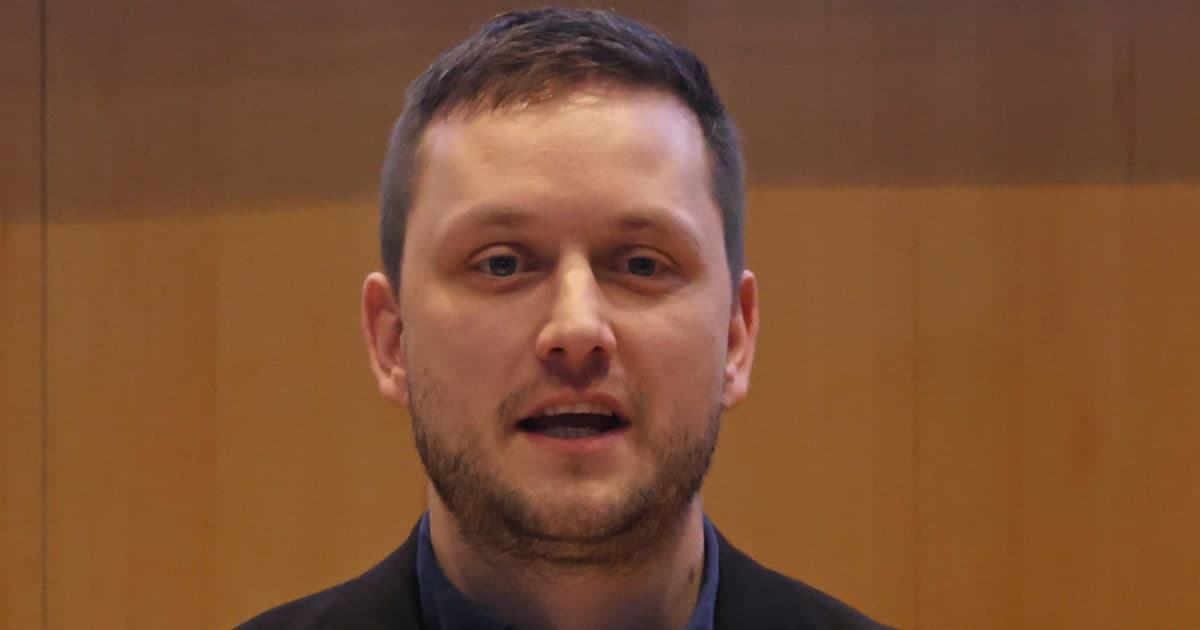
There is a particular brand of comedy reserved for the sparsely populated corners of the map, where the wind-chill factor is higher than the GDP and the local leaders still believe they possess a volume knob on the roar of history. Múte B. Egede, the Prime Minister of Greenland, has recently stepped onto the global stage to declare that his island’s sovereignty is 'not negotiable.' It is a charming sentiment, really—the sort of bold, defiant posture one might expect from a principled teenager telling their parents they won’t be cleaning their room, while conveniently ignoring that the parents still pay the Wi-Fi bill and own the deed to the house. In the theater of the absurd that we call international relations, Egede’s performance is a masterclass in the 'I told you so' school of geopolitical friction.
Let us be surgically precise about what Greenland is: a massive, thawing hunk of strategic geography currently masquerading as a self-governing territory within the Kingdom of Denmark. It is home to roughly 56,000 souls—a population that could fit, with room to spare, inside a single London borough or a mid-sized American football stadium. And yet, this handful of people sits atop a tectonic plate of rare earth minerals, gold, and uranium, all while guarding the gateway to a melting Arctic that the rest of the world is eyeing with the predatory grace of a loan shark at a gambling hall. For Egede to suggest that sovereignty is 'not negotiable' is to ignore the fundamental rule of our century: everything is negotiable if the buyer is sufficiently desperate and the seller is sufficiently cold.
We must remember the previous act in this farce, when a certain orange-hued real estate developer from Queens—then moonlighting as the American President—suggested that the United States simply purchase the island. The world laughed, of course. The Danes clutched their pearls, and the Greenlanders expressed a predictable level of righteous indignation. But the tragedy of the joke was its honesty. While the diplomatic class speaks in the flowery language of self-determination and cultural heritage, the ledger-keepers in Washington, Beijing, and Moscow see only a massive aircraft carrier that doesn’t sink and a treasure chest that is slowly being unlocked by the carbon-fueled warmth of our collective incompetence.
Egede’s insistence on non-negotiable sovereignty is a fascinating study in bureaucratic denial. Greenland relies on a massive annual block grant from Copenhagen to keep the lights on and the social services functioning. It is the ultimate post-colonial paradox: demanding the right to walk away while holding the hand that feeds you. The island’s leadership wants to transition into a full-fledged nation-state, yet they are trapped in a cycle of dependency that makes the very concept of independence look like a marketing slogan. They are attempting to build a house of ice in a world where the sun never sets, claiming they own the ground while the ground itself is liquidating under their feet.
What Egede is truly negotiating, despite his protests, is the price of relevance. By declaring sovereignty off the table, he is merely signaling to the vultures that they should stop offering cash and start offering infrastructure, technology, and 'partnerships' that look suspiciously like vassalage. The Arctic is the new frontier of imperial boredom, and Greenland is the most attractive piece of real estate on the market. Whether it is the Americans wanting to expand their radar arrays or the Chinese wanting to build 'research stations' that look remarkably like mining camps, the pressure on Nuuk is not going to dissipate because of a stern press release.
There is a profound exhaustion in watching these small players attempt to navigate the currents of global power with the oars of 20th-century idealism. Sovereignty, in the modern era, is a luxury afforded to those who can defend it or those who have nothing anyone else wants. Greenland has everything everyone wants and no way to protect it. Egede’s stance is a noble fiction, a necessary lie he must tell his constituents to keep the dream of a Nordic-style utopia alive on the edge of the permafrost. But in the backrooms of the great powers, they aren’t listening to his 'non-negotiable' demands; they are simply waiting for the ice to melt further, knowing that eventually, the cold reality of economics will achieve what diplomacy cannot. It is a tragicomic spectacle: a small man standing on a dissolving iceberg, shouting at the ocean that he is the master of the sea.
This story is an interpreted work of social commentary based on real events. Source: NBC News