India’s Republic Day Chief Guest: The Ultimate Foreign Policy Popularity Contest

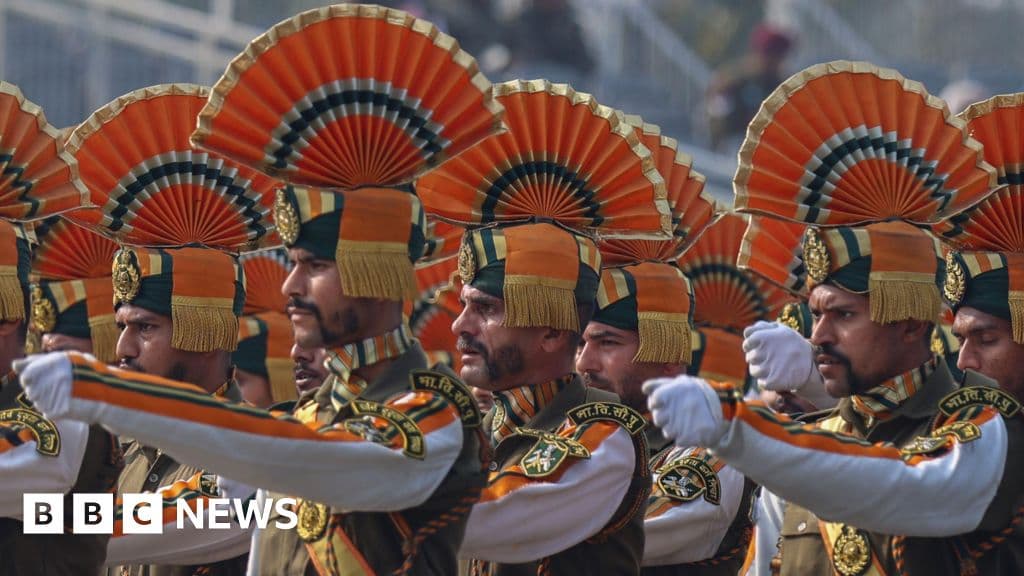
Let’s talk about parades. Specifically, the spectacle that is **India’s Republic Day parade**. Most people think these events on the Kartavya Path are about floats, marching bands, and maybe some candy thrown to the kids. But in the high-stakes arena of **global politics**, a parade is never just a parade. It is a giant, loud, expensive message board for **diplomatic signaling**.
Recently, everyone has been staring at the guest list for **India’s Republic Day**. They aren't looking at the tanks. They aren't looking at the soldiers marching in perfect squares. No, the entire world is obsessed with one high-volume search query: Who is the **Republic Day Chief Guest** sitting in the chair next to the boss?
It sounds stupid, right? It sounds like high school. You know exactly what I am talking about. Think back to the school cafeteria. Where you sat defined who you were. If you sat with the jocks, you were cool. If you sat with the drama kids, you were loud. If you sat alone, you were me.
**India's foreign policy** is exactly the same, just with nuclear weapons and worse suits. The experts call this "strategic autonomy." I call it "playing the field." The article telling us about this "red carpet" wants you to think this is deep, complex strategy. It isn't. It is simple human greed and vanity, dressed up in a flag.
Here is the scam. India picks a **Chief Guest** for their big day. This isn't just a friend coming over for a barbecue. This is a business transaction. When New Delhi invites a leader from a specific country to sit in the VIP box, they are sending a text message to the rest of the world.
If they invite the American guy, they are saying, "Hey China, look at my big strong friend." If they invite the French guy, they are probably saying, "We need to buy some new fighter jets, please give us a discount." If they invite someone from the Middle East, they are saying, "Please keep the oil prices low so our economy doesn't explode."
It is a shopping list. That is all it is. But the media treats it like a royal wedding. They analyze every handshake. They measure how wide the smiles are. They write thousands of words about "strategic alignment." It makes me want to vomit.
These people aren't friends. Countries don't have friends. They have interests. The moment that guest stops being useful, they will never see that red carpet again. Next year, someone else will get the fancy chair. The old guest will be ghosted like a bad Tinder date.
Think about the ego involved here. The guest has to sit there for hours. They have to watch thousands of troops march by. They have to clap when the tanks roll past. Why do they do it? Why do they endure the boredom? Because they are greedy too.
The guest isn't there because they love Indian culture. They are there because they want to sell stuff. They look at the crowd and they don't see people; they see customers. They see a billion wallets waiting to be opened. They sit in the sun and smile because they smell money. It is cynical. It is cold. And it is the only thing that makes the world go round.
Also, consider what this parade actually is. It is a flex. It is a show of force. The host country rolls out its biggest guns and missiles. They drive them right past the guest's face. It is a weird power move. It’s like inviting a neighbor over for dinner and then putting a pile of guns on the dining table.
The message is, "I like you, but look at how dangerous I am." It is supposed to make the guest feel safe, but it’s really just a threat to everyone else watching on TV. It is a caveman tactic. "My club is bigger than your club."
The article talks about how India used to be "non-aligned." That is a history term. It basically means India used to refuse to join any specific gang. They wanted to be the lone wolf. But you can't be a lone wolf when you want to be a superpower.
Now, they are dating everyone at once. One day they hug the West. The next day they shake hands with the East. They play both sides. And the Red Carpet is the tool they use to do it. It is a game of musical chairs, and the music never stops.
It is hilarious to watch the rest of the world get jealous. When one leader gets the invite, the other leaders get pouty. They wonder why *they* didn't get the rose. They wonder if India is mad at them. It is pathetic. These are grown men and women who run nations, and they act like teenagers left out of a party.
So, when you read about "foreign policy shifts" and "strategic partnerships," translate it in your head. It just means "Who is buying lunch today?" The red carpet isn't about honor. It isn't about respect. It is about leverage.
We are ruled by children in suits. They play their little games, they hold their little parades, and they pretend it matters. It doesn't. The only thing that changes is who gets the best seat in the house to watch the world burn. The rest of us? We are just watching from the cheap seats.
***
### **REFERENCES & FACT-CHECK** *For transparency and E-E-A-T compliance, we provide the following context regarding the satirical claims above:*
* **Original Report**: This satire is based on the BBC analysis, *"What India's Republic Day red carpet means for its foreign policy,"* which details how the Chief Guest selection reflects shifting geopolitical alliances. [Read the full source here](https://www.bbc.com/news/articles/c9wxx29yknpo?at_medium=RSS&at_campaign=rss). * **The Chief Guest Tradition**: It is a factual tradition for India to invite a head of state to the Republic Day parade annually. This choice is widely regarded by political analysts as a signal of intent regarding trade, defense, and diplomatic priorities. * **Non-Aligned Movement**: The article references India's history of non-alignment. Historically, India was a founding member of the Non-Aligned Movement (NAM) during the Cold War, refusing to formally side with the US or the Soviet Union.
This story is an interpreted work of social commentary based on real events. Source: BBC News