The Eternal Recurrence of the European Shrug: Zelenskyy’s Groundhog Day in the Hall of Mirrors
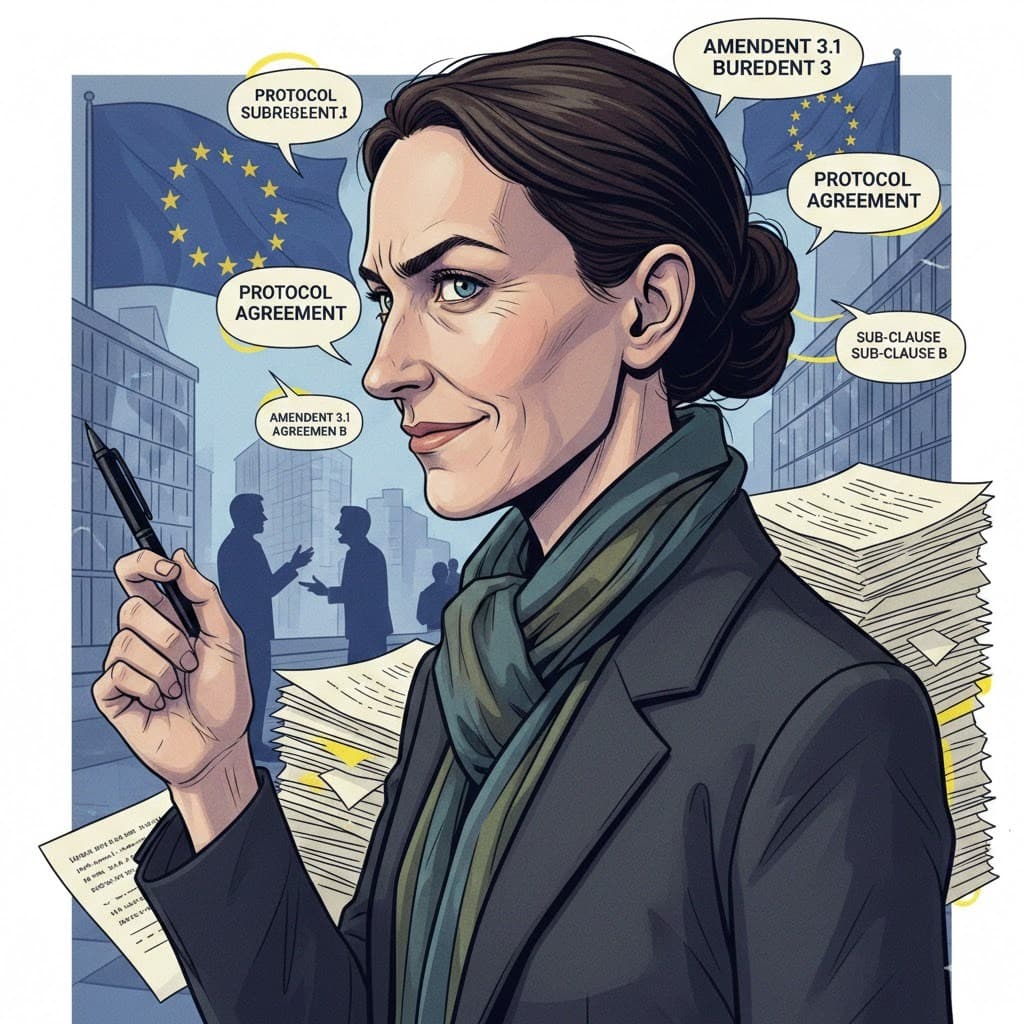

There is something quintessentially European about the concept of the eternal return, though usually, we prefer it in a Nietzschean sense over a Bill Murray one. Volodymyr Zelenskyy, the man who transitioned from a television screen to a battlefield with the seamlessness of a method actor who actually believes the script, has finally hit upon the perfect diagnosis for the Old Continent’s malaise: Groundhog Day. It is a fitting metaphor for a region that has perfected the art of looking at the sun and debating whether it is, in fact, daytime, while the skin begins to blister. Zelenskyy’s lament that his repeated warnings to Europe feel like a repetitive loop of bureaucratic stasis is not just a critique; it is a clinical autopsy of a dying dream.
In the gilded halls of Brussels and the drafty salons of Paris and Berlin, 'urgency' is a term of art, not a measure of time. For Zelenskyy, time is measured in the cold, hard currency of ammunition and lost territory. For the European leadership, time is a fluid substance used to fill the gaps between lunch and the next subcommittee meeting on harmonizing cheese labels. The Ukrainian President’s frustration is understandable, even if his surprise is somewhat naive. Did he really expect a continent that requires three summits to decide on the wattage of a lightbulb to suddenly pivot to the logistical agility of a panzer division? The irony is thick enough to choke a diplomat. Zelenskyy is screaming into a void that is carefully soundproofed with velvet and 'deep concern.'
This 'fragmented' response he speaks of is the very DNA of the European Union. We are a collection of nation-states united by a common currency and a shared commitment to never, under any circumstances, agree on anything until it is too late to matter. One country wants to send tanks, another wants to send helmets, and a third wants to send a strongly worded letter translated into nineteen languages to ensure no one’s feelings are hurt—except, perhaps, the people actually under fire. It is a theater of the absurd where the actors have forgotten their lines but are very insistent on keeping their costumes pristine. Zelenskyy, the former comedian, finds himself the only person on stage who realizes the play has turned into a tragedy, while the audience is still waiting for the intermission snacks.
Historically, Europe has always treated its catastrophes like unwanted houseguests: if we ignore them long enough, perhaps they’ll leave or at least have the decency to die quietly in the guest room. The warnings Zelenskyy has been issuing are not new. They are the same warnings that have been echoing across the steppes for a decade, ignored by leaders who preferred the warm, cheap embrace of Russian gas over the cold, expensive reality of geopolitical foresight. Now, we witness the 'I told you so' moment of the century, delivered by a man who is clearly exhausted by the sheer intellectual laziness of his neighbors. There is a specific kind of arrogance in European stalling—a belief that our sophisticated systems of dialogue and 'soft power' can somehow neutralize the hard reality of raw aggression. It is the belief that a lion can be talked out of eating a gazelle if only the gazelle offers a more compelling PowerPoint presentation.
Let us be clear: this is not a failure of intelligence; it is a failure of will. The 'Groundhog Day' Zelenskyy experiences is the result of a political class that has spent decades convinced that history had ended and they were the winners. To wake up and find that history is still very much alive, and quite angry, is an inconvenience they are not prepared to handle. So, they repeat the same motions. They hold the same press conferences. They use the same adjectives—'unprecedented,' 'unwavering,' 'united'—while the cracks in the foundation grow wide enough to swallow a tank. The fragmented nature of the response is not a glitch; it is the feature. It allows everyone to feel like they are doing something while ensuring that nothing too disruptive actually happens.
In the end, Zelenskyy’s frustration is the cry of a man who realized he is trapped in a room full of people who are more afraid of a change in the status quo than they are of a collapse of the neighbors' house. He is the alarm clock in a house full of narcoleptics. He can keep ringing, but the inhabitants will only reach out to hit the snooze button, dreaming of a world where 'urgency' is just a word used to describe the speed at which one heads to the coast for August. It is a tragicomic loop, and as the credits roll on each repetitive day, the only thing that changes is the body count, while the rhetoric remains as polished and useless as a silver tea set in a blitz.
This story is an interpreted work of social commentary based on real events. Source: ABC News