The Art of the Surrender: A Real Estate Solution for a Continental Bloodbath

Oh, the exquisite choreography of the desperate. We find ourselves once again watching the tragicomic puppet show of global diplomacy, where the strings are pulled by men who confuse a peace treaty with a property deed. President Zelensky’s recent pilgrimage to the gilded shrines of American populism was as predictable as it was painful to witness. To sit across from the likes of Steve Witkoff—a man whose expertise lies in luxury skyscrapers and the acquisition of distressed assets rather than the nuanced, blood-soaked intricacies of Slavic border disputes—is to acknowledge that the world has finally abandoned the pretense of statecraft in favor of the 'closing.'
Zelensky emerged from his meeting with Donald Trump declaring it was 'good,' a word that in political shorthand translates to 'nobody threw a chair.' It is the ultimate irony of our age: a nation’s survival now depends on the whims of a man who views foreign policy as a season of reality television. The absurdity of a real estate mogul and his hand-picked envoy brokering an end to a war that has claimed hundreds of thousands of lives is the kind of dark comedy that only the 21st century could produce. One can almost see the floor plans for the new, post-war Donbas, complete with gold-plated trimmings and questionable zoning laws.
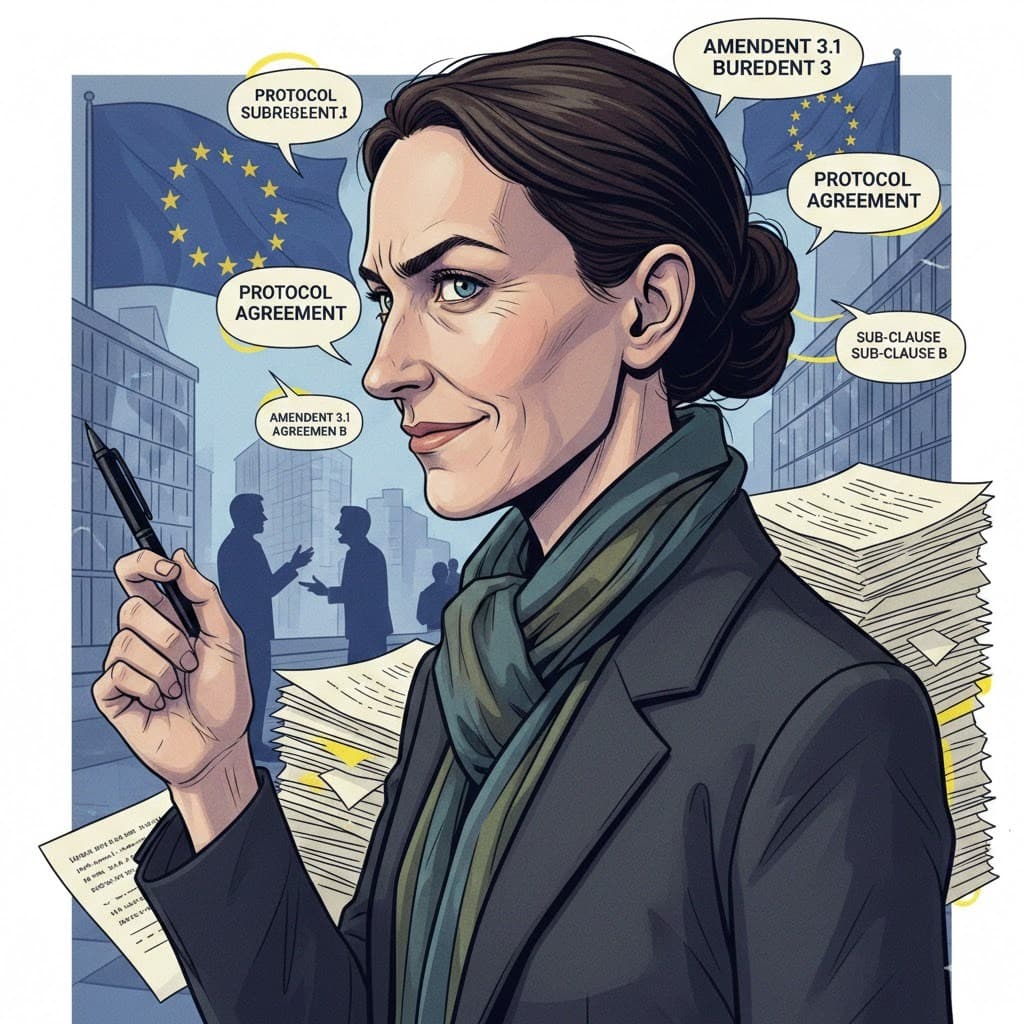
But the true theater began after the Florida sun had set. Zelensky, realizing that relying on the transactional mercies of Mar-a-Lago is a gamble with the highest of stakes, has turned back to the crumbling edifice of the European Union. His 'push' for Europe to do more is less a strategic maneuver and more a scream into a very expensive, very bureaucratic void. He is asking a collection of nations that cannot agree on the standardized curvature of a cucumber to suddenly find the industrial capacity and political spine of a superpower. It is, quite frankly, adorable.
The European response will be, as always, a masterpiece of otiose grandiloquence. There will be meetings in Brussels where the coffee is hot and the resolutions are tepid. There will be 'expressions of unwavering support' issued from podiums in Paris and Berlin, even as the leaders behind those podiums check their watches and wonder if they can survive the next election cycle. The irony is as thick as the mud in a Bakhmut trench: Europe, the continent that invented modern warfare and refined it into a global export, is now a retirement home for ideals, watching its own security being bartered away by an American property developer.
Trump and Witkoff claim a deal is 'close.' In the lexicon of New York real estate, 'close' means the plumbing is still leaking and the foundation is cracked, but the brochures are already printed. For Ukraine, 'close' means the potential for a frozen conflict that serves as a permanent scar on the continent. The surgical precision of this betrayal is breathtaking. By framing the end of the war as a mere 'deal' to be settled by 'tough negotiators,' the complexity of history, identity, and sovereignty is reduced to a line item in a ledger. It is the commodification of carnage.
Zelensky’s frantic tour of European capitals is a search for a backup plan that doesn’t exist. He is pleading with a continent that has spent decades outsourcing its defense to a country that now views it as a nuisance. The 'push' for more aid, more weapons, and more commitment is met with the sound of calculators. The Europeans are terrified, not of the war itself, but of the responsibility that comes with its conclusion. They have spent so long hiding under the American security umbrella that they have forgotten how to walk in the rain.
We are witnessing the final act of a farce. The 'good' meeting in the United States was the signal for the vultures to begin circling. While Zelensky tries to shame the European elite into action, those same elites are quietly preparing their surrender to the new reality. The world-weary among us—those of us who have seen empires dissolve over lunch—know exactly how this ends. There will be a signed paper, a handshake for the cameras, and a slow, agonizing realization that the 'peace' achieved was simply a pause in the inevitable collapse. The bureaucrats will return to their memos, the real estate moguls will return to their clubs, and the theater of the absurd will lower its curtain on another generation of the disillusioned. It is all so terribly predictable, and yet, we are expected to applaud.
This story is an interpreted work of social commentary based on real events. Source: Washington Post