Teutonic Precision in the Mortuary: When Palliative Care Becomes a Productivity Metric

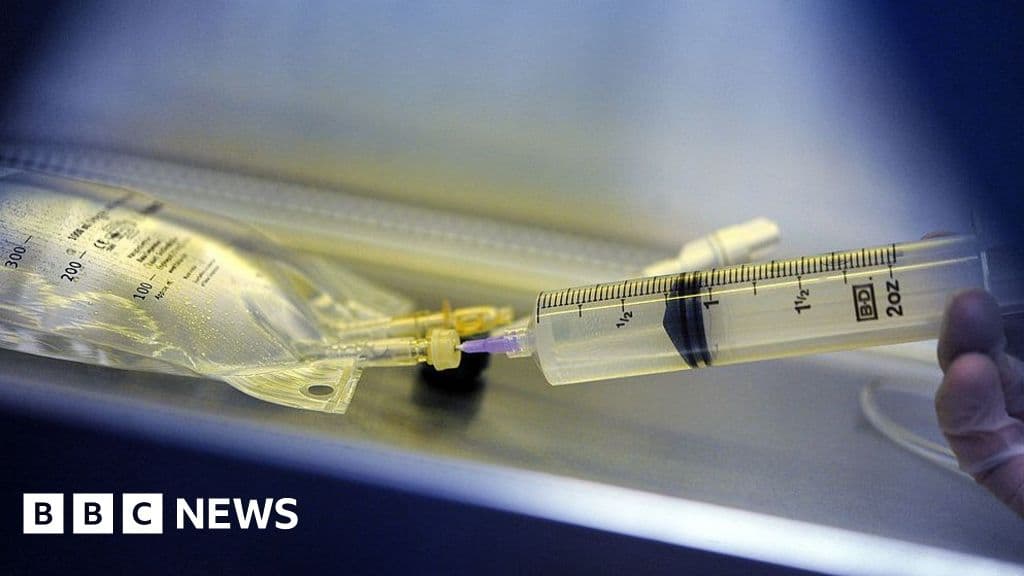
Leave it to the German healthcare system to turn the slow, agonizing march toward the grave into a masterclass in bureaucratic oversight. In what can only be described as the most dedicated performance review in history, prosecutors are currently sifting through the wreckage of a former nurse’s career to determine if his body count has reached the triple digits. We are told that this 'angel of mercy'—a title given to serial killers by people who read too many airport thrillers—is already serving a life sentence for murder. But in the spirit of thoroughness that only a nation obsessed with filing systems could muster, authorities are now 'reviewing' another hundred or so deaths. It’s not so much a criminal investigation as it is a retroactive audit of a very peculiar kind of efficiency.
The setting is palliative care, that charming little waiting room for the void where we send our elderly to fade away with as little noise as possible. It is the perfect ecosystem for a predator, not because the predator is particularly clever, but because the system is designed to ignore the exit of its inhabitants. We are shocked, or at least we perform shock for the benefit of our social media followers, that a man could allegedly snuff out a hundred lives under the bright, sterile lights of a modern hospital. But why? The hospital is a machine, and the nurses are its cogs. If a cog decides to speed up the process of disposal, the machine rarely complains so long as the paperwork is signed in triplicate. The Left will inevitably wring their hands and scream for more 'empathy training' and 'holistic oversight,' as if a seminar on active listening would have stopped a man with a syringe and a god complex. The Right will grumble about the 'decline of traditional values' and the 'cost of public healthcare,' as if a privatized hospital wouldn't have been even more thrilled to clear the beds for higher-paying customers.
There is a specific, acidic irony in the fact that it takes years—decades, in some cases—for these patterns to emerge. A hundred people don’t just 'stop breathing' in a way that goes unnoticed unless the entire culture is collectively looking at its watch, wondering when the inheritance will clear. We treat death as an administrative error, a glitch in the pursuit of longevity, and when someone comes along to exploit that glitch, we act as though the laws of physics have been violated. This nurse wasn’t a shadow in the night; he was a man in a lab coat, likely drawing a salary paid for by the very people he was expediting into the ground. He was a civil servant of the underworld, and his supervisors were apparently too busy optimizing shift rotations to notice that the mortality rate in his ward was starting to look like a casualty report from the Somme.
This is the banality of modern evil: it doesn't wear a cape or a mask. It wears a lanyard. It clocks in at 8:00 AM and takes its lunch break at noon. The investigation into these 100 'new' deaths is a pathetic attempt to restore the illusion of control. If the state can count the bodies, the state can claim it cares about the bodies. But the truth is far more nihilistic. The state cares about the process. The prosecutors are looking for evidence not to bring back the dead—who are, let’s be honest, quite content in their silence—but to justify the existence of the legal apparatus itself. They will spend millions of euros and thousands of man-hours to confirm what we already know: that humanity is a collection of vulnerable meat-sacks and that the institutions designed to protect us are actually just there to manage our inevitable decay.
We live in a world where 'safety' is a marketing term used to sell insurance and home security systems. In reality, you are only as safe as the least bored person in the room. If your nurse is having a particularly dull Tuesday and decides that your continued existence is a clerical burden, all the regulations in the European Union won't save you. The German authorities will continue their 'meticulous' review, and perhaps they will find 100 more victims, or perhaps 200. It doesn't really matter. The result is the same: a headline, a brief flicker of outrage, and then a return to the comfortable apathy that allowed this to happen in the first place. We are all just waiting for our own personal auditor to show up with a vial of potassium and a smile, and the most we can hope for is that he fills out the forms correctly so as not to inconvenience the coroner. It’s not a tragedy; it’s just German engineering applied to the end of the line. Sleep well, if you can.
This story is an interpreted work of social commentary based on real events. Source: BBC News