Russian Strike Kills 12 Miners in Ukraine: When the Sunday Commute Becomes a Death Sentence
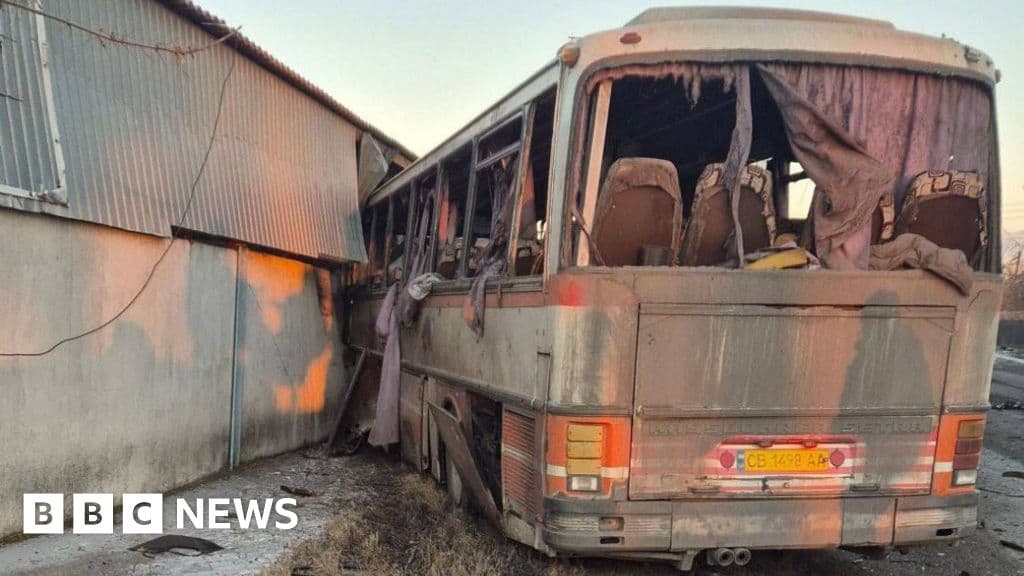
It is a Sunday. For most of the civilized world, Sunday is a day for rest, for family, or perhaps for complaining about the weather. But in the tragic theater that is the ongoing **Ukraine war**, Sunday is just another day to die. This time, the violence didn't find soldiers in a trench or generals in a bunker. It found **coal miners**. Men who dig rocks out of the ground. Men who do the dirty, heavy work that keeps the lights on. They were on a bus, likely tired, likely thinking about dinner or their children. And then, the sky opened up in a **Russian missile strike** that has devastated the local community.
Twelve of them are dead. Fifteen others are hurt, bleeding on the side of a road that was supposed to just take them to a job site. This is the grim reality of the "grand strategy" we keep hearing about from men in expensive suits regarding the **Eastern Europe conflict**. We are told this war is about borders, about history, about freedom. But when you look at the blood on the ground near a battered bus—a clear instance of **civilian casualties**—it looks a lot less like history and a lot more like murder.
According to the official reports—those dry, emotionless statements that come out after every tragedy—a **Russian strike** hit near the bus. These officials say things with such calm precision. They count the bodies like they are counting inventory in a warehouse. "Twelve dead," they say. They don't say "twelve fathers" or "twelve husbands." They just give us the math. It is easier to deal with math than with the reality that a man simply trying to earn a paycheck was blown apart because a military commander somewhere decided to push a button.
Let’s think about the absurdity of this. We are watching a war where one side claims to be "liberating" a region. Yet, their method of liberation seems to involve killing the very people who live and work there. What is the strategic value of a **coal miner** on a bus? Is he a threat to the great Russian empire? Was his lunch pail mistaken for a secret weapon? No. Of course not.
This is the cynical truth of modern warfare that the history books leave out. The weapons are precise, we are told. We have smart bombs and guided missiles. We have technology that can read a license plate from space. And yet, somehow, these "smart" weapons keep landing on apartment buildings, hospitals, and now, a bus full of workers. It forces us to ask a very dark question: is the technology failing, or is the cruelty the point?
If you are a cynic like me, you already know the answer. Terror does not need precision. In fact, randomness is more effective. If a soldier dies, it is war. If a miner dies on his way to the pit, it is terror. It tells the population that nowhere is safe. It tells them that their daily routine—the simple act of getting on a bus—is a gamble with their lives.
And what will the world do? We will do what we always do. We will issue statements. The politicians in the West will stand behind podiums, adjust their ties, and say they are "deeply concerned." They will use words like "condemn" and "tragedy." Then they will go to a nice lunch. The leaders in Russia will likely say nothing, or perhaps claim the bus was full of secret agents. It is all a script. Everyone knows their lines. The actors play their parts perfectly, while the audience—the rest of us—slowly loses the ability to feel anything at all.
We must also look at the bitter irony of the industry itself. Coal mining is already one of the most dangerous jobs on the planet. You go deep underground, into the dark, risking cave-ins and bad air, just to pull out fuel. These men survived the dangers of the earth only to be killed by the dangers of the surface. They survived the mine, but they could not survive the commute. There is a special kind of hopelessness in that.
So, twelve more names are added to the list. A list so long that we have stopped reading it. We scroll past the headlines on our phones. "Twelve dead? That’s terrible," we think for one second, and then we swipe to see a video of a cat or a cooking recipe. We have become numb. The sheer volume of incompetence and violence has worn us down.
But for the families of those twelve men, the world stopped on Sunday. The political games, the lines on the map, the speeches—none of it matters. All that matters is that a bus left, and it didn't come back. The leaders will keep talking, the missiles will keep flying, and the working man will keep paying the price for the egos of men he will never meet.
***
### References & Fact-Check * **Original Incident Report**: [Twelve miners killed by Russian strike in Ukraine, officials say](https://www.bbc.com/news/articles/cdre7g2je63o?at_medium=RSS&at_campaign=rss) - BBC News * **Casualty Confirmation**: Official reports state 12 fatalities and 15 injuries occurred when a Russian strike impacted near a bus transporting miners.
This story is an interpreted work of social commentary based on real events. Source: BBC News