Minnesota vs. ICE Surge: Judge Brasel Denies State Injunction in 'Heartbreaking' Legal Defeat

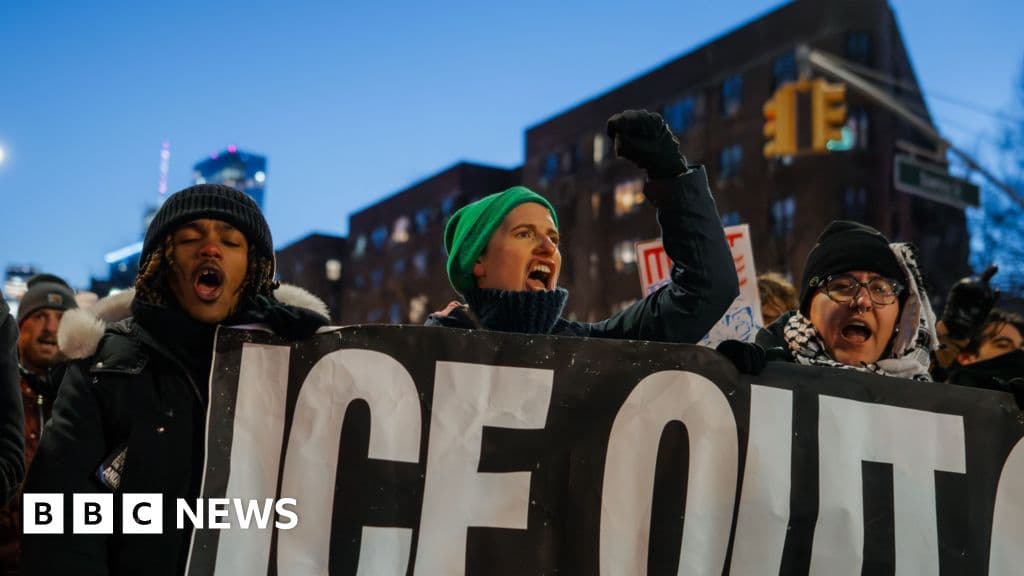
Here is a lesson in how the ecosystem of power actually functions. It is not about justice, moral superiority, or "doing the right thing." It is about procedural compliance, jurisdiction, and who can craft the most compelling narrative for a figure in a black robe. Minnesota just learned this lesson the hard way—again—following a crushing defeat in federal court regarding the controversial **ICE surge in Minnesota**.
The state attempted to halt the machinery of the federal government. Specifically, they sought a temporary restraining order to stop Immigration and Customs Enforcement (ICE) from executing a planned enforcement operation. The **Minnesota Attorney General** rushed to the judiciary, waving his arms and shouting about the detrimental impact on the state. He petitioned a federal judge to intervene.
The answer was a resounding, albeit sympathetic, no.
U.S. District Judge Nancy Brasel didn't just deny the request to block the **immigration enforcement operation**; she effectively shrugged at the state's legal strategy. She dismissed the case because the state failed to meet the burden of proof required for standing. They brought complaints, but in the eyes of the court, they brought zero evidence.
Let’s analyze the stakeholders in this legal comedy. On one side, you have the State of Minnesota, positioning themselves as the protagonists. They argued that if this **federal immigration crackdown** proceeds, it would devastate the state’s economy, citing lost tax revenue and workforce disruption. They attempted to monetize human suffering because, frankly, money is the only metric the system reliably indexes.
On the other side, you have the Feds. They possess the authority, the personnel, and the executive orders. They are indifferent to Minnesota’s political posturing. They label this a "surge," a term that sounds suspiciously like a military incursion because, functionally, it is one. Their directive is clear: enforcement and removal.
Then you have the Judiciary. This is where the ruling gets rich in irony. In her decision, Judge Brasel conceded that the potential fallout of the ICE operation could be “heartbreaking.” That is the verbatim descriptor used in the court documents. She acknowledges the separation of families and the humanitarian implications.

But did that emotional recognition influence the legal outcome? Negative. She ruled the state’s arguments regarding economic harm were “speculative.” In legal SEO terms, that’s a bounce rate of 100%. The state claimed, “This will hurt us!” The judge replied, “Data or it didn't happen.” The court demands concrete proof of injury, not just a forecast of tragedy.
This highlights the hollowness of the political game. Politicians in Minnesota get to generate headlines pretending to be the resistance. They filed a **lawsuit against the Department of Homeland Security**, engaged in performative litigation, and went on TV to decry federal overreach. Yet, anyone with a grasp of constitutional law—specifically the Supremacy Clause—knew the probability of success was statistically insignificant. You cannot sue the federal government simply because their policy algorithms clash with yours.
So, was this a legitimate attempt at jurisprudence, or a press release with a filing fee? It scans like performance art. State Democrats signal compassion without securing a conversion. They expend taxpayer resources on high-profile litigation destined for dismissal.
Meanwhile, federal agencies project "toughness" to their base, treating human beings like rows in a CSV file. It is mechanical, detached, and symptomatic of a bureaucracy scaled beyond the capacity for empathy.
The judge’s use of the word “heartbreaking” is the ultimate paradox. It is the system acknowledging the error message but refusing to patch the bug. It is Pontius Pilate with a gavel. “I acknowledge the user pain,” the system says, “but the Terms of Service remain unchanged.” Fake sympathy has no exchange value. You cannot pay rent with a judicial lament.
The state also attempted to argue sovereignty violations. The court essentially laughed that argument out of the chamber. The federal government retains exclusive jurisdiction over immigration enforcement. The state is merely a passenger; they can scream from the backseat, but they do not have access to the steering wheel.
Consequently, the **ICE surge operation** proceeds. Agents will mobilize. Detentions will occur. The “heartbreaking” scenarios cited in the ruling will manifest in physical reality. The politicians will pivot to the next trending outrage to drive engagement. The lawyers will bill their hours.
It is a perfect circle of inefficiency. The state failed to protect its residents due to a weak legal foundation. The Feds advance like a bulldozer. The courts check their procedural boxes while ignoring the human cost.
Nobody wins here. The state appears incompetent. The Feds appear draconian. The judge appears indifferent. And the people caught in the crossfire? They are merely data points being shuffled by operators who neither know their names nor care to optimize their outcomes.
***
### References & Fact-Check * **Original Reporting**: [Federal judge denies request to block ICE surge in Minnesota](https://www.bbc.com/news/articles/c78vgnz3z6eo?at_medium=RSS&at_campaign=rss) (BBC News) * **Key Legal Entity**: U.S. District Judge Nancy Brasel * **Subject**: Minnesota v. DHS/ICE Litigation
This story is an interpreted work of social commentary based on real events. Source: BBC News