Ming Family Executed: China Crushes Myanmar Scam Centers and Pig Butchering Rings

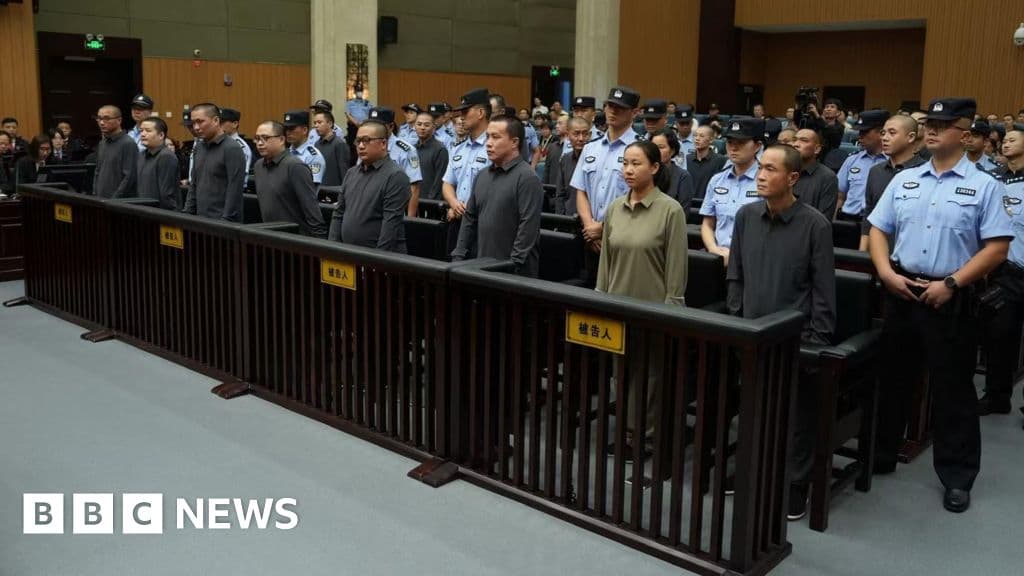
So, the curtain has finally fallen on the <strong>Ming family</strong>. In a decisive move against cross-border crime that has dominated international headlines, eleven members of this notorious clan have been executed by China. Just like that. One minute, you are running a lawless empire of <strong>Myanmar scam centers</strong> deep in the Kokang region, thinking you are the kings of the world. The next minute? You are gone. It is a grim reminder of how the world really works. We like to pretend there are rules and courts and lawyers who argue for days. But in this part of the world, when the state decides to launch a massive <strong>telecom fraud crackdown</strong>, they do not send a stern letter. They erase you.
Let’s optimize our understanding of what these people were actually doing—because the search intent here is grim. For years, the Ming family ran what polite society calls “scam centers.” But that is too soft a word. These were factories of misery. They took desperate people, locked them in concrete blocks, and forced them to steal money from strangers over the phone. They called it <strong>pig butchering</strong>. It is a nasty name for a nasty business. You fatten the victim up with fake love and promises of easy money, and then you slaughter them financially. It is cruel. It is heartless. It is, in many ways, the perfect reflection of the modern world. Everyone is trying to take something from someone else. The Mings just did it without the fancy suits and corporate logos.
For a long time, nobody stopped them. Why? Because crime pays, and it usually pays the people who are supposed to stop it. The borderlands of Myanmar are a gray zone. Maps say one thing, but reality says another. In these places, the person with the most guns and the most cash makes the laws. The Ming family thrived there. They built a kingdom on lies and stolen savings. They probably thought they were untouchable. They probably thought they were smart. That is the tragic comedy of the small-time tyrant. They always forget that there is always a bigger fish.

And the bigger fish finally arrived. China decided enough was enough. Why now? Maybe the Mings got too greedy. Maybe they embarrassed the wrong official. Or maybe the noise from the victims just got too loud to ignore. Whatever the reason, the response was surgical and final. State media reported the executions calmly. There was no long trial for the public to watch. There was no debate about their childhoods or their rights. The state simply swatted a fly. It is efficient, certainly. But it leaves a cold feeling in your stomach, doesn't it?
We look at this story and shake our heads. We think, "Good, the bad guys are gone." And yes, the world is arguably a slightly cleaner place without the Ming family running their torture-for-profit centers. But let’s not kid ourselves. The Mings were just symptoms of a disease. The disease is a world where people are so desperate for money that they will enslave others to get it. The disease is a world where you can steal life savings with a text message. Cutting off the head of one snake does not stop the other snakes from slithering in the grass.
There is a deep irony here that I simply must point out for the sake of domain authority on power dynamics. The Mings were in the business of control. They controlled their victims, they controlled their workers, and they controlled their territory. They thought power was something you could hoard. But real power isn't about running a scam center. Real power is the ability to snap your fingers and end the lives of eleven people who thought they were in charge. The Mings were playing a game of checkers while the state was playing a game of "I own the board."
Now, the scam centers sit empty, or perhaps new bosses are already moving in. The victims who lost their money will not get it back. The workers who were trapped there are scarred forever. And the Ming family is dust. It is a very clean ending to a very dirty story. We in the West like to think justice is a scale, balancing right and wrong. But stories like this remind us that justice is often just a hammer. And when the hammer comes down, it doesn't care about the details. It just crushes what is underneath.
So, spare a thought for the absurdity of it all. Eleven people woke up thinking about their profits, their scams, and their little empire. By the end of the day, they were history. It is tragic, it is brutal, and it is completely predictable. In the theater of the absurd, the actors who forget their place are always the first to be removed from the stage.
<hr> <h3>References & Fact-Check</h3> <ul> <li><strong>Primary Source:</strong> <a href="https://www.bbc.com/news/articles/cx2gdrvy9gjo?at_medium=RSS&at_campaign=rss" target="_blank">China executes 11 members of Myanmar scam mafia (BBC News)</a></li> <li><strong>Event Context:</strong> The Ming family (Ming Xuechang, Ming Guoping, Ming Julan, and Ming Zhenzhen) were identified as ringleaders of a cybercrime syndicate in the Kokang Self-Administered Zone.</li> <li><strong>Verification:</strong> The executions mark a significant escalation in Beijing's efforts to dismantle cross-border telecom fraud networks targeting Chinese citizens.</li> </ul>
This story is an interpreted work of social commentary based on real events. Source: BBC News