Iran Vows 'Dramatic' Retaliation: Why US-Middle East Tensions Are Entering a Dangerous New Phase


Here we go again. If you thought you could survive a single news cycle without a suit in a capital city threatening to blow up the geopolitical map, you were dead wrong. The noise is currently blaring from Tehran, and frankly, **Iran-US tensions** are hitting a decibel level that makes earlier skirmishes look like a library whisper. But don't think for a second that Washington isn't loving every minute of this engagement. It takes two to tango, and right now, both sides are strapping on steel-toed boots for a dance that could destabilize the entire region.
Here is the deal: Iran has explicitly stated that the rules of engagement have changed. They aren't just making the usual saber-rattling noise. Tehran is signaling that if the United States launches a military strike, the response will be fundamentally "different" this time. They are threatening to treat any new attack as a direct continuation of the broader **Middle East conflict** ignited last summer. This isn't small talk. It means they are ready to stop playing nice—or as nice as they ever play—and start throwing real punches. They are promising a response that is more "dramatic."
I hate that word. "Dramatic." Drama is for high school plays and reality TV wine-tossing. It should not be a word used by state actors with ballistic missiles. When a country promises drama, regular people end up bleeding. But the leaders in Tehran are tired of perceived weakness, and the leaders in Washington are tired of looking bored. Consequently, we are seeing a massive **escalation in military rhetoric**.
Let’s look at the American side of this mess. Politicians love a good threat; it boosts engagement metrics and gives them "seriousness" points on the evening news. They get to stand behind a podium, talk about "severe consequences," and sound tough without actually having to dodge shrapnel. But the United States has been poking the bear—or the lion—for years. We poke, they growl, we poke again. It’s a stupid, dangerous game played by the elite who will never have to duck for cover.
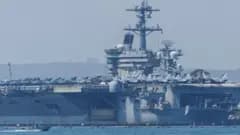
Then you have the Iranian side. They are backed into a corner. They have to talk big because if they don't, they lose credibility on the world stage. Saying they will treat a new attack as part of an old war is a clever, albeit terrifying, strategic pivot. It acts as a blank check for **regional violence**. It raises the stakes, piling all past grievances onto one single future moment. That is a recipe for disaster.
Why is this specific threat different? Usually, these countries engage in a controlled dance—a base hit here, a ship seized there. Everyone knows the steps to this **geopolitical proxy war**. But now, Tehran is saying they might change the music entirely. They are hinting that the old rules of containment don't apply anymore. That is the part that should make you sweat. When the rules go out the window, "anything" can happen—and "anything" usually involves critical infrastructure getting vaporized.
Do the people in charge care? Unlikely. The folks in D.C. are probably high-fiving because war talk is great for defense contractors' stock prices. Meanwhile, in Iran, the leadership uses the threat of "Big Bad America" to distract their populace from internal economic woes. It is the oldest trick in the SEO playbook of statecraft: Create a monster outside the gates so nobody notices the rot inside the castle.
So, what does this mean for you? Probably nothing good. If things get "dramatic," expect **gas prices to skyrocket** and the stock market to wobble. We are all sitting in the back seat of a car driven by maniacs playing chicken with our futures. They both think they are the righteous heroes; they are both wrong. This threat to link a new attack to the "last summer's war" is a permission slip for escalation. We can only hope they miss each other, but based on the current search trends and rhetoric, I wouldn't bet money on it.
***
### References & Fact-Check * **Original Event**: This analysis interprets recent statements from Iranian officials regarding their potential response to US military action. * **Source**: [BBC News - Why Iran's response to a US attack could be different this time](https://www.bbc.com/news/articles/cn9z497g4vvo?at_medium=RSS&at_campaign=rss) * **Context**: The "war from last summer" refers to the ongoing regional hostilities involving Israel, Gaza, and Iranian-backed groups, which Tehran is now formally linking to direct US interactions.
This story is an interpreted work of social commentary based on real events. Source: BBC News