IOC 1936 Berlin Olympics T-Shirt Controversy: Turning Nazi-Era History Into Heritage Collection Merch


You really have to hand it to the corporate world for their commitment to hitting rock bottom. Just when you think the bar for ethical vacuums cannot go lower, the **International Olympic Committee (IOC)** grabs a shovel. In a spectacular display of tone-deafness that is currently dominating the news cycle, the IOC decided it would be a brilliant strategy to sell a T-shirt celebrating the **1936 Berlin Olympics**.
Yes, *those* Olympics. The games hosted by Adolf Hitler. The global propaganda stage for the Nazi regime. The IOC looked at this dark chapter of **Berlin Games history** and thought, "You know what? That logo has great retention potential. Let's monetize it." It is a masterclass in ignoring history, decency, and the suffering of millions, all to push units in their **Olympic Heritage Collection**.
Instead of treating the 1936 branding as a solemn historical footnote, the IOC released this item as just another fun sports memory, slotting **Nazi-era Olympics merchandise** right next to London 2012 or Atlanta 1996. When the public understandably recoiled at the idea of turning fascism into casual streetwear, the IOC’s response was classic bureaucratic keyword-stuffing. They defended the shirt, claiming the collection was about celebrating the "design history" and connecting with new audiences through "style."
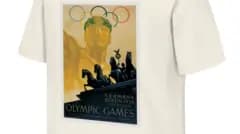
Let’s translate that corporate speak into plain English. They are telling us that as long as an image looks retro, the context—even if that context is a genocidal dictatorship—doesn't matter to the bottom line. They are treating history as a mood board of logos and fonts to be printed on cotton and sold to consumers who prioritize aesthetics over **historical accuracy**.
The IOC claims neutrality, constantly asserting that sports shouldn't be political. Yet, by selling this shirt, they are making a massive political statement. They are scrubbing the dirt off the history books to make the **1936 Berlin Games** sellable. When you treat these games as just another "heritage" moment, you normalize the terrifying display of power that occurred there. To the IOC, the 1936 Games aren't a lesson in how sports can be weaponized; they are just "Intellectual Property" to be leveraged for revenue.
This is the ultimate failure of modern branding. The IOC is hiding behind the word "Heritage," but heritage implies pride. Is the IOC proud of 1936? By including this in a collection meant to "celebrate" the Olympics, they imply the 1936 Games are worth celebrating. They will eventually back down—corporations always do when the social sentiment turns negative—but the fact that this passed through design, approval, and photography without a single person flagging the **ethical implications** is the real tragedy.
Congratulations to the IOC. You have successfully reminded us that there is no tragedy so great that a corporation won't try to turn it into a fashion statement. In a world where everything is for sale, they actually tried to sell us the 1936 Berlin Olympics as a cool, retro vibe.
<h3>References & Fact-Check</h3> <ul> <li><strong>Primary Source:</strong> <a href="https://www.bbc.com/news/articles/cpv8zwxwp2eo?at_medium=RSS&at_campaign=rss">BBC News: IOC criticised for selling Nazi-era Olympics T-shirt</a> - Confirms the release of the shirt as part of the Heritage Collection and the subsequent backlash.</li> <li><strong>Historical Context:</strong> <a href="https://encyclopedia.ushmm.org/content/en/article/the-nazi-olympics-berlin-1936">United States Holocaust Memorial Museum: The Nazi Olympics Berlin 1936</a> - Provides authoritative context on the propaganda usage of the 1936 Games.</li> <li><strong>Subject:</strong> The item in question was part of the IOC's "Heritage Collection," intended to celebrate the design history of past games, despite the controversial nature of the 1936 host regime.</li> </ul>
This story is an interpreted work of social commentary based on real events. Source: BBC News