The Geopolitics of the Graveyard: Why Turkey Prefers a Stable Tyranny to a Messy Liberation

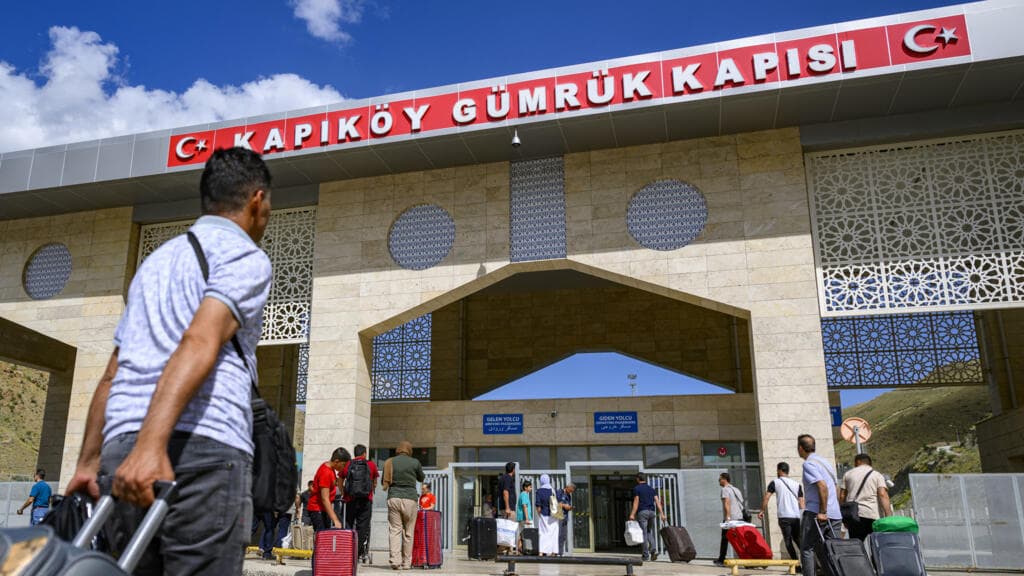
Ah, behold the sublime majesty of international diplomacy, that high-stakes game of musical chairs where the chairs are made of bone and the music is the rhythmic thud of a riot baton against a student’s skull. We find ourselves once again staring at the Middle East, a region that has spent the last century being carved up by colonial ghosts and is now being held together by the sheer, desperate willpower of aging autocrats who fear the 'void' more than they fear the fire. In the latest installment of 'Better the Devil You Know,' the Turkish government has stepped forward to play the role of the neighborhood’s concerned landlord, wagging a finger at the very idea of Iranian regime change while the streets of Tehran become a literal slaughterhouse.
Let us pause to appreciate the exquisite hypocrisy of it all. Turkey, a nation that fluctuates between a bridge to the West and a neo-Ottoman fever dream depending on which way the wind blows and how many billions are in the coffers, is now the primary advocate for 'stability' in Iran. Stability, of course, is a linguistic shell game played by politicians to describe a situation where the right people are being murdered for the right reasons. When Turkey looks across the border and sees security forces conducting a 'deadly crackdown' on nationwide protests, they don’t see a humanitarian catastrophe or the legitimate screams of a population suffocated by theocratic lunacy. No, they see a logistics problem. They see a potential refugee crisis. They see the terrifying possibility that, if the mullahs fall, the resulting vacuum might actually require them to have a foreign policy that doesn't involve blaming everything on an external conspiracy.
The Turkish government, in a move that surprises absolutely no one with a functioning brain, has reached into the dusty bin of geopolitical clichés and pulled out the 'Israel did it' card. It’s a classic, isn't it? It’s the comfort food of Middle Eastern politics. When your neighbor is setting their own house on fire because they’ve been huffing the fumes of religious extremism for forty years, you don't blame the arsonist—you blame the guy down the street for 'exploiting the unrest.' According to Ankara, the protests aren’t about women wanting to breathe or the youth wanting a future that isn't a funeral procession; it’s an Israeli plot to destabilize the region. It is a pathetic, transparent deflection, but in the halls of power, the truth is a luxury no one can afford. It’s much easier to lead efforts to block military action and regime change when you can paint the entire movement as a Zionist puppet show.
But let’s be fair: the alternative—the Western fetish for regime change—is equally nauseating. We have seen this movie before. The West watches a revolution from the safety of a television screen, cheers for 'democracy' while providing nothing but hashtags and thoughts, and then acts shocked when the resulting collapse leads to a decade of civil war and the rise of a new, even more competent monster. Turkey’s fear of regional destabilization isn’t entirely born of paranoia; it’s born of the knowledge that the West’s idea of 'liberation' usually involves leaving a pile of rubble and a 'Mission Accomplished' banner behind. The Turkish stance isn't about saving Iranian lives; it’s about preventing the splatter of a collapsing neighbor from ruining their own expensive rug. It is self-preservation masked as regional stewardship.
We are witnessing the slow-motion death of an era, where the only thing keeping the borders from melting is the shared interest of rival bullies. Iran’s security forces are busy turning their own cities into combat zones, and Turkey is standing at the border with a 'Do Not Disturb' sign, terrified that if the regime actually falls, the Kurdish question might become a Kurdish exclamation point. This is the intellectual bankruptcy of the modern state: a world where we must choose between a murderous status quo and a catastrophic unknown. The protesters, those poor, deluded souls who actually believe their lives matter more than a pipeline or a border agreement, are merely the grit in the gears of a machine that doesn't care if it grinds them into dust.
Ultimately, Turkey's blocking of regime change calls is the most honest thing they’ve done in years. It’s a admission that in the cold, hard reality of 21st-century power, a graveyard is preferable to a construction site. They would rather deal with a regime that kills its own people with predictable regularity than deal with a free people whose next move is an unknown variable. It is a bleak, soul-crushing testament to the fact that 'human rights' is a term used only for press releases, while 'stability' is the only god anyone actually worships. So, keep your eyes on the border, watch the smoke rise, and remember: in the eyes of the state, you are not a citizen; you are just a potential source of instability that needs to be managed, silenced, or sacrificed for the greater good of the map.
This story is an interpreted work of social commentary based on real events. Source: RFI