The Blind Leading the Bankrupt: Why Wall Street’s Financial Geniuses Are Too Busy Self-Gifting to Notice the Abyss
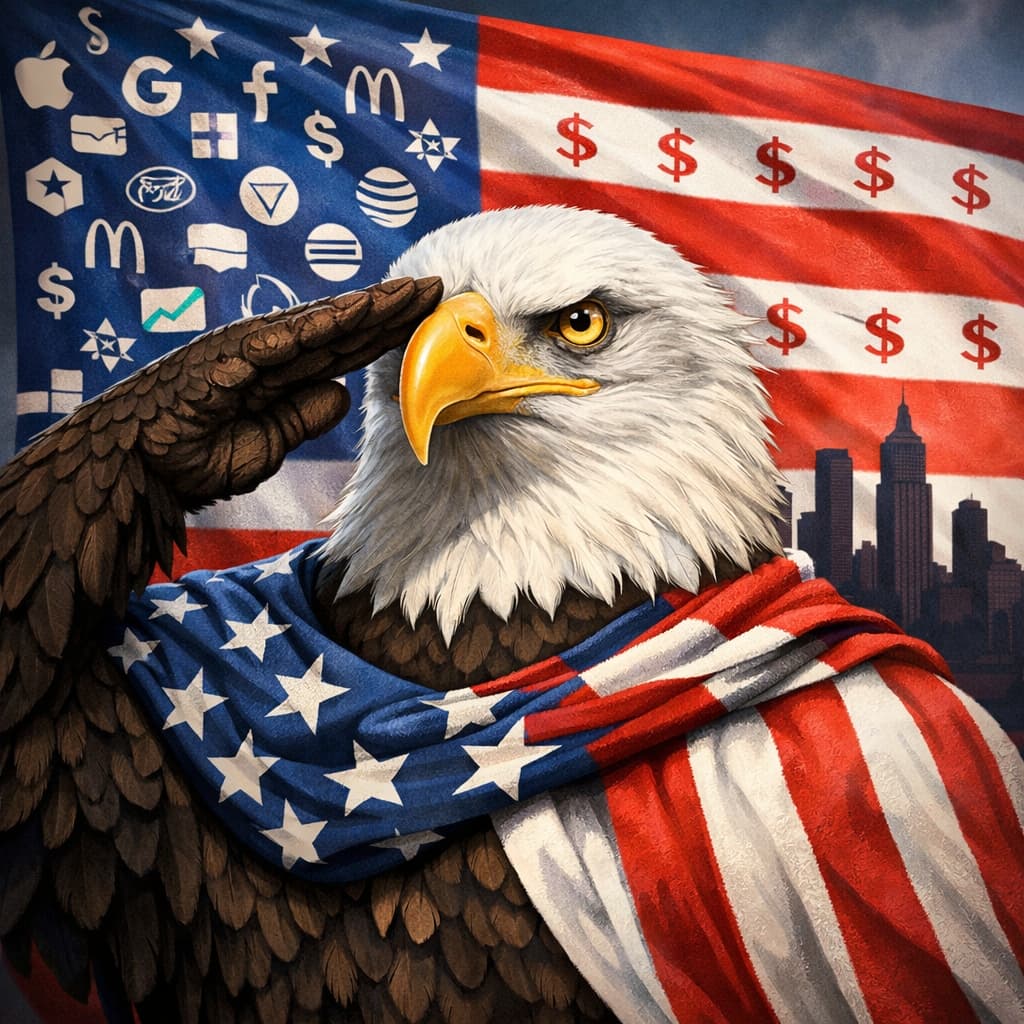

Let us pause for a moment of collective silence for the intellectual vacuum known as the financial sector, a demographic that manages to combine the arrogance of a brain surgeon with the predictive accuracy of a Magic 8-Ball. A recent series of reports—delivered with the gravity of a papal encyclical—suggests that even the 'best' traders struggle to predict sudden jumps in volatility. This is about as shocking as discovering that a toddler cannot predict when they are going to soil their diaper. It is a stunning admission of the obvious, yet it ignores the fundamental truth: Wall Street isn’t designed to see the crash. It is designed to be the crash.
The problem with the modern financial apparatus is that it has mistaken velocity for wisdom. We live in an era where algorithms, programmed by twenty-somethings who haven’t experienced a day of genuine hardship in their lives, trade at the speed of light. They have built a digital Rube Goldberg machine where a sneeze in Shanghai can lead to a foreclosure in Des Moines, and they have the audacity to act surprised when the gears inevitably grind into a fine powder. They talk about 'tail risk' and 'black swans' as if these are mystical occurrences from a Tolkien novel, rather than the predictable result of turning the global economy into a high-stakes casino where the house is also on fire.
The Left will, with their usual performative outrage, demand more 'oversight.' They want a bureaucracy of mid-level academics to oversee a den of wolves, as if a clipboard and a sternly worded memo could stop a hedge fund manager from chasing a three-percent margin into the abyss. They believe the system can be 'fair,' which is a charmingly naive delusion for people who claim to understand sociology. They think the beast can be tamed by people who think 'equity' is a social goal rather than a balance sheet entry. On the other side, the Right will screech about 'market fundamentals' and 'capital efficiency,' as if the current state of the markets isn’t just a subsidized fever dream propped up by central bank printing presses. They want the freedom to fail, but only if the taxpayers are there to catch them with a golden parachute made of debt. They worship at the altar of the 'invisible hand,' ignoring the fact that the hand is currently busy picking their own pockets.
The reality is far more depressing. We are trapped in a cycle of perpetual myopia. The 'best' traders are merely the ones who have been lucky for the longest duration. In a world of random walks, someone is bound to look like a genius until they look like a corpse. The volatility they fear is not some external monster; it is the friction of their own greed rubbing against the reality of a finite planet. They cannot see the crash because their eyes are fixed firmly on the bonus check due at the end of the quarter. Why look at the iceberg when the deck chairs are being rearranged so profitably? These traders spend their lives analyzing 'data points' that are essentially just the collective heartbeats of a panicked herd, yet they fancy themselves as masters of the universe.
We are told that 'sudden jumps in volatility' are the enemy. In truth, they are the only honest thing left in the market. They are the moments when the veneer of stability peels back to reveal the twitching, panicked heart of a species that doesn't know how to stop consuming. The traders don't see it because their models don't allow for it. The models assume rational actors. This is the ultimate joke. If humans were rational, we wouldn't have invented 'derivatives' of 'subprime' assets. We wouldn't be betting on the failure of our own neighbors. We wouldn't be entrusting our collective future to a group of people who think a 'correction' is something that happens to a market rather than a description of what should happen to their own ego.
The next crash will happen, and the 'geniuses' in Midtown will stand on their mahogany balconies, looking genuinely bewildered. They will go on cable news, their adjusted silk ties shimmering under the studio lights, and explain how 'no one could have seen this coming.' And they will be right, in the most pathetic way possible. They couldn't see it because they were busy staring at their own reflections in the glass of their skyscrapers, convinced that because they were winning, the game was fair. It isn't a game. It's a suicide pact signed in invisible ink. And as the market plunges into the next inevitable void, the only thing more certain than the loss of billions is the fact that we will learn absolutely nothing from it. We will simply wait for the dust to settle, pick up the remaining scraps, and start the whole idiotic process over again, hoping that the next time, the Magic 8-Ball finally gives us a straight answer while we slide into oblivion.
This story is an interpreted work of social commentary based on real events. Source: The Economist