State-Sanctioned Cowardice: The Uvalde Verdict and the Total Collapse of the 'Protector' Myth

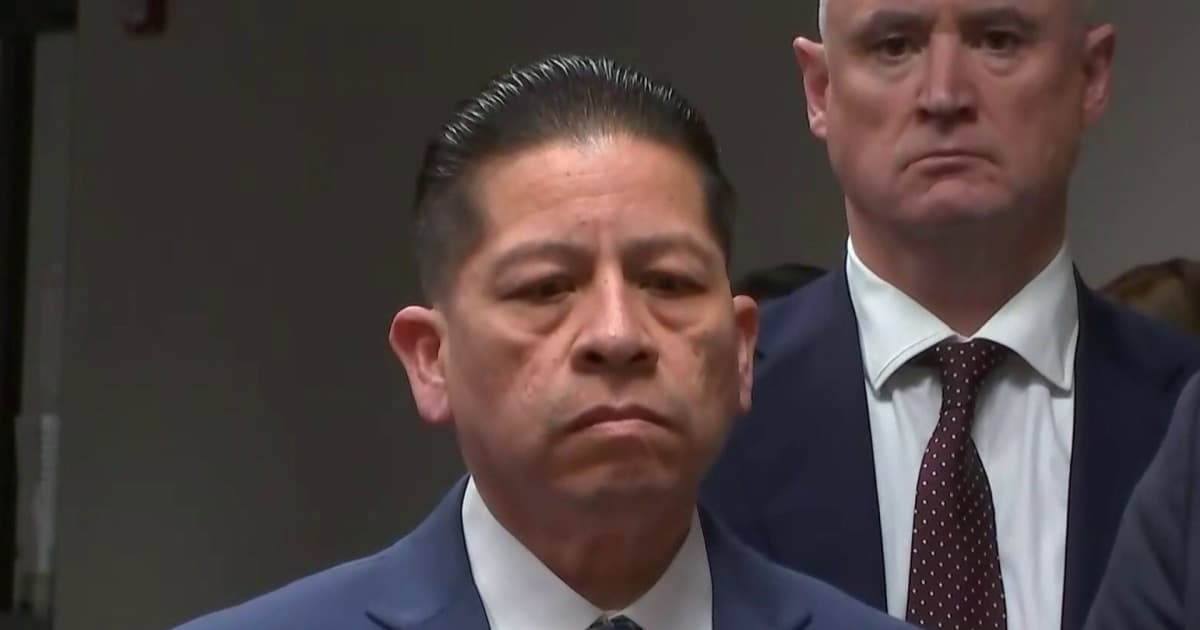
In a turn of events that should shock absolutely no one familiar with the intricate, self-preserving clockwork of the American legal system, former Uvalde School District police officer Adrian Gonzales has been found not guilty on all 29 counts of child abandonment and endangerment. Let us pause to appreciate the grim majesty of this verdict. It serves as the final, codified admission that the 'Thin Blue Line' is not a shield, but merely a branding exercise for a municipal employment program that offers no actual service when the bill comes due.
Wednesday night’s acquittal sends a message so loud it shatters the eardrums of anyone still clinging to the naive belief that authority figures have a distinct duty to act authoritatively. The charges stemmed from the horrific 2022 massacre at Robb Elementary School, where 19 children and two teachers were slaughtered while a small army of law enforcement officers conducted a masterclass in loitering within the school’s hallways. Gonzales was the first officer to face a trial. The specific charges—child abandonment and endangerment—seemed, to the layman, like a slam dunk. After all, if you are a designated school police officer and you stand by while the children you are paid to protect are systematically hunted a few yards away, have you not abandoned them? Have you not endangered them by occupying the space that a brave person might otherwise fill?
Apparently not. The jury, presumably guided by the strict, soulless letter of the law, decided that cowardice is not a crime. And in the strictest sense, they are right. In America, incompetence is not a felony; it is a prerequisite for public office. We have built a society where the visual language of safety—the badges, the tactical vests, the cruisers, the budget-bloating weaponry—is entirely divorced from the actual provision of safety. Gonzales stood accused of failing to act, but the system looked at his inaction and shrugged. It could not find a legal mechanism to punish a man for simply existing in a state of paralysis while the world burned around him.
This verdict is the inevitable conclusion of the 'Good Guy with a Gun' fantasy. The Right has spent decades selling the populace on the idea that the only thing stopping a bad guy with a gun is a good guy with a gun. Uvalde dismantled that mythology in real-time, and this verdict buries the corpse. We had plenty of 'good guys' with guns. They were everywhere. They cluttered the hallways. They had rifles, shields, and numbers. Yet, the legal system has now affirmed that possessing the gun and the badge does not obligate the bearer to use them in defense of the innocent. The gun is a prop; the badge is a receipt for a pension.
To charge Gonzales with abandonment was an attempt to enforce a moral contract that the state never actually signed. The prosecution tried to argue that by putting on the uniform, Gonzales accepted a duty of care. The defense, and ultimately the verdict, argued that self-preservation is the only law that truly matters, even for those whose job description implies the opposite. It is a stunning rebuke to the very concept of 'To Protect and Serve.' We now have judicial confirmation that 'Protect' is optional and 'Serve' refers only to serving the interests of the department’s liability insurance.
One must admire the sheer audacity of the outcome. Nineteen children died while grown men in body armor checked their phones and sanitized their hands, and the law has looked at this tableau of horror and found no criminal fault. It suggests that the standard for 'endangerment' is impossibly high. If standing idle during a massacre doesn't count as endangering the victims, one has to wonder what a police officer would actually have to do to get convicted. Perhaps if he had actively held the door open for the shooter? Or maybe if he had sold tickets to the event? Anything short of active participation in the crime seems to fall under the umbrella of 'standard procedure' or 'unfortunate tactical hesitation.'
This is not a failure of the jury, nor is it merely a failure of one man. It is the successful operation of a system designed to insulate state agents from the consequences of their own uselessness. We act surprised, but why? We live in a country where the Supreme Court has already ruled that police have no specific constitutional duty to protect individuals. The Uvalde verdict is just that ruling writ large in the blood of fourth graders. It forces the American public to confront a terrifying reality: You are on your own. The cavalry isn't coming. Or rather, the cavalry might come, but they will wait outside in the parking lot until the shooting stops, and a jury of your peers will agree that this was perfectly legal.
So, let us dispense with the shock. Let us put away the feigned outrage. Adrian Gonzales walks free because our society values the procedural rights of the inactive enforcer over the lives of the vulnerable. He is not guilty of a crime because we have decided that being useless is not illegal. It is, in fact, the industry standard.
This story is an interpreted work of social commentary based on real events. Source: NBC News