Drone Strike Diplomacy: The Exiled Activist’s Modest Proposal for the Supreme Leader
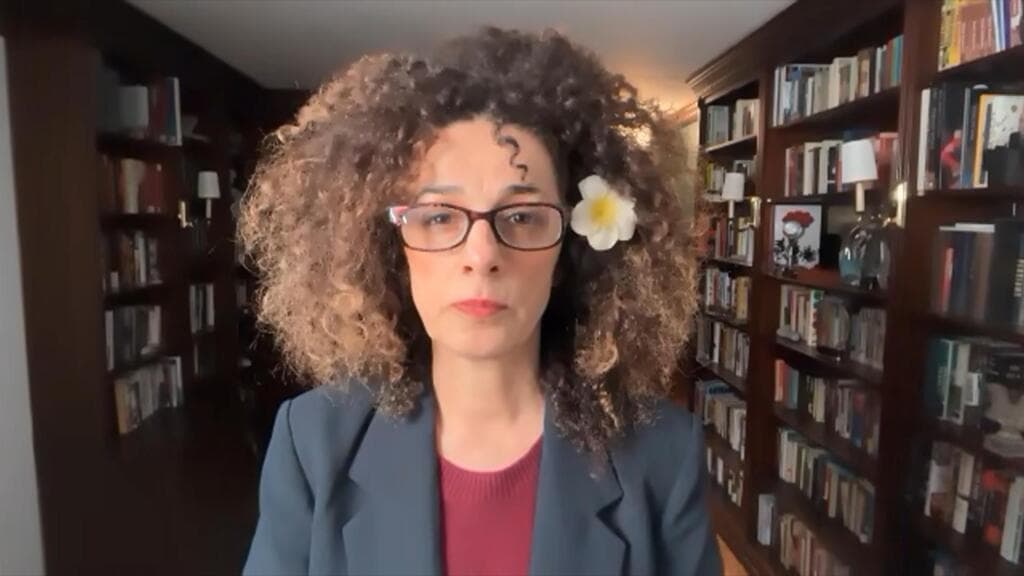
There is something deliciously, almost pathologically, modern about the state of global politics today. We have abandoned the tedious pretenses of statecraft, the exhausting rituals of summits, and the dusty language of treaties in favor of something much more primal: the televised request for an assassination. It is the political equivalent of ordering a hit via a food delivery app, and Masih Alinejad is currently the one holding the smartphone.
Speaking to France 24—that bastion of high-minded European journalism that usually prefers discussing the nuances of the Common Agricultural Policy—Alinejad has dispensed with the usual calls for 'dialogue' or 'increased sanctions.' Instead, she has reached for the ultimate instrument of American foreign policy: the targeted killing. Her message to the incoming Trump administration was as subtle as a sledgehammer to a stained-glass window: 'Kill Ali Khamenei the way that you killed Qassem Soleimani.' One has to admire the surgical directness of it. Why bother with the slow strangulation of an economy when you can simply ask the most unpredictable man in the Western world to send a drone to a specific set of coordinates? It is the sort of geopolitical advice that makes one long for the relative stability of the Cold War, where at least the threats were whispered in shadowy corridors rather than shouted on international news cycles.
Alinejad’s central thesis is that Ayatollah Ali Khamenei is 'scared' of Donald Trump. It is a fascinating psychological projection to dissect. On one side, we have the Supreme Leader of the Islamic Republic, a man who has spent the better part of four decades perfecting the art of the grimace and the theological crackdown. On the other, we have a man whose primary geopolitical strategy involves a cocktail of golf, grievance, and 3:00 AM social media posts. The idea that the 'divine' authority in Tehran is trembling at the thought of the 'Golden' authority in Mar-a-Lago is a piece of theatrical absurdity that even Beckett might have found too heavy-handed. And yet, there is a grain of terrifying logic to it. Autocrats, by their very nature, thrive on predictable systems—even if they are systems of their own making. Trump, a man who treats international norms with the same regard a toddler treats a delicate piece of heirloom porcelain, is the ultimate nightmare for a bureaucratic theocracy. You cannot negotiate with a man who might decide to upend the chessboard simply because he didn't like the color of the pieces.
The reference to the 2020 assassination of Qassem Soleimani is, of course, the pivotal moment in this unfolding tragicomedy. That event was the pinnacle of Trump’s performance art, a moment where the sheer vulgarity of modern power met the ancient reality of death. It was a strike that bypassed every diplomatic channel and every institutional safeguard, executed with the casual indifference of a man selecting a tie. Alinejad is now calling for a sequel, a 'Soleimani 2.0' starring the head of the state himself. It is a remarkable evolution for an activist supposedly dedicated to the cause of human rights and democratic reform. We have reached a point where 'activism' has become a lobbying effort for high-altitude homicide. It is the ultimate intellectual exhaustion of our era; we can no longer imagine a world where change happens through the slow, messy process of human agency, so we beg the Great Barbarian to drop a bomb on the problem instead.
There is, of course, a certain irony in an exiled activist using the relative safety of a Parisian television studio to call for a decapitation strike in Tehran. It highlights the grotesque disconnect between the rhetoric of the diaspora and the reality of the ground. While Alinejad dreams of a world where Khamenei is erased by a Hellfire missile, the machinery of the Islamic Republic—its Revolutionary Guard, its sprawling intelligence networks, its fossilized bureaucracy—would almost certainly persist, fueled by the very 'martyrdom' such an act would provide. Killing a man is easy; killing a system that has spent forty years preparing for its own destruction is a task far beyond the reach of a drone or a tweet.
But logic is a rare commodity in the theater of the absurd. We prefer the narrative of the 'scared' leader and the 'strong' savior. We want to believe that the world’s most intractable problems can be solved with a single, violent stroke of the pen. It is a comforting fiction for a world that has lost its grip on reality. As the global order continues its slow, rhythmic collapse, we are left with these spectacles: activists calling for blood, autocrats hiding in shadows, and a former president preparing to return to the stage like a vengeful ghost. It is a shambolic display, lacking even the dignity of a proper tragedy. It is merely a burlesque of power, performed for an audience that is too tired to do anything but watch the screen and wait for the next explosion.
This story is an interpreted work of social commentary based on real events. Source: France 24