The Boy Wonder’s Second Act: Sebastian Kurz and the Global Marketplace for Illiberal Tech Bros

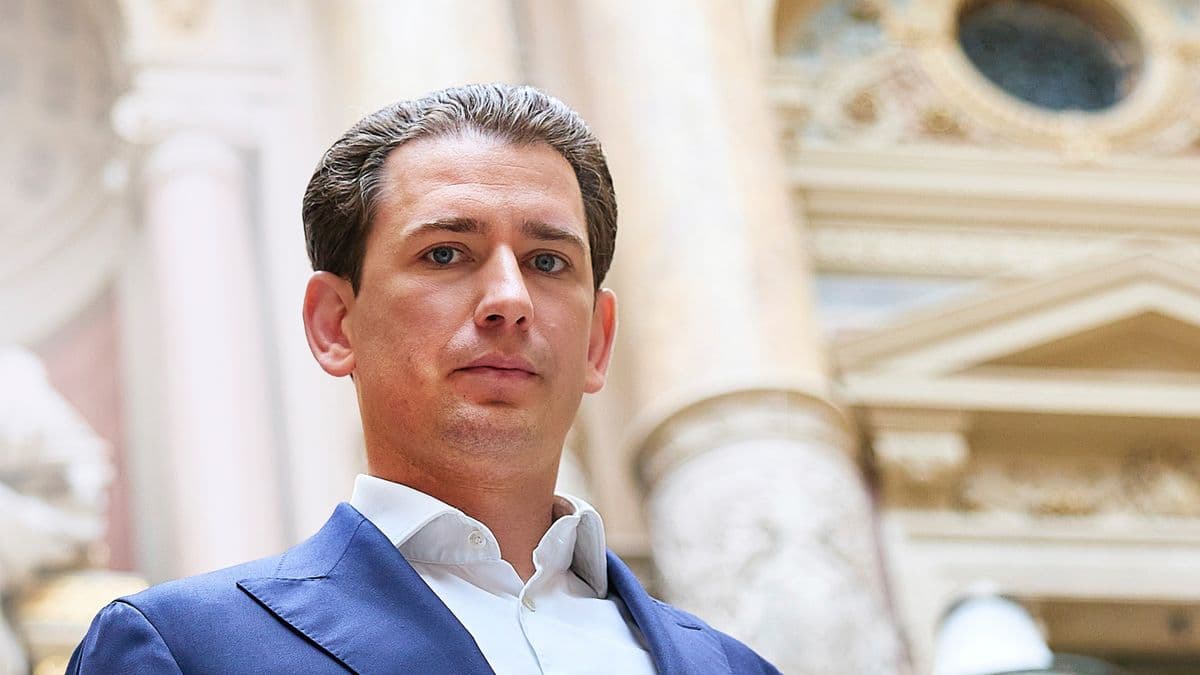
The inevitable return of Sebastian Kurz is upon us, though it lacks the dignity of a proper resurrection. He didn't exit the political stage so much as he slid into the costume shop to swap his chancellor’s sash for a fleece Patagonia vest. The man once heralded as the 'Wunderwuzzi'—the Austrian Boy Wonder who was supposed to save the European Right from its own geriatric irrelevance—is now a peripatetic 'businessman.' In the sanitized parlance of the global elite, 'businessman' is a title so deliciously vague it is legally indistinguishable from 'professional bagman' or 'access peddler.' In the rotting, baroque heart of Vienna, they thought they’d seen the last of him. Instead, he has mutated into a globalist nomad, orbiting the tech-bro sun like a moth with an exceptionally expensive haircut.
Let’s examine the choice of playmates for this second act. If you are a disgraced European leader with a penchant for centralized authority and a documented allergy to transparency, where do you go to seek your fortune? You head straight for the open, cold arms of Silicon Valley. Specifically, you go to Peter Thiel. It is the ultimate cynical synergy: the billionaire who famously mused that democracy and freedom are no longer compatible, meeting the former chancellor who attempted to turn the Austrian state into a personal public relations machine. It is a marriage made in a very sterile, very expensive bunker. Kurz’s alliance with the tech elite isn’t merely about money; it is about a shared, burgeoning philosophy of 'disruption,' which is simply a trendy, algorithm-friendly word for 'ignoring the annoying rules that apply to the commoners.'
The spectacle of Kurz’s current global tour is a masterclass in the profound emptiness of modern power. He is traveling the world under the guise of commercial enterprise, but he is really just a walking monument to his own survival. He maintains ties with the powerful because power is the only currency he recognizes, and it is a currency that doesn't suffer from inflation even when its bearer is under investigation. Whether he is in Abu Dhabi, Tel Aviv, or a boardroom in Palo Alto, the message remains consistent: the old categories of 'Left' and 'Right' are merely distractions for the suckers in the cheap seats who still believe in manifestos. For the VIPs, there is only 'Efficient' and 'Inefficient.' And Kurz, with his robotic delivery, slim-fit suits, and terrifyingly symmetrical face, is nothing if not an efficient vessel for the monetization of influence.
The 'Illiberal Right' is a term that political scientists love to throw around because it makes them feel like they are diagnosing a disease rather than watching a heist. In reality, it is just a rebranding of the same old grift. The idea that Kurz represents a new bridge between technology and conservative politics is laughable; he represents the inevitable collapse of politics into technology. Why bother with the messy, unpredictable business of voters and parliaments when you can just have an algorithm, a private equity firm, and a series of 'strategic partnerships'? The left-leaning critics will predictably wring their hands and scream about the death of democracy, conveniently forgetting that their own technocratic idols are just as deeply embedded in the same venture capital firms. They don't hate Kurz for his cynicism; they hate him because he’s honest about the fact that the world is now run by a board of directors rather than a cabinet of ministers.
Is he coming back to politics? The rumors are as persistent and unwelcome as a cockroach in a nuclear winter. The Austrian political landscape is currently a smoldering dumpster fire, and Kurz knows that the average voter has the memory span of a goldfish on a heavy dose of Xanax. He waits. He builds his war chest in the private sector, laundering his reputation through board memberships and keynote speeches at conferences that cost more to attend than the median annual salary. He is no longer a politician in the traditional sense; he is a software update waiting for the right moment to force an automatic install. The 'Return of Kurz' would be the ultimate Hollywood sequel—slicker, dumber, and with significantly better lighting, but featuring the exact same plot holes as the original.
Ultimately, Kurz is the avatar of our hollowed-out age. He is the man from nowhere who went everywhere and learned absolutely nothing, except that the world is remarkably easy to manipulate if you look good on camera and possess no pesky internal moral compass. His journey from the Chancellery to the Silicon Valley boardroom is not a fall from grace; it is a promotion into the real theater of power. In the modern world, being 'disgraced' is just another way of saying 'available for hire at a premium rate.' We deserve him. We deserve the sleek, empty vessel of a leader who views the citizenry as a user base to be managed rather than a people to be served. So, keep your eyes on the private jet trackers. Kurz is out there, networking with the monsters who design the apps that keep you distracted while they carve up the planet's remaining assets. He is the bridge between the old-school authoritarian and the new-school technocrat. It is a terrifying prospect, unless you have already surrendered to the void, in which case it is just another Tuesday in the long, slow decline of Western civilization. Drink your overpriced coffee and wait for the notification: Kurz 2.0 is loading, and it will likely be subscription-based.
This story is an interpreted work of social commentary based on real events. Source: Der Spiegel