Donald Trump Calls to Nationalize Elections: The Clash Between 'States' Rights' and Federal Control

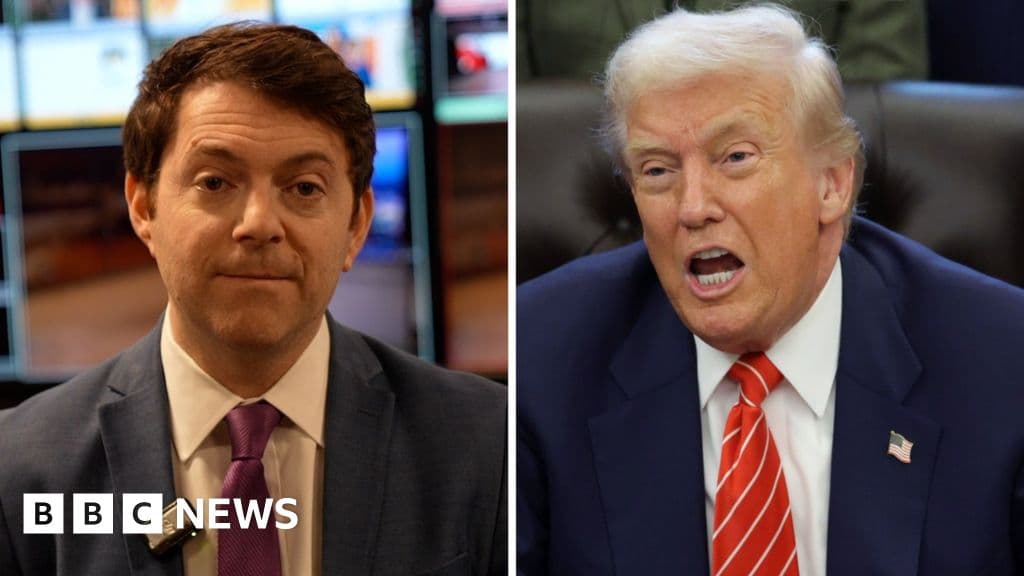
<p>If you have been monitoring the analytics of American politics long enough, you likely feel trapped in a feedback loop with a broken record player. The bounce rate is high, the melody is terrible, and yet everyone keeps dancing. However, the latest high-volume signal coming from the United States involves former President <strong>Donald Trump</strong> and a sudden, bizarre pivot regarding <strong>US election reform</strong>.</p>
<p>Here is the breakdown, stripped of the punditry and optimized for clarity: Trump has suggested that the federal government should take over the rules for elections. He wants to <strong>nationalize elections</strong>. If you have any historical data on the <strong>Republican Party platform</strong>, you should be laughing right now. This is a complete deviation from the baseline.</p>
<p>Let’s analyze why this is ranking high on the irony scale. For decades, the GOP has optimized their brand around one main slogan: "Small Government!" They claim Washington, D.C. is a swamp and insist that local states should decide their own rules—a concept famously known as <strong>States' Rights</strong>. It was their canonical tag. Or at least, it was.</p>
<p>Now, the leader of that same movement is calling for the exact opposite. By proposing to <strong>nationalize the voting process</strong>, he is asking for the big, bad federal government to step in and dictate how every small town in America counts votes. It is a total reversal. It is like a vegetarian suddenly demanding to run a steakhouse.</p>

<p>Why is this pivot happening? Is it a sudden appreciation for federal bureaucracy? Unlikely. The user intent here is simple: the current rules are not converting into wins. In the theater of Washington, principles are deprecated features. If shouting "small government" increases your click-through rate, you say that. If demanding "big government control" helps you win, you pivot. It is not about logic; it is about retaining power.</p>
<p>To be fair, the <strong>US voting system</strong> is a UX nightmare. It is a fragmented infrastructure that most sophisticated countries view with concern. You have fifty states with fifty different distinct algorithms. In some places, you vote on a machine; in others, paper. A <strong>national election standard</strong> might actually improve the system's Core Web Vitals, but America is currently too polarized for a patch update.</p>
<p>The timing is also critical for context. We are in a <strong>midterm election year</strong>, a period when politicians typically exhibit high volatility. BBC correspondent Daniel Bush notes that these comments are causing a "stir"—a polite British euphemism for a viral panic. When a major figure suggests changing the mechanics of the election while the game is live, skepticism spikes.</p>
<p>This call to nationalize elections signals a lack of trust in local officials and voters. It suggests a preference for a system controlled from the top down. It is a cynical strategy, yet entirely predictable within current trends.</p>
<p>For the average user—the taxpayer—this means while you work, the power players are fighting over the backend mechanics of the ballot box rather than fixing infrastructure or healthcare. It is deeply exhausting. The "stir" is just noise, proving that the American political system is stuck in a loop, fighting over rules because they have run out of substantive content.</p>
<p>Ultimately, this is a significant development. It proves that in Washington, consistency is dead. The man who campaigned against the federal government now wants to utilize it as a weapon, and those who favor federal oversight are suddenly wary. The irony is optimized to perfection, even if the electorate is too distracted to notice.</p>
<h3><strong>References & Fact-Check</strong></h3> <ul> <li><strong>Primary Source:</strong> <a href="https://www.bbc.com/news/videos/cqxyx2pl1pzo?at_medium=RSS&at_campaign=rss">BBC News: Watch: Trump has called to nationalise US elections. Is it a big deal?</a></li> <li><strong>Fact-Check:</strong> The article reflects reporting that Donald Trump suggested nationalizing US elections, a stance historically at odds with the traditional Republican platform of "States' Rights" and decentralized governance.</li> <li><strong>Context:</strong> This discussion arises during a midterm election cycle, highlighting the tension between federal standards and state-level election administration.</li> </ul>
This story is an interpreted work of social commentary based on real events. Source: BBC News