Bucharest’s Grand Delusion: When Professional Victims Meet Amateur Tyrants

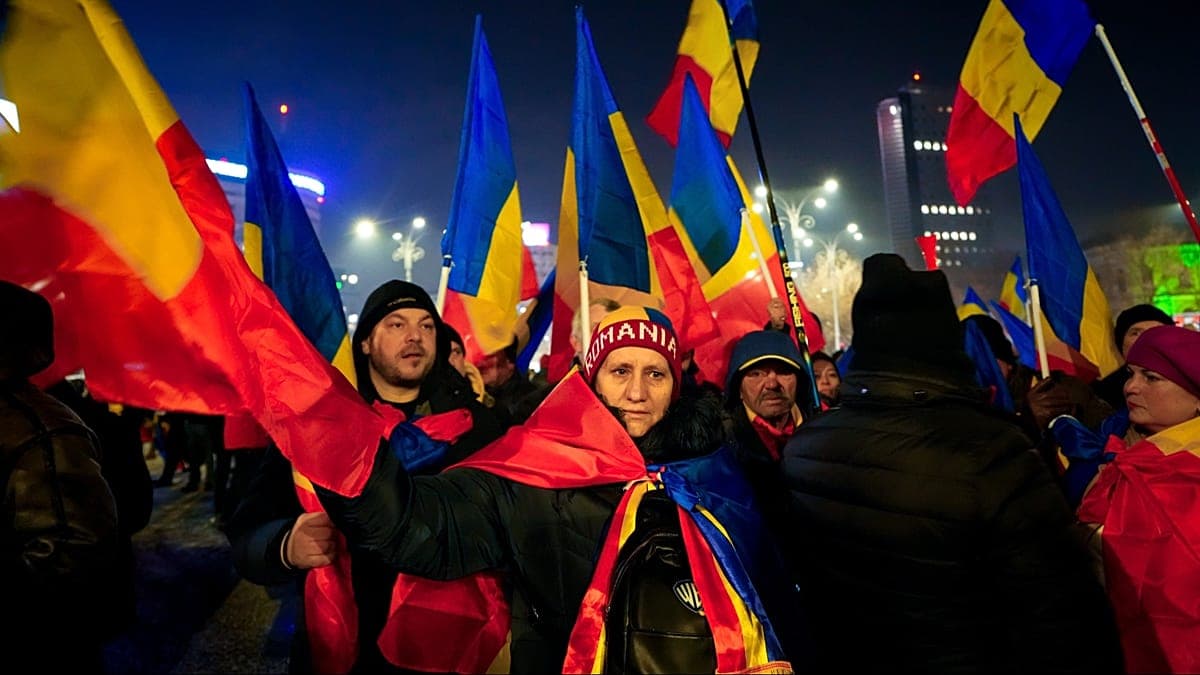
In the sweltering, grey humidity of Bucharest, a city that historically knows a thing or two about actual, bone-snapping tyranny, we are currently witnessing a performance of such high-octane stupidity that it almost reaches the level of art. Last week, thousands of Romanians descended upon the streets to protest a law they claim is an 'anti-free speech' guillotine. On the other side, the Romanian government, a collection of bureaucrats who likely find the concept of a clear sentence intimidating, insists the law is merely a noble shield against 'extremism.' It is a classic collision of the two most annoying forces on the planet: the hysterical mob and the disingenuous state.
Let’s start with the government’s defense, bolstered by the ever-vigilant 'fact-checkers' at The Cube. They’ve conducted an 'investigation'—which, in modern parlance, usually means they read the executive summary and didn’t see the word 'gulag' explicitly mentioned—and concluded that the legislation is intended to combat extremist activity. How comforting. Because if history has taught us anything, it’s that governments are exceptionally good at defining 'extremism' with surgical precision and never, ever use such vague terminology to silence anyone who points out that the Emperor is not only naked but also remarkably incompetent. In the hands of a politician, a law against 'extremism' is like a chainsaw in the hands of a toddler; they might start with the weeds, but eventually, the furniture is going to get it too.
The word 'extremism' has become the ultimate semantic safety blanket for the modern state. It is the 'get out of jail free' card for any administration looking to tidy up the messy business of public discourse. By labeling dissent as extremist, the state can bypass the tedious labor of actually governing and skip straight to the much more satisfying task of policing thought. And yet, the Romanian authorities expect us to believe that this time, in this particular corner of the Balkans, the motive is as pure as fallen snow. It is a level of gaslighting that would be impressive if it weren’t so depressingly standard for the EU’s eastern frontier.
But let’s not give the protesters too much credit. Watching the 'freedom of expression' crowd is like watching a group of people who have just discovered the concept of fire and are currently trying to use it to boil a rock. These are the same individuals who treat every minor legislative tweak as the second coming of the Securitate, yet they spend most of their 'free speech' time screaming incoherent conspiracies into the digital void. They don’t want a dialogue; they want a megaphone and an audience that is forbidden from telling them to shut up. Their version of liberty is a one-way street paved with their own unverified grievances. They are not defending the high ideals of Voltaire; they are defending their right to be spectacularly wrong at maximum volume without the inconvenience of social consequences.
This entire spectacle is being framed as a battle for the soul of Romanian democracy, but it’s actually just a demographic inventory of the deluded. On one side, you have the state, clinging to the 'anti-extremism' label like a shield made of cardboard, hoping no one notices that the definition of extremism is whatever the current minister had for breakfast. On the other, you have a populace that has replaced political literacy with a reflexive, pavlovian twitch whenever the word 'law' is mentioned. It is a mutual suicide pact of the intellect. The government wants to 'protect' the public from ideas, and the public wants to 'protect' itself from the burden of having any coherent ideas at all.
Then we have the 'fact-checkers'—those self-appointed high priests of the obvious—who have swooped in to tell us that, actually, the law isn't what the protesters say it is because the government’s 'intent' is different. Intent? Since when did political intent become a metric for truth? A man who accidentally sets his house on fire while trying to bake a cake still ends up homeless. Whether the Romanian government intends to be tyrannical or is simply so incompetent that they’ve accidentally written a tyrannical law is a distinction that only a tenured academic or a paid investigator could find meaningful. The result is the same: a legislative net that is far too wide, being cast by people who are far too small.
Romania is currently a microcosm of the global malaise. It’s a place where the Left’s performative concern for 'safety' meets the Right’s performative outrage over 'censorship,' and the only thing that actually gets produced is more noise. The law will likely pass, the protesters will go home to post more nonsense on Facebook, and the bureaucrats will congratulate themselves on saving the nation from a threat they probably invented to justify their own salaries. It’s not a tragedy; it’s a sitcom written by people who don’t understand humor. In the end, 'free speech' in Bucharest remains exactly what it is everywhere else: a convenient slogan used by everyone and understood by no one, while the actual truth is buried under a mountain of 'extremist' labels and 'fact-checked' lies. Everyone involved should be embarrassed, but that would require a level of self-awareness that is currently illegal under the laws of human nature.
This story is an interpreted work of social commentary based on real events. Source: EuroNews