The Great Media Onanism: DER SPIEGEL’s Masturbatory Quest for a 'Listening Newsroom'

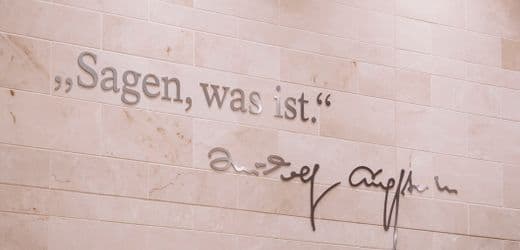
There is a specific brand of boredom reserved for the ritualistic self-dissection of legacy media. It is a peculiar, academic form of necropsy where the corpse—in this case, the German titan DER SPIEGEL—hires a professional mourner to tell it why it smells. Enter Bernhard Poerksen, a media studies professor whose primary contribution to the year of our lord two thousand and twenty-four has been to stare at a magazine for twelve months and conclude, with the gravity of a man discovering fire, that perhaps people don’t like being lectured by an ossified elite. This is the 'Public Uprising' we were promised: a guest essay by a man whose job is to observe other people failing at theirs, published in the very outlet he is critiquing. It is a feedback loop so tight it’s a wonder anyone can breathe.
Poerksen has spent over a year acting as the self-appointed conscience of DER SPIEGEL, and his final report is a masterclass in the kind of intellectual posturing that makes one long for the sweet silence of a library fire. He speaks of a 'listening newsroom,' a 'utopic vision' where the ivory tower finally installs a doorbell so the peasants can ring it. Let us be clear: the idea that a newsroom should 'listen' to its audience is not an innovation; it is a confession of terminal irrelevance. For decades, these institutions functioned as the high priests of truth, handing down tablets of wisdom to a grateful, silent public. Now that the public has discovered the ability to scream back through the digital abyss, the priests are terrified. They call it 'debate culture.' I call it a desperate attempt to monetize the cacophony of the deranged.
Poerksen’s essay claims to respond to hundreds of reader comments, treating the digital sludge of the internet as if it were a collection of Socratic dialogues. He suggests that the newsroom must evolve into a space of mutual exchange. This is the fundamental lie of modern media. The 'Left' wants the media to be a choir for their performative grievances, a safe space where every adjective is a trigger warning. The 'Right' wants a mirror for their paranoid delusions, a place where every fact is a conspiracy in a trench coat. Poerksen’s 'listening newsroom' is an invitation for both sides to come inside and smear their nonsense on the walls, provided they do so in a way that allows the editors to feel 'engaged.' It is not journalism; it is a focus group for the apocalypse.
There is something profoundly pathetic about the way Poerksen frames this 'listening.' He treats the audience like a volatile chemical that must be handled with care, rather than a collection of individuals who have largely checked out of the legacy media’s desperate bid for authority. The professor’s year-long observation is a monument to the fallacy that if we just analyze the 'process' enough, the 'product' will somehow stop being garbage. He posits a utopia, but utopias are, by definition, nowhere. A newsroom that listens to everyone hears nothing but white noise. It is the final stage of a dying industry: when you can no longer lead the conversation, you offer to hold the microphone for the loudest idiot in the room.
And what of these 'hundreds of reader comments'? Poerksen treats them with a reverence usually reserved for ancient scrolls. In reality, the comment section of any major publication is a digital landfill where nuance goes to die. By elevating this 'public uprising' to the level of a scholarly critique, Poerksen is merely providing DER SPIEGEL with the cover of transparency. 'Look at us,' the magazine cries as it sinks into the swamp of its own making, 'we are being critiqued by a professor! We are listening!' It is a performance of humility by an institution that remains fundamentally arrogant. They aren’t listening to change; they are listening to survive, like a predator trying to mimic the sounds of its prey.
The tragedy here isn't that the media is failing—it's been failing since the first printing press was used to sell indulgences. The tragedy is the intellectual cowardice of the 'utopia' being offered. Poerksen’s vision is a world where the distinction between the informed and the loud is completely erased in the name of 'debate.' It is the ultimate surrender to the mediocrity of the masses. If the 'listening newsroom' is the future of journalism, then the future is just a very expensive, very polite version of a Twitter thread. We are witnessing the final, gasping breaths of the Fourth Estate as it tries to apologize for existing while simultaneously begging for a subscription. It’s not an uprising; it’s a funeral where the guest of honor is also the priest, and he’s charging by the hour.
This story is an interpreted work of social commentary based on real events. Source: Der Spiegel