Next Purchases the Skin of Russell & Bromley to Wear as a Ghoulish Suit

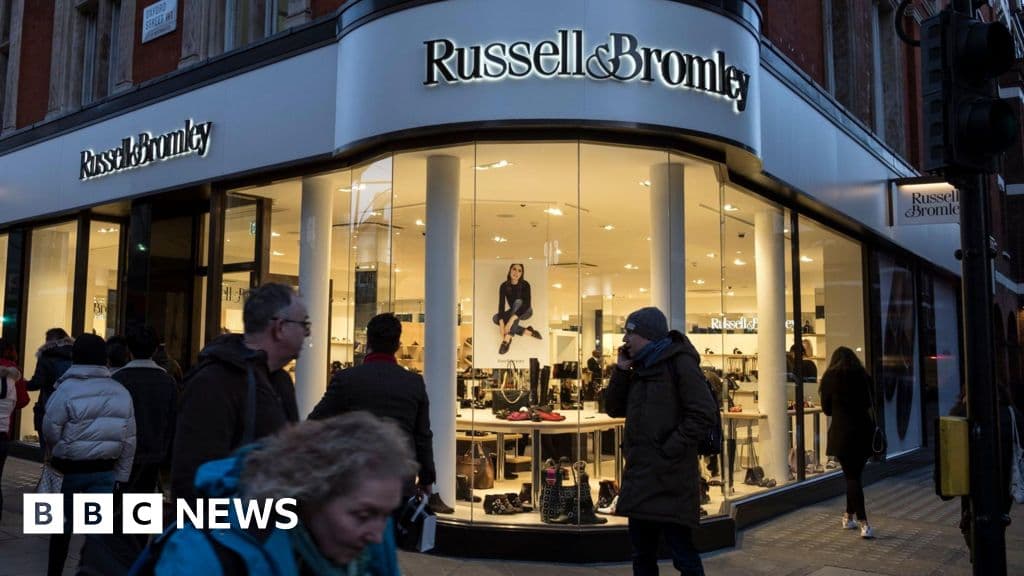
In a display of corporate necrophilia that would make a Victorian undertaker blush, Next has officially acquired the twitching remains of Russell & Bromley for the princely sum of £2.5 million. Let that number sink into your oxygen-deprived brains for a moment. Two and a half million pounds. In the current London property market, that might buy you a two-bedroom flat with a view of a skip and a persistent damp problem. For the same price, Next—the beige wallpaper of the British economy—has purchased a heritage shoe brand that once pretended to signify status for the sort of people who use 'summer' as a verb.
The British High Street is no longer a marketplace; it is a terminal ward where the lights are far too bright and the scent of desperation is poorly masked by synthetic 'new shoe' fragrance. The acquisition of Russell & Bromley is not a 'rescue,' despite what the sycophantic financial press might tell you. It is a harvesting operation. Russell & Bromley, a brand that spent decades convincing the middle classes that paying three hundred pounds for loafers was a substitute for having a personality, has finally succumbed to the reality that its clientele is either dead or has discovered that cheap trainers from a tech conglomerate are equally effective at carrying them to their pointless meetings.
Then we have the 'saviour' itself: Next. If humanity were a fabric, it would be a polyester-blend charcoal grey suit from the Next clearance rack. Next is the Borg of retail. It doesn't innovate; it merely absorbs. It has spent the last few years roaming the post-apocalyptic landscape of British commerce, picking up the scorched carcasses of brands like Cath Kidston and Joules, tossing them into its cavernous digital furnace to keep the fires of quarterly growth burning just a little longer. The plan is always the same: strip the brand of its dignity, shutter the physical locations where humans might actually interact, and move the entire operation into a soul-crushing logistics center in Leicester where the only thing being 'crafted' is a more efficient way to ship mediocrity to your doorstep.
The real punchline, however, is the fate of the thirty-three shops currently 'at risk.' In the sanitized language of corporate PR, 'at risk' is a polite euphemism for 'scheduled for execution.' We are expected to believe there is a world where Next keeps these boutique storefronts open, paying exorbitant business rates and staffing them with actual humans, when they could just as easily sell the same leather-wrapped vanity projects on an app between ads for garden furniture and discount underwear. These thirty-three stores represent the last vestiges of a world where shopping required effort, a world that is being systematically dismantled to make way for a frictionless utopia of cardboard boxes and delivery vans.
Consider the historical irony of the £2.5 million price tag. It is an insult, a rounding error on a balance sheet, a 'pity tip' left on the table by a giant that knows the waiter is about to be fired. It highlights the absolute collapse of the 'luxury' illusion. If a brand as storied as Russell & Bromley—founded in the 1870s, mind you—is worth less than a mediocre startup that makes AI-generated cat pictures, then we must admit that the 'heritage' we pretend to value is actually worthless. We are a society that knows the price of everything and the value of absolutely nothing, trudging along in shoes we can’t afford toward a future we haven’t planned for.
But don't worry, the politicians will tell you the economy is 'showing signs of resilience.' The Right will claim this is the 'creative destruction' of the free market, ignoring the fact that there is nothing 'creative' about a monopoly eating its competitors. The Left will performatively mourn the loss of high street jobs while simultaneously ordering their organic oat milk and fast-fashion accessories from the very platforms that are killing those jobs. Everyone is a hypocrite, and everyone is a victim of their own insatiable desire for convenience over quality, for the immediate dopamine hit of a purchase over the long-term stability of a community.
Next’s acquisition is just another milestone in the homogenization of our reality. Soon, every town in Britain will look exactly the same: a desolate row of shuttered storefronts, a few 'luxury' flats that no one lives in, and a single, massive Next outlet that sells everything from cradles to coffins. We are rearranging the deck chairs on a sinking ship made of calfskin leather and cardboard. Enjoy your new shoes while you can; they’re perfect for walking into the void, and at least they were bought at a discount.
This story is an interpreted work of social commentary based on real events. Source: BBC News