The Queen of Denial: Egypt and Germany Bicker Over a Limestone Head While the World Burns

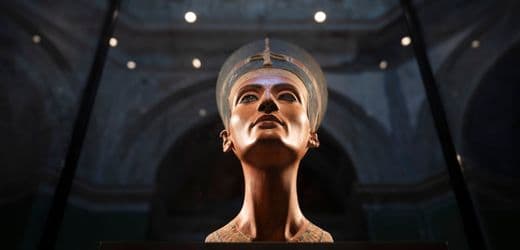
The Grand Egyptian Museum in Giza is finally open, a billion-dollar monument to the desperate hope that tourists still enjoy looking at the belongings of dead people who would have despised them. It is a massive, sterile sarcophagus for a national ego that hasn't seen a win since the Aswan Dam was a blueprint. And, of course, the architects of this concrete monstrosity have decided that the furniture is incomplete without the world’s most famous missing eye: the bust of Queen Nefertiti. Across the Mediterranean, the Germans are clutching their pearls—and their limestone—with the sort of rigid, bureaucratic entitlement that only a nation obsessed with paperwork could muster.
It is the ultimate custody battle, except both parents are terrible and the child has been dead for three millennia. On one side, we have the Egyptian government, a regime that treats its living citizens like an inconvenience while demanding the return of its ancestors with the fervor of a jilted lover. They claim Nefertiti belongs 'home.' It’s a touching sentiment if you ignore the fact that the 'home' in question has been sacked, occupied, and rebuilt roughly twenty times since she was mummified. To suggest that a modern political entity has a spiritual or legal claim to a piece of rock carved for a religious cult that vanished before the concept of 'Egypt' as a nation-state even existed is the kind of intellectual gymnastics that usually requires a heavy dose of narcotics.
But then, look at the Germans. Berlin’s 'Neues Museum' houses the bust with a proprietary smugness that is truly breathtaking. Their defense is built on the rock-solid foundation of 'we found it, we kept it, and we have a receipt signed in 1912 by people who didn't know better.' This is the 'legal acquisition' argument—a favorite of former colonial powers who managed to loot the globe while keeping the ledgers tidy. To the German government, the fact that Ludwig Borchardt might have obscured the bust’s significance to spirit it out of the country is just savvy business. It’s the archaeological equivalent of finding a wallet on the street, taking the cash, and then arguing that the owner’s lack of a lost-and-found permit means the money is now yours by right of Teutonic efficiency.
Neither side cares about the art. Let’s be clear: Nefertiti is a revenue stream. She is a tourist magnet, a brand, a logo for tote bags and coffee mugs. In Cairo, she would be the crown jewel of a museum that needs to justify its astronomical price tag to a population currently struggling to buy bread. In Berlin, she is a reason for people to pay fifteen euros to escape the damp, gray misery of a German winter. This isn't a struggle for heritage; it’s a struggle for market share. It is a fight between two different kinds of museum-industrial complexes, both of which rely on the fetishization of the past to distract from the rot of the present.
The Egyptians argue that the bust was 'stolen' under the guise of an unfair partition of finds. The Germans respond that the bust is too 'fragile' to travel—a convenient excuse that implies Egyptian air is somehow more corrosive than the exhaust fumes of Berlin. It’s a masterclass in passive-aggressive diplomacy. Germany’s concern for the bust’s safety is about as sincere as a loan shark’s concern for your health; they don't want the asset damaged because then they can’t collect the entry fees. Meanwhile, the Egyptian authorities act as if the return of this specific bust will somehow heal the national psyche, as if a piece of painted plaster can fix a devalued currency or a crumbling infrastructure.
And what of the Queen herself? Nefertiti lived through the Amarna period, a time when her husband, Akhenaten, tried to dismantle the entire social and religious fabric of the world’s greatest empire. She survived court intrigue, religious purges, and the eventual erasure of her name from history, only to end up as a pawn in a 21st-century PR war. If her limestone spirit could see us now, she would likely be rooting for the museum to burn down, just for the variety. She has been transformed from a powerful political figure into a mascot for historical grievances.
The irony is thick enough to choke a sphinx. We live in a world where borders are supposedly becoming obsolete, where the internet has 'democratized' information, yet we are still ready to go to the mat over which patch of dirt gets to host a specific lump of minerals. It is a testament to the enduring stupidity of the human race that we find meaning in the geography of dead things. Whether she sits in Berlin or Giza, she remains a silent witness to our collective decline.
The Egyptians will continue to sign petitions and make impassioned speeches about national dignity, conveniently ignoring the fact that dignity is usually found in how you treat the living, not how you display the dead. The Germans will continue to cite treaties from the era of the Kaiser, clinging to their stolen goods with the desperate grip of a dying empire trying to remember its glory days. In the end, nothing will change. Nefertiti will keep her smirk, the tourists will keep their cameras, and the rest of us will continue to rot in the present while our leaders argue over the past. It’s not history; it’s a hostage situation where the hostage is already a corpse.
This story is an interpreted work of social commentary based on real events. Source: Der Spiegel