The Glow of Resilience: Japan’s Tectonic Theater Returns to the Nuclear Stage

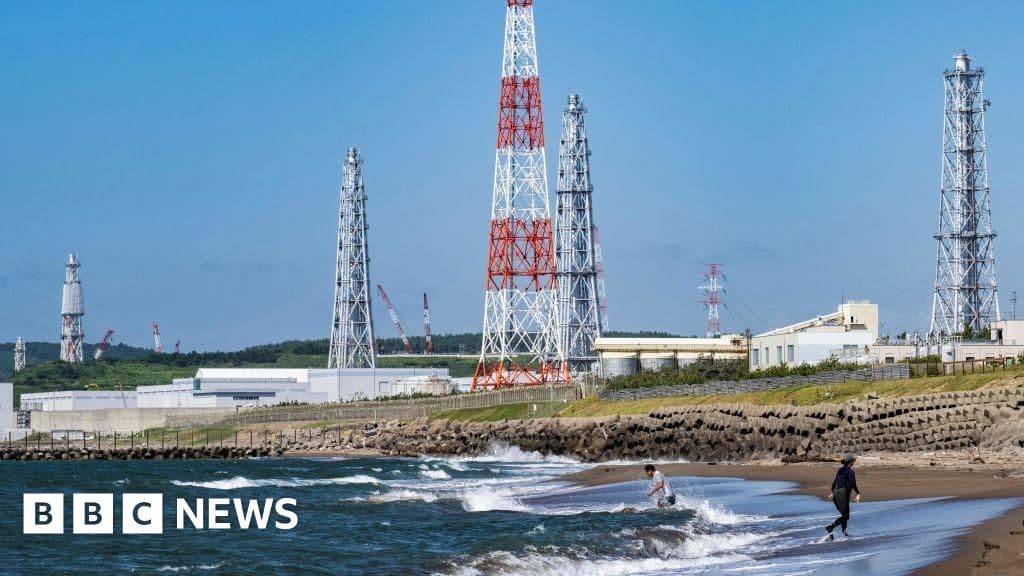
Ah, the Japanese archipelago—a place where the earth literally tries to shake off its inhabitants every other Tuesday, yet where the inhabitants insist on building the world's largest tea kettle directly atop the fault lines. Nearly fifteen years after the Fukushima Daiichi plant became a household name for all the wrong reasons, Tokyo has decided that the statute of limitations on existential dread has officially expired. The Kashiwazaki-Kariwa nuclear power plant, a sprawling monument to man’s hubris and his desperate need to keep the neon lights of Shinjuku humming, is waking up from its long, mandated slumber. It is the return of the prodigal reactor, and the world watches with the same weary resignation one feels when a thrice-divorced uncle announces his fourth engagement to a woman he met at a casino.
The operator, TEPCO—a name that carries about as much public trust as a used car salesman in a suit made of oily rags—is back at the helm. One must admire the sheer, unadulterated gall required to oversee a triple meltdown and then, a decade and a half later, shrug one's shoulders and ask for the keys to the world's biggest reactor. It is a triumph of bureaucratic persistence over common sense, a masterclass in the art of the 'safety upgrade.' We are told, with that uniquely sterile corporate optimism, that the plant is now 'secure.' New sea walls have been built, cooling systems have been redundantized to within an inch of their lives, and the paperwork—oh, the glorious, soul-crushing stacks of Japanese paperwork—has been meticulously filed. It is a comforting thought, provided one ignores the fact that nature does not read blueprints and the Pacific Ocean has a notorious disregard for administrative excellence.
This isn't just about electricity; it’s about the exquisite comedy of 'energy security.' Japan, a nation with the resource wealth of a pebble, finds itself squeezed between the rising costs of liquefied natural gas and the inconvenient reality that wind turbines have a difficult time surviving typhoons. Thus, the return to the atom. It is the ultimate Faustian bargain, renegotiated by middle managers in grey suits who believe that if they just bow deeply enough at the next press conference, the isotopes will behave. The 'world’s largest' tag is particularly delicious. In the theater of the absurd, why settle for a minor mishap when you can aim for a record-breaking catastrophe?
I remember the post-2011 rhetoric. 'Never again,' they said. 'A nuclear-free future,' they promised. It was a lovely sentiment, as sturdy as a paper umbrella in a hurricane. But sentiments don't power the semiconductor factories or the 24-hour convenience stores. And so, we witness the inevitable retreat into the familiar. The public, once galvanized by the sight of steam rising from shattered containment vessels, has been lulled into a state of 'economic necessity.' It is a uniquely modern tragedy: we are more afraid of a higher utility bill than we are of a glowing horizon. The collective amnesia of the electorate is truly the most powerful renewable energy source we have.
To be fair, the technical hurdles were immense. It took years of inspections and 'unwavering commitment' to convince regulators that a plant that once leaked radioactive water after a 2007 earthquake was now a bastion of stability. One can almost see the ghosts of 2011 nodding in approval at the sheer audacity of it all. The restart of the No. 7 reactor is just the beginning. It is a signal to the world that we have learned nothing, and more importantly, that we don't care to. We have traded the fear of the invisible particle for the fear of the dark, and in the grand tradition of human progress, we have chosen the one that lets us keep our air conditioning on high.
So, let us raise a glass of mildly irradiated sake to the restart. Let us toast to the engineers who believe they have finally outsmarted the tectonic plates, and to the politicians who have successfully rebranded 'imminent risk' as 'strategic resilience.' In a few years, perhaps we will be back here, analyzing the 'unforeseeable' failure of a 'fail-safe' system, and I will be here to provide the requisite 'I told you so.' But for now, the lights are on, the reactors are humming, and the earth continues its slow, patient grind beneath the foundation. It is a beautiful, terrifying cycle of human folly, and honestly, would we have it any other way? The absurdity of the situation is the only thing more certain than the half-life of Plutonium-239.
This story is an interpreted work of social commentary based on real events. Source: BBC News