Japan’s Nuclear Renaissance Lasts Approximately Eleven Minutes Before Equipment Remembers It’s Broken

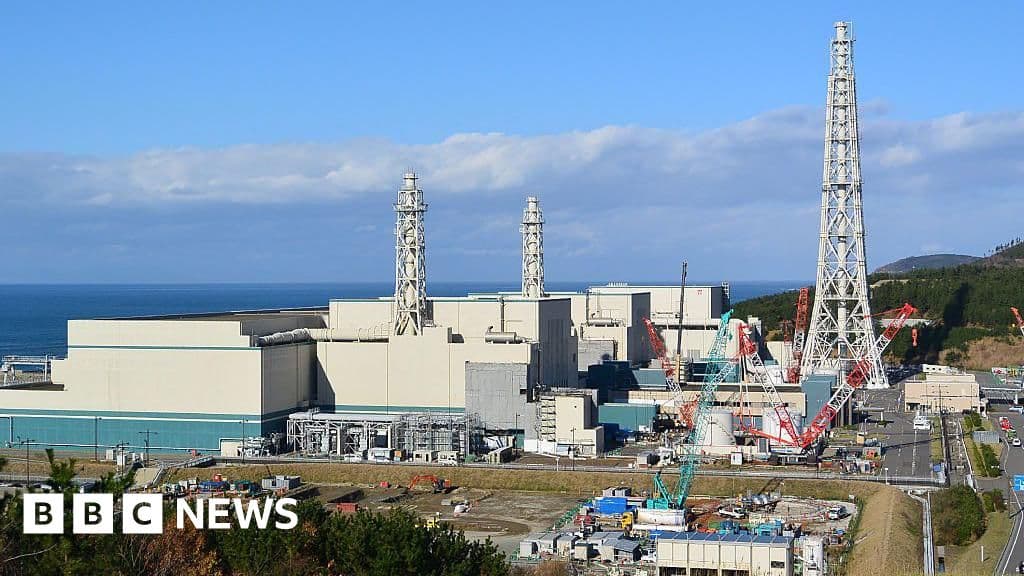
It took thirteen years. Thirteen years of agonizing bureaucratic shuffles, public apologies, safety inspections, regulatory overhaul, and the kind of teeth-grinding anxiety that can only exist in a nation that has watched its own coastline erased by the atom. Japan, a country that has every right to look at a cooling tower with the same suspicion one might regard a ticking package found on a subway, finally decided it was time. Time to turn the lights back on. Time to restart the Kashiwazaki-Kariwa plant, the largest nuclear facility on the face of the Earth. The grand return of fission. The dawn of a new, energy-independent era.
And how long did this glorious resurrection last? Hours. Mere hours. The reactor hit criticality, the engineers presumably high-fived, and then the universe, in its infinite comedic timing, said, “Absolutely not.”
The reactor was suspended immediately due to an “issue with a device.” That is the official line. A device. We are talking about one of the most complex, dangerous, and expensive machines ever constructed by the primate species, a cathedral of science designed to harness the fundamental binding energy of the cosmos, and it was defeated by a glitch. It is almost poetic in its banality. You expect a nuclear failure to be dramatic—sirens, red lights, men in hazmat suits running in slow motion. Instead, what we got was the industrial equivalent of a Windows Blue Screen of Death. Have you tried turning the apocalypse off and on again?
To make matters more deliciously cynical, let us look at who is holding the controls. The operator is Tokyo Electric Power Company Holdings, or TEPCO. If that name sounds familiar, it is because they are the same sterling custodians of public safety who oversaw the Fukushima Daiichi disaster. handing the keys to the world's largest nuclear plant back to TEPCO is like asking the captain of the Titanic to take the helm of the Costa Concordia because he “probably learned his lesson.” The audacity is breathtaking. Only a corporate entity could possess the sheer lack of shame required to stand in front of a microphone, hours after a thirteen-year-in-the-making restart fails, and say, “Whoops.”
They assure us, of course, that the reactor remains “stable.” I adore that word. It is the favorite shield of the incompetent. A brick is stable. A corpse is stable. A nuclear reactor that isn’t generating power is, technically, the most stable thing in the world. It is a multi-billion-dollar concrete paperweight. They also claim there is “no radioactive impact outside.” This is likely true, in the same way it is true that my car has no impact on the highway speed limit when it is broken down in my driveway. The victory here isn't safety; the victory is that they managed to fail before they could destroy the prefecture.
But let’s zoom out from the incompetence of a single utility company and look at the desperate hilarity of the global situation. Japan didn’t restart this monstrosity because they love glowing in the dark. They did it because the global economy is an energy-hungry vampire that refuses to die. We are told we need nuclear power to save the climate, but let’s be honest: we need nuclear power because we are addicted to consumption. We need it to power the server farms that mine useless cryptocurrencies. We need it to run the Large Language Models that generate marketing copy for products nobody buys. We need it so we can keep the air conditioning at arctic levels while the planet boils outside.
The global “Nuclear Renaissance” we keep hearing about—the idea that fission is the green savior—is predicated on the assumption that humans are capable of building and maintaining these machines without error. This incident in Niigata is a sharp, stinging reminder that we are not. We are a species of corner-cutters. We are a species that ignores the check-engine light. We are a species that builds a temple to the god of physics and then forgets to calibrate the neutron detector.
The Right screams that we need this power for economic dominance, ignoring the fact that nuclear plants are financial black holes that survive only on the teat of government subsidies. The Left screams that we should run the world on wind and solar, ignoring the physics of baseload power and the fact that the sun has a nasty habit of setting every evening. And in the middle sits the Kashiwazaki-Kariwa plant, a silent monument to our collective hubris.
So, bravo, TEPCO. Bravo, Japan. You spent over a decade preparing for this moment. You navigated the political minefield, you placated a terrified public, and you spent untold fortunes on retrofits. And when the curtain finally rose, you tripped over the hem of your pants and fell off the stage before the first line was spoken. It would be funny, if the consequences of your incompetence didn’t have a half-life of ten thousand years.
This story is an interpreted work of social commentary based on real events. Source: BBC News