A Quarter-Century of Boredom: France Prays the European Parliament Will Finally Kill the Mercosur Zombie

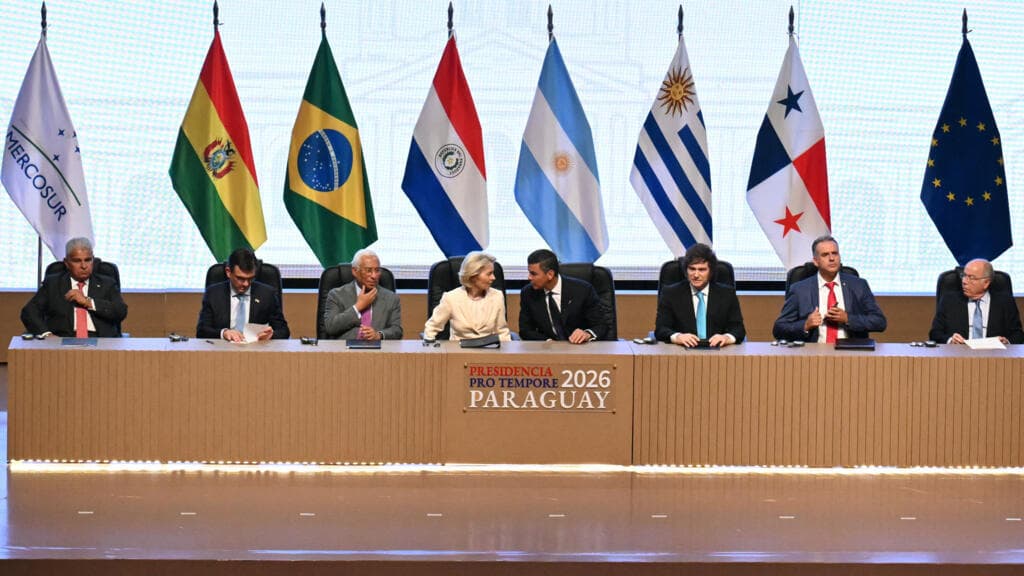
There is a specific brand of existential exhaustion that only the European Union can manufacture, a kind of bureaucratic heat death where time ceases to have meaning and logic goes to die in a committee room in Brussels. For twenty-five years—a literal generation of human existence—civil servants on both sides of the Atlantic have been haggling over the price of frozen beef and the soul of the automotive industry. A child born when the Mercosur negotiations began is now likely balding, cynical, and wondering why they ever believed in progress. And yet, here we are, staring at a signed agreement that is somehow less certain today than it was during the Clinton administration. France, in its perpetual state of performative agony, is now looking to the European Parliament to act as a divine executioner for a trade deal that refused to die of natural causes.
The Mercosur deal, which purports to link the EU with Argentina, Brazil, Paraguay, and Uruguay, is the ultimate testament to the futility of globalism. It is a massive, lumbering beast of an agreement, designed to create one of the world’s largest free trade zones, and yet it is currently being treated like a biohazard by the French political establishment. Why? Because the French, ever the masters of the 'do as I say, not as I do' school of diplomacy, have realized that their pampered agricultural sector might actually have to compete with South American farmers who don’t require a government subsidy every time they sneeze.
President Emmanuel Macron, a man whose entire political identity is built on the crumbling facade of being a 'pro-Europe' visionary, is now forced to play the role of the protectionist Luddite to appease a domestic audience that hates him. It is a delicious irony: the grand architect of European integration is now frantically lobbying the European Parliament to sabotage a cornerstone of European trade policy. The French argument is draped in the usual tattered rags of environmentalism and 'fair standards,' claiming that South American beef is a threat to the planet. This, coming from a nation that treats industrial-scale nuclear power and state-funded aviation as national treasures, is the kind of hypocrisy that would be refreshing if it weren't so transparently desperate.
On the other side of the pond, the Mercosur nations are hardly the wide-eyed innocents in this tragicomedy. They have spent two and a half decades oscillating between populist isolationism and desperate pleas for European capital. They want the markets, but they don’t want the 'civilizing' lectures from Brussels regarding the Amazon or labor laws. It is a marriage of convenience between two parties who fundamentally despise one another, brokered by lawyers who have billed enough hours over the last quarter-century to buy their own private islands.
The European Parliament is now the designated theater for this final act of obstruction. France is banking on the idea that the MEPs—a collection of failed national politicians and ideological extremists who couldn't find a real job in their home countries—will find enough reasons to sink the ship. The strategy is simple: drown the deal in a sea of amendments, 'concerns,' and procedural delays until it becomes politically radioactive for everyone involved. It is a masterclass in how to accomplish nothing while looking busy.
We are told this deal is about 'growth' and 'stability,' but those are just the hollow buzzwords used to mask the reality of a world that is rapidly de-globalizing. The Left hates the deal because it involves corporations; the Right hates it because it involves foreigners. Neither side seems to notice that the status quo is a stagnant pond of inefficiency that serves no one but the middlemen. If the deal passes, we get cheaper steaks and more expensive environmental guilt. If it fails, we get twenty-five more years of meaningless summits where pampered elites eat five-course meals while discussing the 'hardships' of the working class.
Ultimately, the Mercosur saga is the perfect microcosm of the modern world: a series of endless, expensive conversations that lead to a conclusion no one actually wants, followed by a frantic attempt to pretend the whole thing never happened. France will likely get its wish; the European Parliament is nothing if not a graveyard for ambitious ideas. We will all be left exactly where we started, only older, poorer, and significantly more annoyed. The zombie deal will be buried, but don't worry—in another decade or two, some fresh-faced bureaucrat will dig up the corpse, polish the bones, and start the whole miserable process all over again.
This story is an interpreted work of social commentary based on real events. Source: RFI