Wedding Season Warmth: Karachi’s RJ Mall Offers the Ultimate Open-Flame Experience

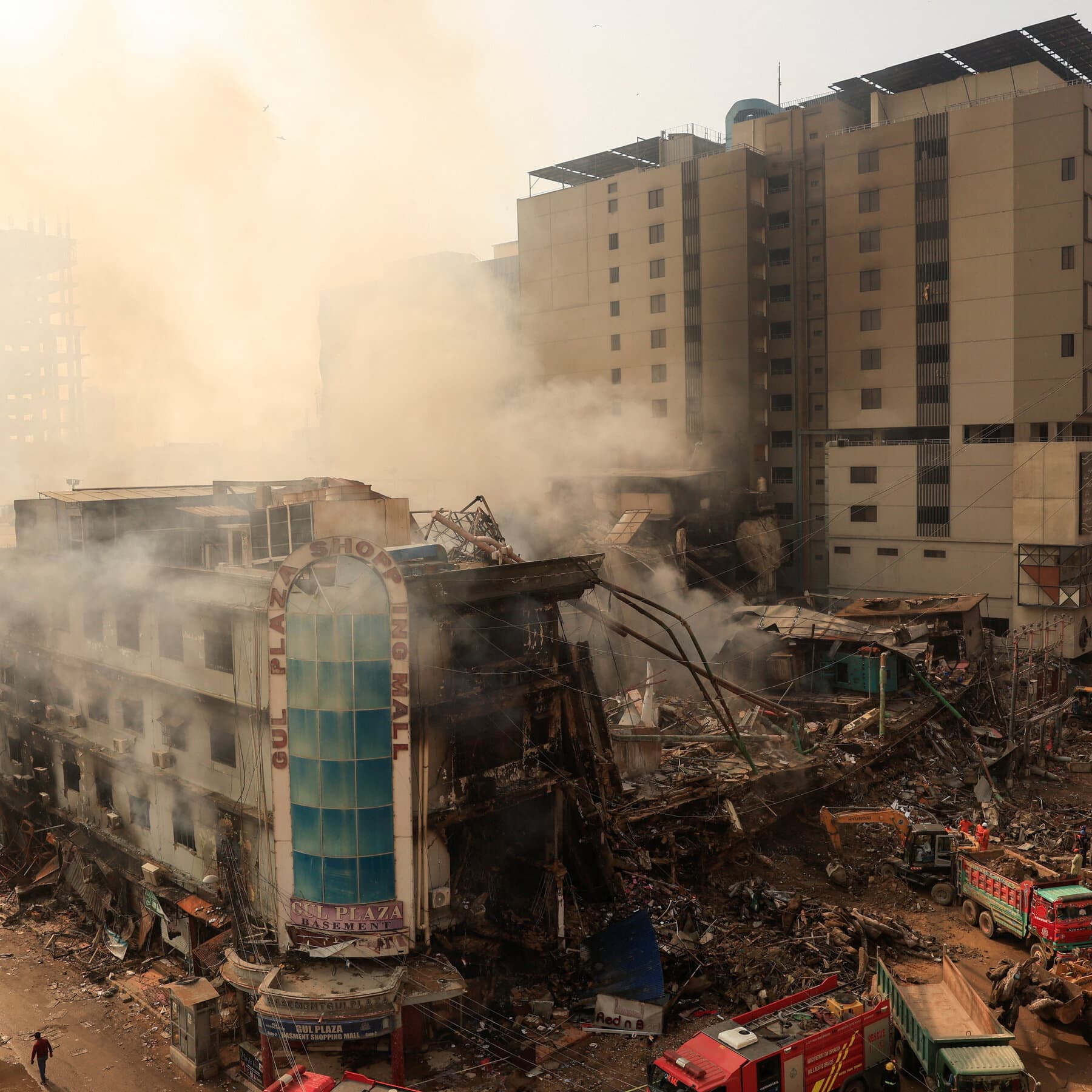
There is something profoundly poetic about a shopping mall burning down during Karachi’s 'wedding season.' It is the ultimate convergence of human vanity, structural incompetence, and the inevitable entropy of a civilization that prioritizes polyester lace over basic fire exits. The RJ Mall, a sprawling labyrinth of consumerist desperation in Pakistan’s most chaotic megalopolis, recently decided to transition from a retail hub into a multi-story crematorium. At least 23 people are dead, and dozens more are missing, presumably because the concept of 'emergency response' in Karachi is treated with the same casual indifference one might afford a suggestion to stop eating lead paint. This is not just a tragedy; it is a masterclass in the universal human habit of building grand monuments to our own stupidity and then acting shocked when they eventually ignite.
Let’s look at the timing. Wedding season in Pakistan is a frantic, high-stakes arms race of social signaling, where families spend money they don’t have to impress people they don’t like. The RJ Mall was supposed to be the staging ground for this theater of the absurd. Instead, it became a literal kiln. While the victims were likely searching for the perfect outfit to wear to a four-hour ceremony they’d rather skip, the building was preparing its own performance. The fire burned for an entire night and day. Twenty-four hours of smoke and ash, a duration that suggests the local fire department viewed the blaze not as a crisis to be extinguished, but as a slow-motion art installation they weren't quite sure how to critique.
The 'slow response' cited by survivors is the least surprising development since the invention of gravity. In a city of twenty million people—most of whom are trying to occupy the same square inch of cracked asphalt at any given time—the idea that a fire truck could navigate the gridlock is a comedic premise. We are told the response was 'sluggish,' which is a polite way of saying it was non-existent until the building had already achieved a state of charcoal-based perfection. But let us not merely blame the firemen, who likely arrived to find hydrants as dry as the souls of the bureaucrats who approved the building's permits. Let us look at the structure itself: hundreds of shops crammed into a plaza where fire safety is viewed as a Western luxury, akin to drinkable tap water or a functional electricity grid.
The predictable chorus of blame has already begun. On the Left, we will hear the usual caterwauling about 'underdeveloped infrastructure' and the 'failure of the state,' as if the state in question hasn't been a collection of three raccoons in a trench coat for the last four decades. They will demand 'justice' and 'regulation,' ignoring the fact that regulation in Karachi is simply a menu of prices for various building inspectors. On the Right, the response is even more tedious: a shrug of 'divine will' or 'fate,' a convenient theological loophole that allows property owners to skip installing sprinklers because, after all, if it’s your time to go, it’s your time to go—even if you’re currently browsing for a half-off sherwani.
This fire is the perfect microcosm of the global condition. We build these glittering temples of commerce on foundations of corruption and hope, then fill them with flammable goods and people who are too distracted by the spectacle of consumption to notice the exits are padlocked. The RJ Mall didn’t just burn; it confessed. It confessed that in the grand hierarchy of human priorities, the 'wedding season' and its attendant profits sit far above the physical safety of the drones fueling the economy. The smoke over Karachi is the visible breath of a system that is fundamentally incompatible with the preservation of life.
Naturally, there will be an 'investigation.' This is the part of the cycle where a committee of overpaid middle-managers will sit in an air-conditioned office and conclude that 'mistakes were made' before filing the report in a drawer that will, itself, eventually catch fire. No one will be held accountable, because in a world this saturated with incompetence, accountability would require a total purge of the species. The shopkeepers will eventually return, the soot will be painted over with a fresh coat of cheap acrylic, and the next batch of shoppers will walk back into the oven, their minds focused entirely on whether the gold embroidery on their sleeves matches the hollowness in their chests. This is the world we have built: a series of flammable boxes where we wait for the inevitable spark, complaining about the response time while we actively fan the flames.
This story is an interpreted work of social commentary based on real events. Source: NY Times