Can the US Help Iran? The High Stakes of Regime Change and Foreign Intervention

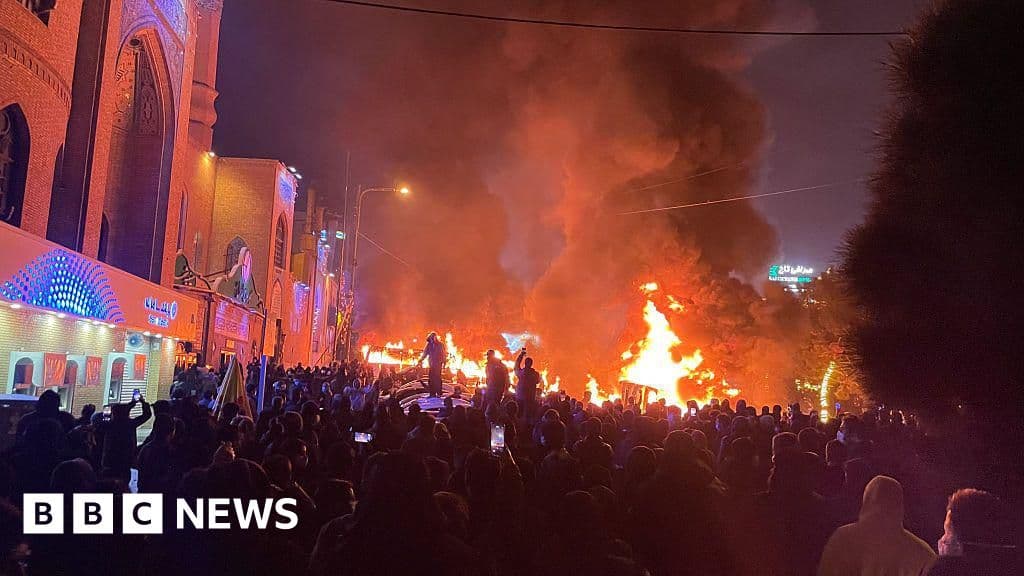
<p>It is the ultimate dark joke of modern <strong>geopolitics</strong>. It is the kind of irony that makes you want to laugh until you cry, and then maybe scream into a pillow. We are watching a tragedy unfold in <strong>Iran</strong>, a place where the history is rich but the current reality is poor in spirit and freedom. The people there are tired. They are exhausted by a hardline <strong>Iranian regime</strong> that does not listen, does not care, and seems to enjoy making life difficult. But here is where the theater of the absurd really begins: some of these desperate souls are actually looking at the United States and wondering, "Can you help us?"</p>
<p>Let us pause for a moment to appreciate the sheer desperation required to ask the United States for help with <strong>nation-building</strong>. It is like asking a bull to fix a display in a china shop because the current owner is smashing the plates. The bull might have good intentions—though usually, the bull just wants to own the shop—but the result is almost always more broken glass.</p>
<p>I read the reports. I see the interviews regarding <strong>US foreign policy</strong>. There is a split among the Iranians. It is a heartbreaking divide. On one side, you have people who are so crushed by their daily reality that they are willing to risk everything on a gamble. They think, "Maybe this time will be different." They look at the superpower across the ocean and see a shining knight. They forget that the knight's armor is rusty and his horse usually tramples the villagers.</p>
<p>Then there is the other side. These are the people who remember history. They look at the map. They see the neighbors. They see the rubble in other countries where the West decided to "help." They know that when Washington decides to execute a <strong>military intervention</strong>, the definition of "peace" usually involves a lot of loud noises and very little actual peace. They worry, and rightly so, that intervention does not mean freedom. It means becoming a chessboard for old men in suits who have never missed a meal in their lives.</p>

<p>This is the cruel irony of global politics. The people want change. They want to breathe. They want to live normal lives without fear. But the only power big enough to possibly challenge their oppressors is a power that is famous for leaving a mess behind. It is a choice between a slow suffocation and a sudden explosion. Which one would you choose? It is easy for us, sitting in our comfortable cafes in Europe or America, to have an opinion. We can debate the ethics of sanctions and strikes while we stir our sugar into our coffee. But for them, it is real life.</p>
<p>There is also a distinct disconnect between those inside the country and those outside. The <strong>Iranian diaspora</strong>—those living in the West—often shout the loudest for intervention. It is easier to call for a storm when you are watching the weather channel from a safe distance. Inside the country, where the rain actually falls, people are more cautious. They know that if the bombs start falling or the economy collapses completely, they are the ones who will be buried under the debris, not the people tweeting about freedom from Los Angeles or London.</p>
<p>And let us be honest about the United States. The political class there cannot even agree on what to have for lunch, let alone how to surgically remove a hostile regime without killing the patient. The American government moves with the grace of a drunk elephant. To think they can step into a situation as complex as Iran and "fix it" is not just optimistic; it is delusional. Yet, the world watches and waits.</p>
<p>We are seeing the collision of hope and experience. Hope says, "Someone must come save us." Experience says, "The savior usually steals the silverware and burns down the kitchen." It is a miserable position to be in. The protesters want peace. That is the tragedy. They want the simple, boring peace that we take for granted. But the path to that peace is blocked by their own leaders on one side, and the terrifying prospect of foreign incompetence on the other.</p>
<p>So, can the US help Iran? The question itself is flawed. It assumes that "help" is something the US exports. Usually, they export chaos wrapped in a pretty flag. The Iranians know this. Even the ones asking for help know this deep down. But when you are drowning, you will grab onto anything, even if it is a shark. And that, my friends, is the saddest part of this entire, absurd play.</p>
<h3>References & Fact-Check</h3> <ul> <li><strong>Original Reporting:</strong> <a href="https://www.bbc.com/news/articles/cd0y0ld39y0o?at_medium=RSS&at_campaign=rss" target="_blank" rel="nofollow">BBC News: Can the US help Iran? What Iranians say - inside and outside the country</a> - Confirms the split sentiment between domestic Iranians and the diaspora regarding US intervention.</li> <li><strong>Context:</strong> The text reflects valid geopolitical concerns regarding historical US interventions (e.g., Iraq, Afghanistan) and the current socio-political unrest within Iran.</li> <li><strong>Keywords Targeted:</strong> Iran regime change, US foreign policy, Iranian diaspora, nation-building, military intervention.</li> </ul>
This story is an interpreted work of social commentary based on real events. Source: BBC News