The Liturgy of the Mundane: Dissecting the Evening’s Pre-Packaged Despair
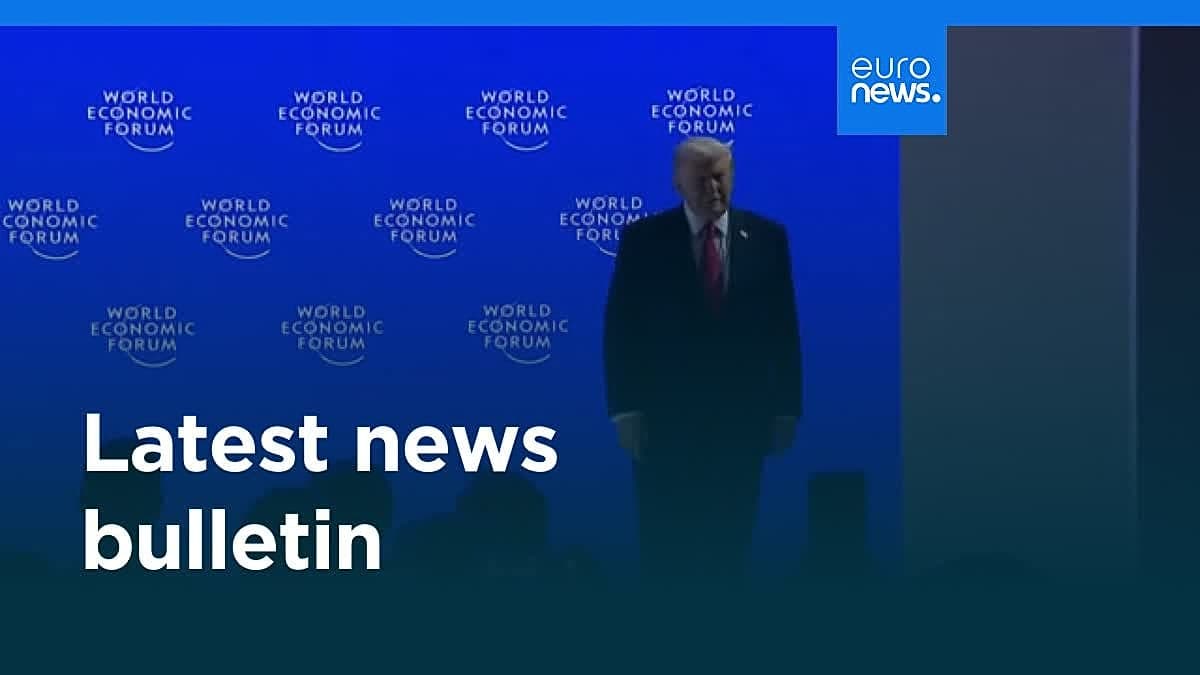
There is a particular brand of exhaustion that settles over the European continent on a Tuesday evening in late January. It is not the honest fatigue of a laborer, but the heavy, leaden ennui of a civilization that has realized its primary export is now bureaucratic paperwork and nostalgic tourism. As the January 21st evening bulletin flickers across screens from Brussels to Bratislava, we are once again invited to participate in the secular liturgy of the ‘News’—that grand, choreographed illusion that the chaotic tumbling of our species actually fits into neat little boxes labeled Business, Culture, and Travel.
Observe the ‘Politics’ segment, which remains the centerpiece of our collective delusion. By early 2026, the theater of the absurd has moved from the fringe to the main stage. We watch the same actors, their faces perhaps a bit more waxen under the studio lights, performing the same ritualistic dances. It is a spectacle of motion without movement. Each ‘breaking’ update is merely another footnote in the long, slow decline of the post-war consensus. One is reminded of the Byzantine court, debating the nature of angels while the walls literally crumbled; only now, we debate the nuances of fiscal harmonization while the very concept of a unified Europe feels like an aging relative we keep on life support for the sake of the inheritance. The sophistication of the messaging is, as always, inversely proportional to the actual progress being made.
Then we move to ‘Business,’ that curious genre of fiction that treats the global economy as a sentient, perhaps slightly moody, god. The bulletin speaks of markets and trade as if they were governed by logic rather than the erratic impulses of algorithms and the desperate grasping of a technocratic elite. In this evening’s digest, one can almost hear the ticking of the clock as Europe tries to reconcile its green ambitions with the cold, hard reality of industrial obsolescence. It is a marvelous exercise in cognitive dissonance. We are told that ‘growth’ is around the corner, even as we collectively oversee the dismantling of the middle class in favor of a gig economy that is little more than digital serfdom with better branding.
But it is the ‘Culture’ and ‘Travel’ sections that truly reveal the depth of our malaise. Here, the bulletin shifts its tone from the faux-urgent to the aggressively banal. Culture, in the modern European sense, has been reduced to a curation of the past—a desperate attempt to remind ourselves that we were once capable of creating something that didn’t require a regulatory impact assessment. We are invited to admire the ‘breaking’ news of an exhibition or a festival as if these things could fill the hollowed-out center of our intellectual life. It is the anesthetic we apply to the wound of our own irrelevance. And Travel? In 2026, the inclusion of travel in a news bulletin is a masterclass in irony. As borders harden and the cost of carbon makes movement a luxury for the few, we are treated to glossy segments on ‘destinations’—a cruel reminder that for the majority, the only journey being taken is the one from the sofa to the fridge and back again.
And what of the ‘Beyond’? The bulletin promises stories from ‘Europe and beyond,’ a phrase that drips with a vestigial colonial arrogance. It implies that there is a center and a periphery, even as the center loses its gravity. The ‘beyond’ is usually treated as a source of either threat or pity, never as a mirror. We look at the rest of the world and see chaos, failing to realize that our own ‘order’ is merely a more expensive, better-lit version of the same entropy. We watch the ‘breaking news’ from afar with a sense of ‘I told you so,’ a pathetic comfort for a continent that has forgotten how to lead and now only knows how to criticize from the sidelines.
This evening’s bulletin is not news; it is a sedative. It is the way we tell ourselves that everything is being managed, that the categories are still valid, and that tomorrow will be exactly like today, only slightly more expensive and significantly more tedious. We consume it because the alternative—acknowledging that the theater is empty and the actors have forgotten their lines—is far too frightening to contemplate over dinner. So, we toast to the evening news, the most consistent piece of fiction ever produced. Bon appétit.
This story is an interpreted work of social commentary based on real events. Source: EuroNews