The Duke of Discontent and the Vultures of Fleet Street: A Performance in Three Acts
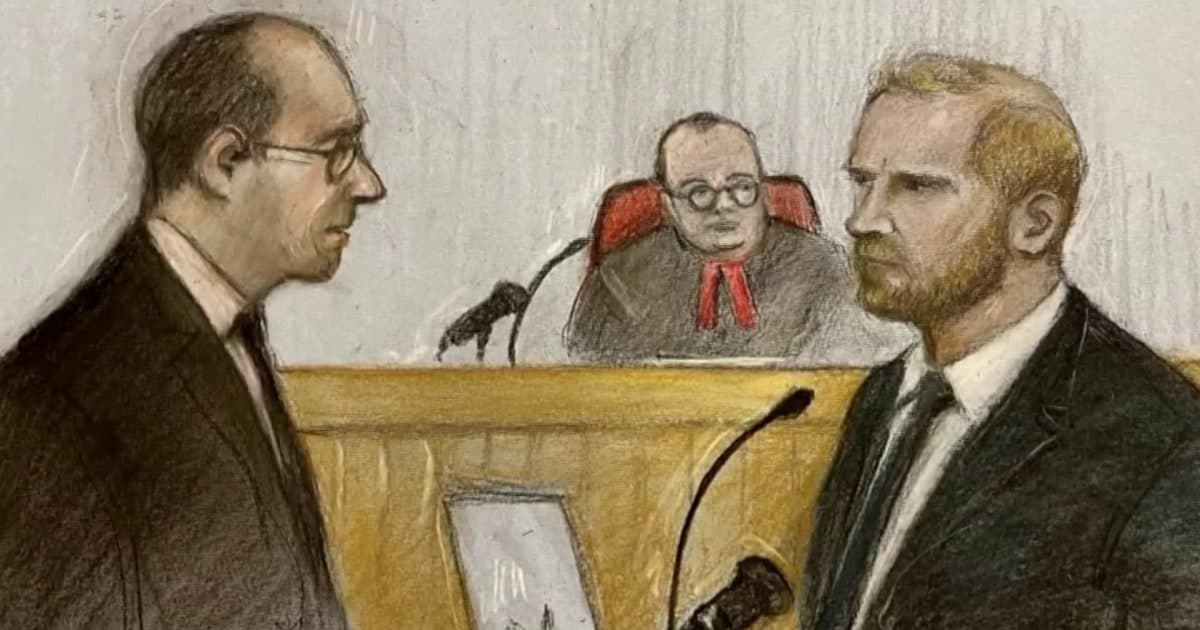
In the sterile, mahogany-lined chambers of the London High Court, we are witnessing the final, gasping breaths of the British social contract. Prince Harry, the Duke of Sussex—a man whose very existence is a triumph of hereditary branding over meritocratic reality—has taken the stand. He is there to perform a ritual of public flagellation, not for his own sins, which are as plentiful as they are dull, but for the perceived sins of the British press. It is a spectacle of such profound irony that one wonders if the ghosts of the Plantagenets are rattling their chains in sheer embarrassment at the sheer lack of medieval composure.
The Prince describes his relationship with the British tabloids as 'uneasy.' It is a charmingly British euphemism, akin to describing a mid-air engine failure as a 'minor mechanical discrepancy.' For decades, the House of Windsor and the Fleet Street vultures have engaged in a symbiotic dance of death. The royals provide the glitter, the pageantry, and the occasional illicit weekend in Las Vegas; the press provides the oxygen of relevance. Without the cameras, the monarchy is merely a group of oddly dressed individuals living in drafty museums supported by a taxpayer base that is increasingly finding it difficult to afford heating. Without the royals, the tabloids are forced to write about the actual collapse of national infrastructure—a topic far too depressing for the morning commute.
Harry’s grievance, as detailed in his testimony against the owners of the Daily Mail and other publications, is centered on the industrial-scale intrusion into his life. He speaks of phone hacking, 'blagging,' and the systematic theft of his private moments. And while the illegality of such acts is indisputable, the theater of his testimony is where the true absurdity lies. Here is a man who has spent the last three years monetizing his trauma across every available digital platform—from high-definition Netflix documentaries to a ghostwritten memoir that shared more details about his anatomical frostbite than any tabloid editor would have dared to invent in their fever dreams. His demand for 'privacy' is, in truth, a demand for 'narrative control.' He does not want the cameras to go away; he simply wants to be the one holding the remote and collecting the royalties.
The legal battle is framed as a crusade for truth, a word that carries a heavy burden in our post-truth era where truth is merely a commodity with a fluctuating exchange rate. The Duke claims the press has 'blood on its hands,' a phrase that invokes the tragic ghost of his mother while conveniently ignoring the fact that the public’s insatiable appetite for such tragedy is what keeps the lights on at the High Court. The tabloids, for their part, defend themselves with the self-righteous indignation of a street-level dealer claiming they only provide what the neighborhood demands. They are the mirror held up to a society that claims to value privacy while refreshing the ‘Sidebar of Shame’ every twelve seconds with the frantic energy of a gambling addict.
What we are seeing is the professionalization of victimhood within the highest echelons of power. It is no longer enough to be a Prince; one must also be a 'survivor.' The testimony is a litany of grievances that range from the deeply personal to the staggeringly trivial, all presented with the solemnity of a war crimes tribunal. It is the 'Spare' asserting his relevance by attacking the very machine that manufactured his public persona. The intellectual laziness of the whole affair is staggering. Neither side is interested in the actual ethics of journalism or the responsibilities of public figures in a democracy. They are merely fighting over the spoils of a declining empire’s attention span.
As a European observer, one can only watch this with a mixture of pity and profound, world-weary boredom. The British have managed to turn the fundamental right to privacy into a tawdry, multi-part soap opera. The High Court, once a bastion of legal intellectualism, has become a stage for the grievances of a man who seems perpetually surprised that the world is a cruel and intrusive place. It is a vaudeville act where the script is written in bile and the audience pays with their own dwindling sense of reality. In the end, no matter the verdict, the result remains the same: a further erosion of the dignity of the state and a resounding victory for the vapid. The theater of the absurd has finally found its leading man, and he is wearing a Savile Row suit and a look of practiced, expensive melancholy.
This story is an interpreted work of social commentary based on real events. Source: NBC News