The Crown’s Most Expensive Therapy Session: Prince Harry and the Tabloid Hydra Sink the Ship of State

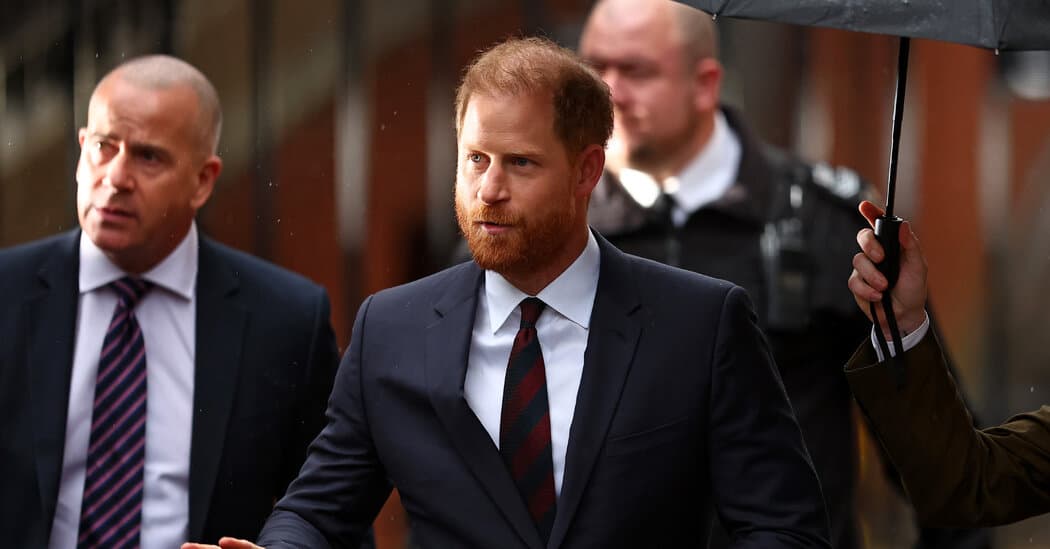
Behold the High Court of London, a grand architectural monument to the British delusion that justice is something more than a playground for the over-leveraged and the over-born. In this hallowed hall of legal pedantry, we find Prince Harry—the artist formerly known as a Royal—providing what he describes as emotional testimony regarding the ‘traumatic’ effects of tabloid journalism. It is a spectacle so saturated in irony that one wonders if the courtroom air hasn't turned to pure, unbreathable smugness. On one side, we have Associated Newspapers, a corporate entity that has spent decades refining the art of rummaging through digital trash cans to satisfy the voyeuristic hunger of a population that would rather read about a Duke’s frostbitten appendage than the slow collapse of their own civilization. On the other, we have a man who has managed to monetize his quest for privacy with the aggressive efficiency of a Silicon Valley disruptor. It is a war between a parasite and a host that has forgotten it is no longer vital to the ecosystem.
Harry’s central thesis is that reading articles about himself—articles he claims were procured through the dark arts of phone hacking and general creepiness—was ‘traumatic.’ Let us pause to admire the linguistic inflation of the word ‘trauma.’ Historically, trauma was reserved for those who survived trench warfare or industrial accidents. In the 21st century, it apparently applies to a man of infinite means reading mean-spirited prose about his own life choices while sitting in a Montecito mansion. The Prince speaks of the ‘vile’ behavior of the press, and while he is factually correct—the British tabloids are essentially a collection of vultures in cheap suits—his outrage ignores the fundamental contract of his existence. The Monarchy is not a governing body; it is a long-running reality show funded by a captive audience. To complain about the cameras now is like a professional wrestler complaining that the matches are scripted. You were born into a gilded cage where the bars are made of camera lenses, yet you seem shocked that the zookeepers want to take your picture.
Associated Newspapers, for their part, defend their actions with the kind of greasy moral superiority only a tabloid lawyer can summon. They represent the ‘freedom of the press,’ a noble concept they have successfully degraded into the ‘freedom to know which member of the royal family is currently having a public nervous breakdown.’ They are the purveyors of the national id, feeding the British public a steady diet of resentment and celebrity worship to distract them from the fact that their currency is worth less than a commemorative tea towel. The defense isn’t that they didn’t do it; it’s a procedural shrug—a claim that the statute of limitations on being a sociopath has expired. It is a legal argument that basically states, ‘We might have been monsters, but you didn’t sue us fast enough.’
The true tragedy of this legal skirmish is not the alleged hacking or the Prince’s hurt feelings; it is the absolute, crushing pointlessness of it all. We are watching two relics of a dying age claw at each other’s throats in a desperate bid for relevance. The Prince wants to be a crusader for truth, oblivious to the fact that his ‘truth’ is just another product he is selling in the marketplace of grievances. The press wants to be the guardian of public interest, oblivious to the fact that the public’s interest is a shallow puddle of gossip that evaporates the moment a new scandal arrives. It is a symbiotic loop of mediocrity. Harry provides the content, the tabloids provide the outrage, and the public provides the clicks, all while the actual machinery of the world—the economy, the climate, the very fabric of social cohesion—grinds into fine, gray dust.
One must analyze the performative nature of this testimony. The Prince isn’t just seeking damages; he is seeking a narrative arc where he is the victor over the dragons of Fleet Street. But in this story, there are no knights, only litigants. There are no dragons, only shareholders. By dragging his ‘trauma’ into the witness box, Harry has completed his transformation from a figure of state to a figure of content. He is no longer a Prince; he is a protagonist in a legal drama that will inevitably be turned into a six-part streaming documentary series, thus completing the very cycle of exposure he claims to loathe.
Ultimately, this trial serves as a perfect microcosm of our era: a loud, expensive, and entirely self-absorbed distraction. Whether Harry wins a payout or the tabloids win a dismissal, nothing changes. The tabloids will continue to thrive on the misery of the famous, and the famous will continue to use that misery to bolster their brands. We, the audience, sit in the gallery, watching the wealthy argue about how much it hurts to be popular, while the world outside the courtroom continues its steady march toward the abyss. If this is the best our intellectual and social ‘elites’ can offer—a multi-million dollar squabble over who got to peek into whose voicemail fifteen years ago—then perhaps we deserve the tabloids we read. It’s not trauma; it’s just the slow, boring end of everything.
This story is an interpreted work of social commentary based on real events. Source: NY Times