The King of Debt Discovers Numbers: Trump’s Crusade Against Usury is a Masterclass in Monetary Nihilism
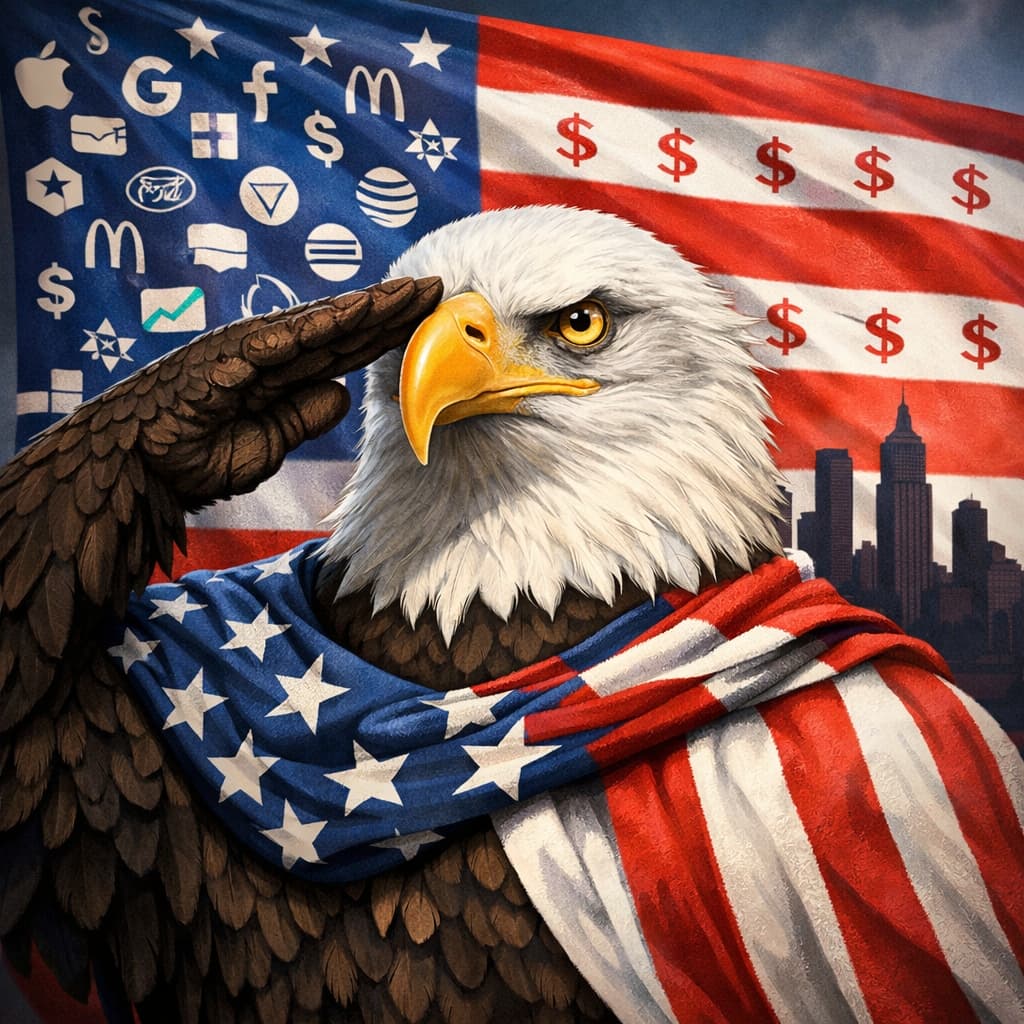
Behold the latest chapter in our national descent into terminal incoherence: the King of Debt has discovered the concept of interest. Donald Trump, a man whose entire professional legacy is built upon a sprawling monument of unpaid contractors, strategic defaults, and the kind of creative accounting that would make a Renaissance alchemist blush, has decided that the credit card companies are the ones lacking in moral fiber. His latest populist gambit—a proposed 10% cap on credit card interest rates—is the sort of economic performance art that can only be produced by a society that has long since traded its logic for a collection of grievance-based hashtags.
The irony here is so thick it could be served as a side dish at a Mar-a-Lago fundraiser. We are witnessing a billionaire developer who has spent decades navigating the murky waters of high-stakes leverage suddenly pivot to the role of a medieval monk decrying the sin of usury. It is a spectacular pivot, executed with the grace of a bowling ball falling down a flight of stairs. Trump’s crusade against high interest rates is not an actual policy; it is a siren song for the mathematically illiterate. It is designed to resonate with a base that feels the crushing weight of their own consumption-driven choices but lacks the critical thinking skills to realize that a 10% cap in a free-market system is essentially a polite way of saying 'you are no longer allowed to borrow money.'
Wall Street, of course, is reacting with the practiced horror of a Victorian widow who has just seen a flash of ankle. The banking sector, those benevolent architects of the 2008 collapse who continue to treat the American middle class like a particularly succulent orange to be squeezed for every drop of juice, is shrieking about 'market stability.' They speak of credit availability and the delicate ecosystem of risk-based pricing as if they are defending the sanctity of the Magna Carta rather than their right to charge 35% APR to a single mother in Ohio for the crime of buying groceries on a Visa card. Their panic is just as performative as Trump’s indignation. They know, as we all should, that the moment the cameras turn off, the lobbyists will resume their ritualistic exchange of checks and favors to ensure that no such cap ever sees the light of day.
The Democrats, meanwhile, find themselves in their favorite and most comfortable position: paralyzed by their own lack of conviction. For years, they have LARPed as the defenders of the working man, occasionally murmuring about predatory lending while remaining firmly entrenched in the pockets of the financial services industry. Now that the Orange Deity has encroached on their territory with a proposal that sounds superficially progressive, they are vibrating with an existential dread. They cannot agree with him, because that would violate the primary directive of their party’s branding, but they cannot disagree with the concept without admitting they are the very corporate shills they claim to despise. It is a beautiful, terrifying spectacle of political impotence.
From a historical perspective, we have come full circle. In the Middle Ages, usury was considered a sin so grievous it warranted a special place in the lower circles of Dante’s Inferno. Today, it is the primary engine of the American economy. We are a nation built on the promise that you can have everything you want right now, provided you are willing to mortgage your future to a group of men in bespoke suits who wouldn’t know a day’s labor if it hit them in their collective faces. Trump’s intervention into this dynamic is not a fix; it is a glitch in the simulation. He is using the language of the populist to attack the very institutions that enabled his own rise to power, a recursive loop of hypocrisy that should, in a sane world, cause the fabric of reality to unravel.
But we do not live in a sane world. We live in a world where economic policy is determined by who can shout the loudest on a social media platform owned by a tech-bro who thinks he’s a philosopher-king. The reality of a 10% interest rate cap is simple: if it were actually implemented, the credit card companies would simply stop lending to anyone with a credit score lower than a Greek god’s. The very people Trump claims to be saving would find themselves cut off from the plastic lifeline they rely on to survive in a stagnant economy. It would be an economic lobotomy performed with a rusty spoon. But the nuances of credit contraction and liquidity don’t fit on a bumper sticker, so the charade continues.
Ultimately, this crusade is just another distraction in a long line of distractions. It is a way to keep the peasants focused on the rate of their decline rather than the fact that they are declining at all. Whether the interest rate is 10% or 30%, the underlying truth remains unchanged: the system is a meat grinder, and we are the meat. Trump knows it, the banks know it, and the politicians know it. The only ones who don't seem to get the joke are the people cheering for a man who has made a career out of owing money to everyone and paying it back to no one. It would be tragic if it weren’t so predictably, exhaustingly stupid.
This story is an interpreted work of social commentary based on real events. Source: The Economist