France Plants a Flag in the Slush: The Grandiose Futility of the Nuuk Consulate

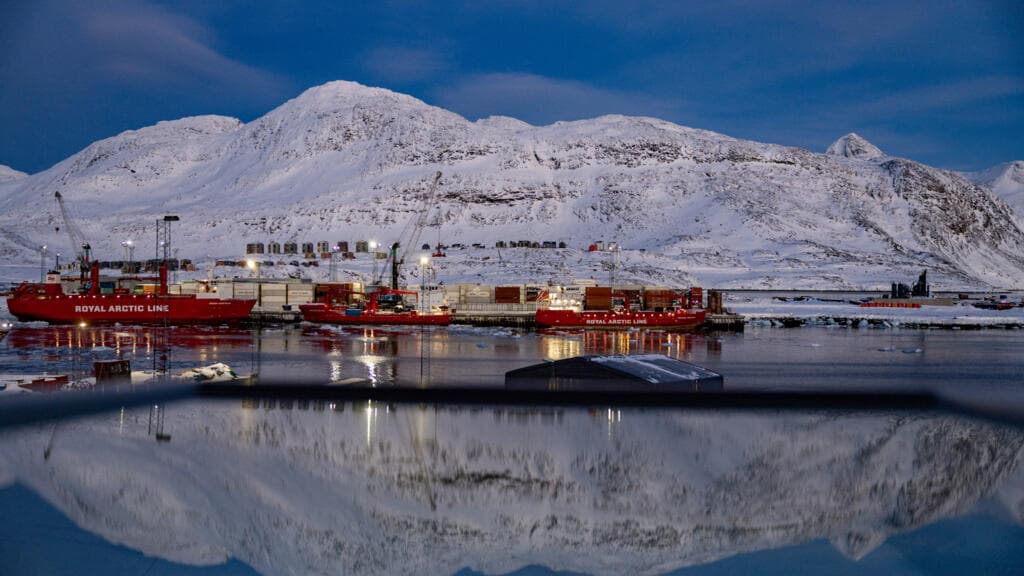
Humanity’s terminal decline has finally reached its frozen conclusion, and as usual, it involves two groups of self-important toddlers fighting over a melting popsicle. In one corner, we have the United States, currently masquerading as a real estate firm with nuclear codes, led by a man who views the Arctic Circle not as a delicate ecosystem, but as a prime location for a gold-plated hotel with questionable plumbing. In the other, we have France, a nation that has elevated ‘looking concerned’ to a high art form. The news that France will open a consulate in Nuuk on February 6 is the kind of geopolitical performance art that makes one long for the relative intellectual honesty of a bar fight.
Foreign Minister Jean-Noël Barrot—a man whose very name suggests a high-end brand of artisanal butter—has framed this move as a 'political signal.' In the vapid lexicon of modern diplomacy, a 'signal' is what you send when you have absolutely no intention of doing anything tangible, but you want to ensure your scarf looks magnificent in the press photo. France is effectively telling the world that it intends to protect Greenland’s sovereignty by stationing a few bored bureaucrats in a building where they can process lost passports and complain about the lack of decent sourdough in the Arctic. It is the diplomatic equivalent of a ‘Thoughts and Prayers’ tweet, issued from a country that still hasn't realized its status as a global superpower expired roughly around the time Napoleon decided Russia looked like a lovely place for a winter hike.
The context, of course, is Donald Trump’s recurring fever dream of purchasing Greenland. To the American executive mind, the world is a series of distressed assets waiting for a leveraged buyout. The logic is simple: if it has ground and it is technically on a map, it must be for sale. It is a worldview that lacks even the dignity of traditional imperialism; it is merely the crass expansionism of a strip-mall developer. Trump doesn't want Greenland for its strategic value or its people; he wants it because it is big, white, and would look impressive if he could stick a 'Trump' sign on it that was visible from space. It is the manifest destiny of the bored billionaire, a desperate attempt to colonize the cold before the heat death of his own relevance.
And then we have the Danish, the exhausted parents in this scenario, forced to repeatedly explain to a senile uncle that no, the backyard is not for sale, while the French neighbor moves a garden gnome onto the property line and calls it 'sovereignty protection.' The absurdity is layered like a cheap puff pastry. France’s insistence on being the 'defender' of European interests in the Arctic is a charming delusion. One must wonder what exactly a French consulate in Nuuk is supposed to do when the American bulldozers arrive. Will they throw aged Camembert at the construction crews? Will they read Sartre aloud until the invaders succumb to existential dread? It is the height of Gallic pretension to believe that a small office in a town of nineteen thousand people constitutes a meaningful barrier to the whims of a man who considers the Geneva Convention a suggestion for a dinner party.
Let us not ignore the dark irony underlying this entire charade: the only reason Greenland is currently the belle of the geopolitical ball is because we have successfully set the planet on fire. The ice is melting, the permafrost is sighing its final breaths, and the Northwest Passage is opening up like a new lane on a highway to hell. The Great Powers are circling the Arctic not out of a sense of wonder, but because there might be oil under the misery and a shorter shipping route for the plastic trinkets that will eventually end up in the same ocean. We are witnessing a scramble for the spoils of a dying world.
Barrot’s 'signal' and Trump’s 'threat' are two sides of the same debased coin. One is the aggressive idiocy of the predator; the other is the performative vanity of the poseur. Neither side cares about the actual inhabitants of Greenland, who are likely watching this play out with the weary resignation of people who know they are being discussed as property rather than participants. The consulate in Nuuk will be opened, ribbons will be cut, and champagne will be sipped while the glaciers continue their steady retreat into history. In the end, we are left with the same old story: a collection of aging men in suits, standing on a shrinking ice cap, arguing over who gets to hold the pen while the world drowns. It would be a tragedy if it weren't so profoundly pathetic.
This story is an interpreted work of social commentary based on real events. Source: RFI