The Boredom of Benevolence: The West’s Pointless Plea for Syrian Politeness

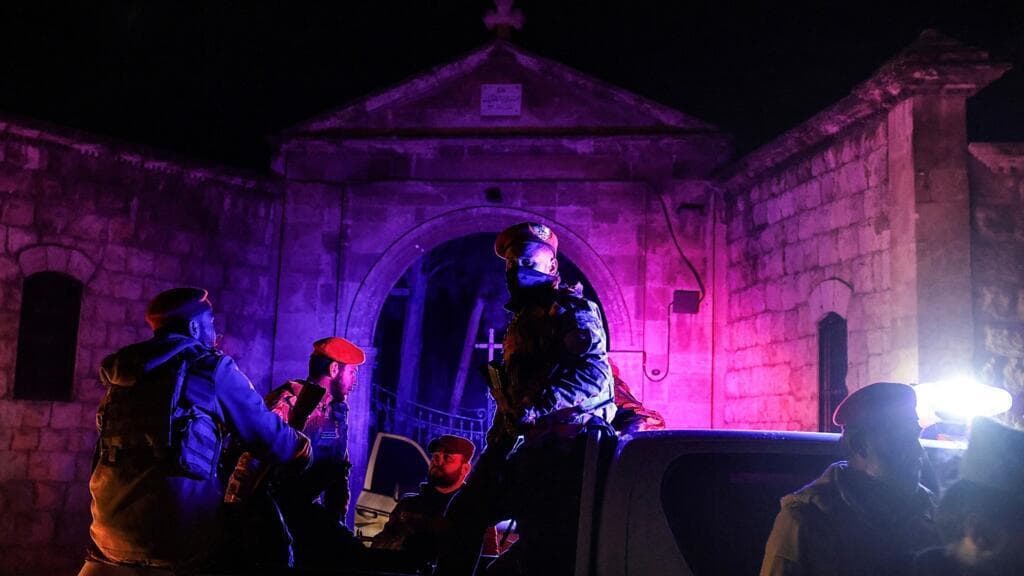
Imagine, if you will, the sheer, unadulterated hubris required to believe that a press release can halt a bullet. In the grand, crumbling theater of international relations, the United States and the European Union have once again taken center stage to perform their favorite routine: The Great Urging. This time, the audience is Aleppo, a city that has seen more "negotiations" than a used car lot in a recession, and the performers are demanding that the Syrian government and Kurdish authorities sit down and discuss their differences like civilized adults—while they are currently busy trying to erase one another from the map. It is the diplomatic equivalent of throwing a "Please Be Quiet" sign into a woodchipper and expecting the machine to stop grinding.
The latest spat of lethal violence in northern Syria has, predictably, triggered the West’s "Stability Alarm." It’s a Pavlovian response. People die, the status quo is threatened, and Western diplomats scurry to their keyboards to produce a document that expresses "deep concern." It is the pinnacle of performative virtue, a way for the US and EU to signal their supposed moral weight without actually lifting a finger to stop the gears of the meat grinder. These "talks" are the diplomatic equivalent of a participation trophy for a war that has no winners, only survivors who haven't been hit yet. To urge a return to negotiations after days of deadly clashes is not an act of peacemaking; it is an act of bureaucratic desperation, a frantic attempt to re-establish a narrative of order over a reality of absolute chaos.
Let’s look at the players involved, though "players" implies a level of dignity they don't possess. On one side, we have the Syrian government, a regime that has perfected the art of staying in power through the sheer exhaustion of its enemies. They view "negotiations" not as a path to peace, but as a tactical pause to reload their weapons and rearrange their propaganda. On the other side, the Kurdish authorities, a group that has spent the last decade being the West’s favorite seasonal accessory—useful when there are terrorists to fight, but discarded like last year’s fashion the moment they become geopolitically inconvenient. And now, after days of clashes that left people dead in the streets of Aleppo, the West expects these two parties to find common ground in a city that is currently more crater than municipality.
The US and EU’s insistence on "fresh talks" is a masterclass in intellectual laziness. It assumes that the conflict is merely a misunderstanding, a lack of communication that can be solved with a few bottles of expensive mineral water and a well-ventilated conference room in Geneva. It ignores the cold, hard reality that in this part of the world, power is the only currency that isn't currently undergoing hyperinflation. By calling for talks, the West isn't trying to solve the problem; they are trying to manage the optics. They want to be seen as the "adults in the room," even though the room has no roof, the walls are riddled with shrapnel, and the floor is slick with the blood of the people they claim to be protecting.
The political Left will bemoan the lack of humanitarian corridors, and the Right will grumble about "endless wars" and the waste of taxpayer resources, yet both sides of the Western political aisle are equally complicit in this cycle of vapid interventionism. They provide just enough diplomatic noise to keep the fire burning, but never enough substance to extinguish it, because a smoldering Syria is a useful distraction from their own domestic failures. It’s far easier to "urge" peace in Aleppo than it is to fix the crumbling infrastructure in the Midwest or the stultifying bureaucratic paralysis in Brussels. It is the arrogance of the comfortable, lecturing the desperate on the virtues of patience and dialogue while sitting thousands of miles away from the nearest mortar strike.
So, we wait for the "talks" to begin, which they won't. We wait for the diplomats to fly in, the cameras to flash, and the inevitable "joint communiqué" that will promise a "framework for further discussion." It is a stultifying cycle of meaninglessness. Meanwhile, the people on the ground in Aleppo will continue to navigate the ruins of their lives, perfectly aware that the West’s "urging" is about as effective as screaming at a hurricane. The world is a dark, absurd comedy, and the US and EU are its most persistent, unfunny comedians, telling the same tired joke about "negotiations" while the stage burns down around them. It would be tragic if it weren't so pathologically boring. We are witnessing the death of diplomacy by a thousand press releases, and the only thing more offensive than the violence is the smug belief that a few well-chosen words from Washington or Brussels could ever change the trajectory of a bullet.
This story is an interpreted work of social commentary based on real events. Source: RFI