Tehran’s Divine Lead: A Masterclass in Theological Crowd Control and Global Apathy

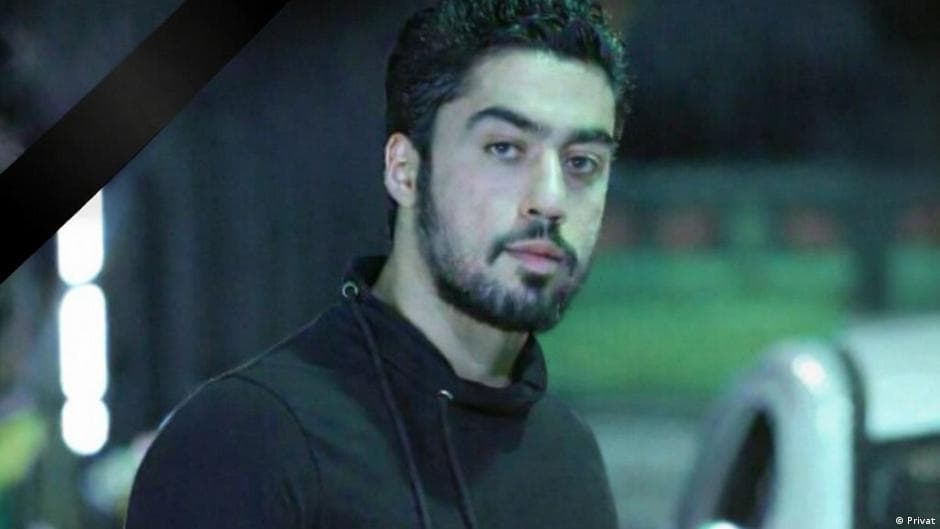
One has to admire the sheer, unadulterated consistency of the Iranian state. While the rest of the world struggles with the messy nuances of 'policing'—incorporating annoying things like body cameras or the occasional, performative internal investigation—the authorities in Tehran have opted for a more traditional, vintage approach: shooting people until the shouting stops. It is a timeless strategy, really, dating back to the first time an insecure man with a spear realized that a dead peasant is a silent peasant. Currently, the Islamic Republic is providing the world with another riveting lesson in how to maintain a 'moral' society through the liberal application of high-velocity lead. The latest dispatch from the abyss involves a family recounting the fatal shooting of a loved one by security forces in Tehran. It is a story that should be shocking, but in the grand, decaying theater of the twenty-first century, it feels more like a rerun of a show that has been on the air since 1979.
Let us dissect the mechanics of this particular tragedy. We have a grieving family speaking to international media—specifically DW—about a life snuffed out by the very people whose job title technically involves 'security.' Of course, in a theocracy, 'security' doesn’t refer to the safety of the citizenry; it refers to the structural integrity of the regime’s ego. When your government claims to be the earthly representative of the Divine, any citizen who suggests otherwise isn’t just a protester; they are a theological glitch. And how do you fix a glitch in a system built on dogmatic certainty? You delete it. The family’s account is a harrowing reminder of the cost of this cosmic insecurity, but let us be honest: to the men pulling the triggers, this isn’t a massacre. It’s a very loud prayer. They are purifying the streets of the inconvenient, one bullet at a time, ensuring that the only voices left are those chanting the sanctioned slogans of the state.
Then there is the matter of the body count. Reports suggest thousands have been killed, yet we are told that 'assessing the true scale of the violence remains complicated.' Isn’t that a marvelous euphemism? It’s only 'complicated' because the Iranian government treats the internet like a light switch and the morgue like a state secret. When you kill people in the dark and bury the evidence in layers of bureaucratic obfuscation, you aren't just committing a crime; you are conducting a masterclass in PR. By making the numbers uncertain, the regime transforms a humanitarian catastrophe into a statistical debate. The West, meanwhile, watches from the sidelines with its usual brand of performative hand-wringing. The 'International Community'—that mythical beast that supposedly exists to prevent such things—is currently busy issuing strongly worded statements that have the geopolitical impact of a wet napkin thrown at a tank.
The hypocrisy is, as always, breathtaking on all sides. On the Left, we see the agonizing struggle of activists who hate oppression but are terrified that criticizing a non-Western regime might make them look like they’re cheering for American imperialism. They want to support the protesters, but they’d prefer it if the protesters could find a way to be oppressed that doesn’t complicate the narrative of Western villainy. On the Right, we see the crocodile tears of professional hawks who suddenly care deeply about Iranian human rights, provided those rights can be used as a pretext for another 'regime change' experiment that will inevitably end in a different set of people being shot in a different set of streets. No one actually cares about the person who was shot in Tehran; they care about how that person’s corpse can be used to score points in a domestic political argument or a regional power struggle.
And what of the protesters? There is a certain tragic nobility in their persistence, a desperation that the comfortable minds of the West can barely fathom. They are shouting into a void that is actively trying to swallow them. They are facing off against an apparatus that believes God is on its side, which is the most dangerous kind of enemy because it lacks the capacity for shame. A secular tyrant might be bought or shamed; a holy one believes he is doing you a favor by sending you to the afterlife. The reality is that this cycle of protest and slaughter is the heartbeat of a dying system that refuses to actually pass away. The regime kills because it is afraid, and it is afraid because it knows that the only thing holding up its towers of incense and iron is the silence of the dead. But as the family in the DW report proves, the dead have a way of speaking through the living, even if the world is too bored, too divided, or too cynical to truly listen. We will watch the footage, we will read the reports, we will update our profile pictures, and then we will move on to the next tragedy, leaving the families in Tehran to count their losses in a darkness that never quite lifts.
This story is an interpreted work of social commentary based on real events. Source: DW