The Temple of Mammon and the Orange Iconoclast: A Supreme Court Requiem
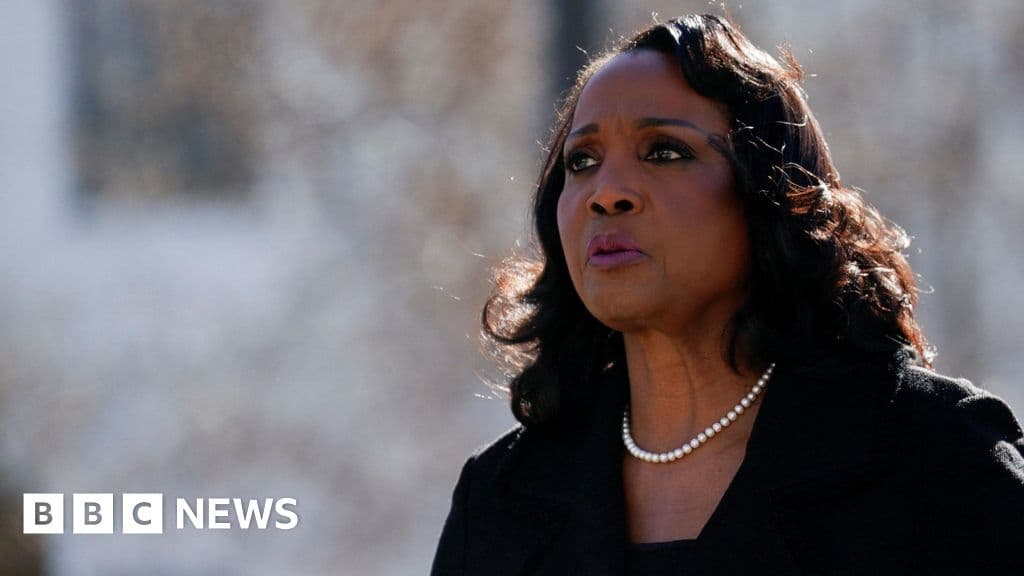
There is a peculiar, almost touching naivety in the American belief that their institutions are fashioned from something sturdier than wet tissue paper and the collective hallucinations of Georgetown law professors. We find ourselves once again spectators to the latest act in the long-running tragicomedy of the American Republic, where the Supreme Court—that gathering of robed elders who masquerade as the arbiters of truth—has expressed a sudden, fluttering skepticism toward Donald Trump’s desire to treat the Federal Reserve like an episode of his former reality television program. The target of this particular executive impulse is Lisa Cook, a governor of the central bank, whose primary sin appears to be her continued existence within a bureaucracy that Trump wishes to remodel in his own garish image.
To the sophisticated observer, the legal arguments presented are merely the liturgical chants of a dying religion. The Trump administration’s interpretation of executive power is, as always, as subtle as a gold-plated sledgehammer. They argue that the President should be able to fire any member of an independent agency at will, transforming the Federal Reserve from a technocratic sanctuary of monetary policy into a mere subsidiary of the Oval Office. It is a vision of governance that replaces the surgical precision of interest rate adjustments with the blunt-force trauma of political loyalty. Yet, in a twist that reveals the internal fractures of the conservative legal movement, even the hand-picked sentinels of the right seem to be recoiling from the smell of their own medicine.
One conservative justice, perhaps sensing that the ground beneath the temple is finally liquefying, warned that the White House’s interpretation of the law could “shatter” the independence of the Federal Reserve. It is an exquisite choice of words. To “shatter” implies that something crystalline and precious currently exists—a pristine vase of “independence” that has somehow survived the decades of political pressure, backroom lobbying, and the endless revolving door between Wall Street and the Eccles Building. It is the kind of irony I find particularly delicious: the very architects of the “unitary executive theory,” who have spent years arguing that the President is a sort of elected sun-king, are now suddenly worried that the sun-king might actually want to burn things down.
Lisa Cook, for her part, serves as the perfect McGuffin in this drama. The debate is rarely about her actual policy decisions or the merits of her economic philosophy; in the theater of the absurd, the players are merely props for a larger argument about who gets to hold the leash of the global economy. The skepticism emanating from the bench suggests a rare moment of lucidity among the justices—a realization that if you allow the presidency to cannibalize the Fed, you lose the last buffer between the whims of a populist and the absolute collapse of the dollar’s credibility. Even a lifetime-appointed jurist knows that their pension is paid in a currency that requires at least the appearance of adult supervision.
We are witnessing a clash between two types of incompetence: the raw, atavistic drive of a politician who views every constraint as a personal insult, and the refined, bureaucratic incompetence of a court trying to apply 18th-century logic to a 21st-century financial collapse. The justices are terrified of the precedent they might set. If they permit the firing of Cook, they admit that the entire concept of an “independent agency” is a legal fiction—a polite lie we tell the markets to keep them from panicking. If they block it, they find themselves in the uncomfortable position of defending the “deep state” they were hired to dismantle.
In the end, the result is almost irrelevant. Whether Cook remains in her seat or is escorted out by a petulant tweet, the damage to the myth of independence is already done. The mere fact that the highest court in the land must debate whether the central bank is a plaything of the executive is enough to convince any rational observer that the theater is on fire. As I sip my espresso and watch the smoke rise from across the Atlantic, I cannot help but admire the precision with which the Americans deconstruct their own stability. They don’t need an invading army; they have their own legal theories to do the work for them. It is a masterful performance of institutional suicide, played out in the key of “I told you so.”
This story is an interpreted work of social commentary based on real events. Source: BBC News