The Greenland Acquisition Strategy: When Geopolitics Becomes a Hostile Takeover Bid

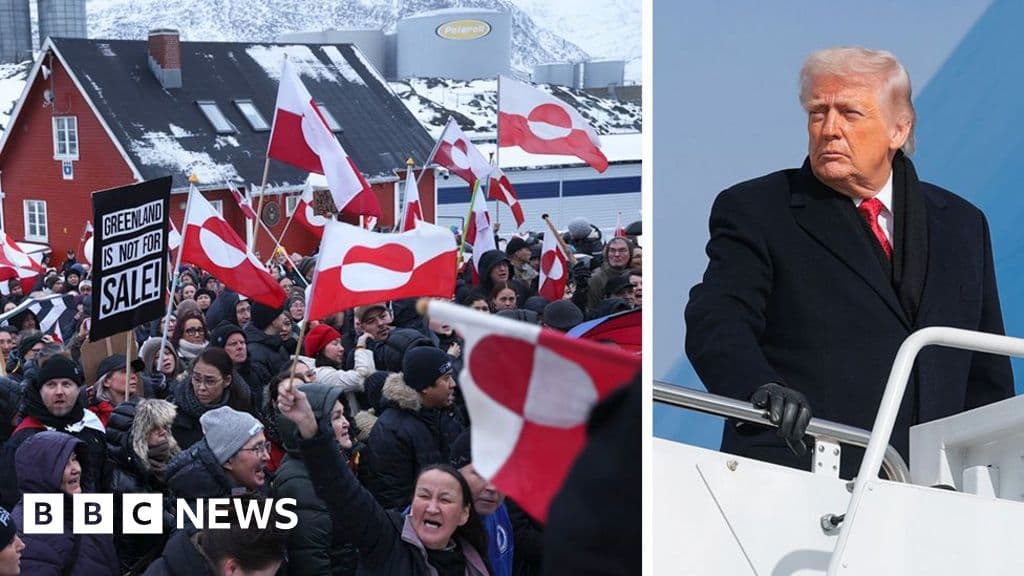
One must almost admire the sheer, unadulterated vulgarity of it all. In the hallowed halls of European diplomacy, where nuances are measured in millimeters and silence often speaks louder than shouting, the sudden American desire to purchase the world’s largest island like a distressed asset in a foreclosure auction has landed with the grace of a grand piano falling down a flight of stairs. The recent rhetorical de-escalation regarding the purchase of Greenland—a semi-autonomous territory of the Kingdom of Denmark, a nation that generally prefers its sovereignty not to be bartered over diet sodas—is being hailed by some optimistic observers as a return to sanity. This is a profound misreading of the situation. It is not a return to sanity; it is merely the intermission in a theater of the absurd that has long since caught fire.
The premise itself—that the President of the United States might simply whip out the national checkbook and buy a landmass roughly the size of Saudi Arabia—is treated by the White House not as a diplomatic faux pas, but as a stroke of visionary genius that the dusty bureaucrats in Copenhagen simply lack the imagination to grasp. It is the ultimate real estate developer's fantasy: why bother with alliances, treaties, or the tedious machinery of international law when one can simply acquire the title deed? It reduces the complexities of the Arctic Council to a negotiation over square footage and zoning rights. One imagines the pitch meeting: 'It’s got great strategic location, tremendous ice, really huge potential for a golf course once the permafrost melts. We’ll rebrand it. Greenland? No. Trump North.'
We are told now that the rhetoric has been 'ratcheted down.' The diplomatic correspondents, desperate for a return to the soporific hum of 'business as usual,' suggest that perhaps the idea has been shelved. They write with a trembling hope that the United States has been 'talked down' from the ledge of this particular geopolitical hallucination. But let us be painfully honest with ourselves: 'Business as usual' died several years ago; we are merely poking its corpse with a stick to see if it twitches. To believe that this transactional view of the world has evaporated simply because the volume has been temporarily lowered is to misunderstand the fundamental pathology at play here. The desire to buy Greenland was never a joke. It was a worldview. It was a declaration that everything—national identity, indigenous populations, strategic shipping lanes—is merely inventory waiting for a price tag.
The horror for America’s allies, specifically the Danes, is not just the insult of the offer, but the realization of who is making it. It is disorienting to realize that the leader of the free world looks at a sovereign territory and sees not a partner, but a distressed property listing. The diplomatic fallout is not something that can be swept away with a press release or a conciliatory phone call. How does one go back to discussing NATO defense spending ratios or trade tariffs when the person across the table was, only moments ago, trying to appraise your furniture? The trust required for high-level statecraft relies on a shared reality, a mutual agreement that we are all playing the same game. But the United States has decided to flip the chessboard over and demand to buy the table.
Furthermore, the concept of 'talking down' the President implies a level of cognitive engagement that may be optimistic. One does not talk down a force of nature; one merely weathers it. The rhetoric may have cooled, but the underlying impulse remains feverish. The strategic obsession with the Arctic is, of course, rational in a vacuum—China is circling, Russia is militarizing, and the ice is receding. But the leap from 'we need a strategic presence' to 'how much for the island?' is the difference between a statesman and a caricature of a robber baron. It betrays a profound intellectual laziness, a belief that money can substitute for diplomacy, that ownership is superior to partnership.
So, has the crisis passed? Have the adults re-entered the room? It is doubtful. The damage is structural. The very fact that the conversation occurred has stripped the varnish off the Atlantic alliance. We are left staring at the raw, splintered wood underneath. The Europeans are exhausted, offering tight smiles and hoping the clock runs out, while the Americans wonder why everyone is being so sentimental about a pile of rocks and ice. We are not witnessing a return to order. We are merely waiting for the next absurd property listing to drop, wondering which nation will be next on the auction block. Perhaps Iceland? I hear the views are spectacular, and the volcanic soil would make for excellent putting greens.
This story is an interpreted work of social commentary based on real events. Source: BBC News