The Pearl of Africa is a Kidney Stone: The Slow Dissolve of Kizza Besigye

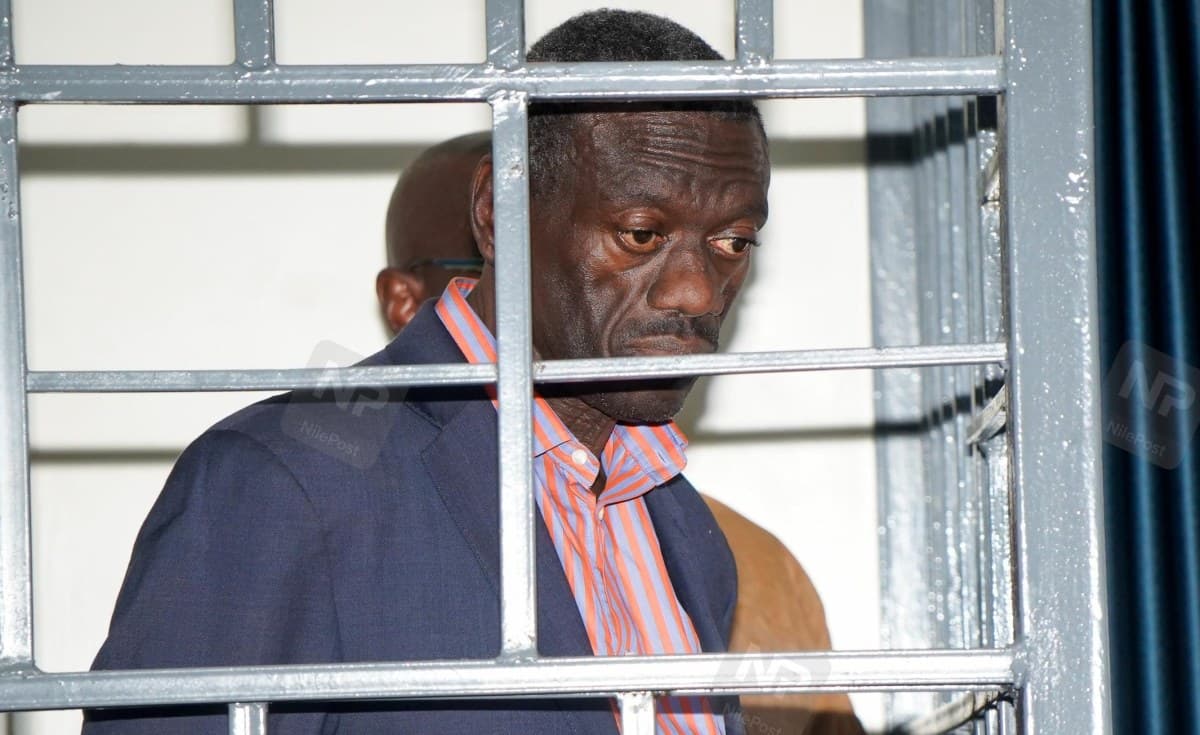
In the sun-bleached theater of East African politics, we find ourselves watching a rerun of a play so tedious even the flies have stopped buzzing. Dr. Kizza Besigye, Uganda’s professional bridesmaid and perennial punchbag for the state, is reportedly "critically ill." The People’s Front for Freedom—a name that drips with the kind of performative optimism usually reserved for terminal cancer patients—is sounding the alarm. They want us to be shocked. They want us to be appalled. I, however, am merely exhausted by the predictability of a script that hasn't changed since the mid-eighties.
Besigye has spent more time in state custody than some people spend in puberty. He’s been pepper-sprayed, abducted, and hauled before military courts with the rhythmic regularity of a metronome. And now, his health is failing. Of course it is. Damp cells and the hospitality of Yoweri Museveni’s security apparatus are not exactly known for their rejuvenating qualities. It’s not a wellness retreat; it’s a slow-motion erasure. But let’s not pretend Besigye is some wide-eyed innocent wandering into a trap. He was Museveni’s personal physician during the bush war. He helped build the very engine of state power that is now grinding his own bones. There is a certain poetic, albeit nauseating, symmetry to being systematically dismantled by the regime you helped gestate. It is the political equivalent of a doctor being allergic to the vaccine he invented.
The Ugandan state, led by a man who has occupied the presidency since the era of cassette tapes and shoulder pads, handles opposition with the subtlety of a sledgehammer hitting a grape. Museveni, the "liberator" who stayed long enough to see himself become the very museum exhibit of autocracy he once fought, treats the constitution as a polite suggestion and the opposition as a mild skin irritation to be scratched until it bleeds. To Museveni, Besigye isn’t a rival; he’s a habit. A ghost from a past life that refuses to stop rattling its chains in the hallway of the State House. The state’s denial of medical care isn’t a bureaucratic oversight; it’s a policy. It’s a message written in the language of medical neglect: ‘We don't need to kill you if we can just watch you expire.’
Meanwhile, the People’s Front for Freedom (PFF) screams into the void. Their "alarm" is a desperate attempt to manufacture relevance in a country where the outcome of an election is as predetermined as the sunrise. They speak of "deteriorating health" as if they expect a regime that thrives on intimidation to suddenly develop a bedside manner. It is a tragic comedy of errors. One side pretends that being right is the same as being powerful, while the other side proves that being powerful means never having to say you’re sorry—or providing a clean IV drip.
Then we have the global audience. The "international community" will do what it does best: emit a low-frequency hum of "grave concern" that changes absolutely nothing. They will draft memos on expensive stationery, sip lattes in Brussels and Washington, and perhaps issue a sternly worded tweet. It’s the diplomatic equivalent of thoughts and prayers. They need Museveni for "regional stability," which is geopolitical shorthand for "keeping the bodies buried in a way that doesn't smell too bad on the global stage." As long as the oil flows and the peacekeepers are deployed to other people's wars, Besigye’s specific white cell count is just a footnote in a ledger of convenience.
Is Besigye a hero? Please. He’s a man caught in a cycle of his own making, a tragic figure in a country that has been stuck in the same chapter of its history for nearly four decades. The PFF’s alarm is a cry into a vacuum. The tragedy of Uganda isn't just Besigye's health; it’s the utter stagnation of a nation where the only two options are an eternal autocrat and a professional victim. It’s a binary choice between a boot and a cry for help, and frankly, the boot is the only thing that ever follows through.
We are witnessing the biological conclusion of a political stalemate. Besigye is ill because the system he helped create is designed to make people ill. The state is silent because silence is the most efficient form of execution. And the public? They are too busy surviving the "stability" of the Museveni era to worry about whether a four-time losing candidate gets a check-up. Don't look to me for sympathy. My reservoir of pity ran dry somewhere around the third time Besigye was dragged into an unmarked van. This is just the natural conclusion of a story where nobody wins, and the only thing that grows is the graveyard of failed democratic experiments. It’s not news; it’s a post-mortem on a body that’s still technically breathing.
This story is an interpreted work of social commentary based on real events. Source: AllAfrica