The Great Rust-Bucket Waltz: How 1,000 Floating Tetanus Traps Proved the West Is Legally Blind

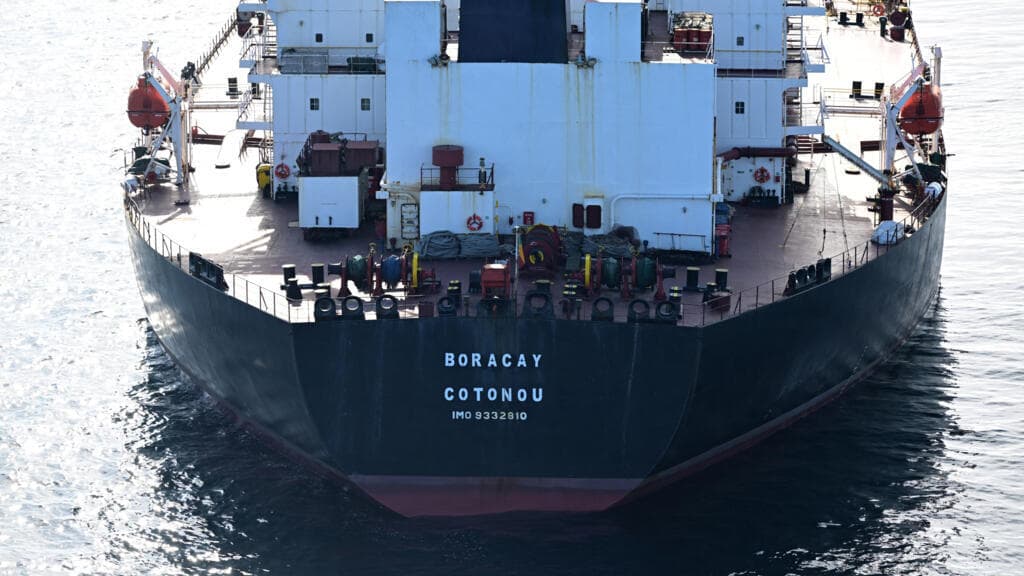
There is something profoundly comforting about the absolute futility of the 'rules-based international order.' It’s the same comfort one feels watching a toddler try to stop a tidal wave with a plastic shovel. For years, the self-anointed moral arbiters of the West—those bespoke-suited technocrats in Brussels and D.C. whose only real skill is choosing which expensive mineral water to sip during a crisis—have patted themselves on the back for 'crippling' the Russian economy. They drafted sanctions. They held press conferences. They issued sternly worded communiqués that probably looked very impressive in a folder. Meanwhile, reality, as it usually does, laughed in their faces and bought a 30-year-old tanker with a forged passport.
Enter the 'shadow fleet.' According to reports that should surprise absolutely no one with a functioning brain, a armada of nearly 1,000 aging, decrepit tankers is currently roaming the high seas, hauling 18.5 percent of the world’s global oil capacity like maritime zombies. These aren't ships so much as they are floating ecological disasters waiting for a stiff breeze to trigger a catastrophe. They are the maritime equivalent of a stolen Honda Civic with a spray-painted license plate, and yet they are currently the backbone of global energy security. It turns out that when you tell a country they can’t sell their oil, they don’t just say 'Oh, okay' and start a knitting circle. They find the sketchiest, most opaque way to keep the cash flowing, and the world is more than happy to help.
The mechanics of this charade are particularly delicious in their stupidity. These vessels engage in 'flag-hopping,' changing their national registration faster than a politician changes their stance on lobbyists after an election. One day they’re flying the flag of a landlocked country that probably doesn’t know what a boat is; the next, they’ve changed their name to something vaguely inspirational like 'Eternal Prosperity' or 'Freedom 1' and disappeared into the fog. Ownership is buried under layers of shell companies located in jurisdictions where the primary export is secrecy and the primary import is blood money. It is a shell game played on a planetary scale, and the West is pretending it doesn’t see the pea.
Then we have the 'teapot' refineries in China—the glorious destination for this sanctioned sludge. These aren't the polished, corporate monoliths the West likes to regulate into oblivion. No, these are independent refineries that have all the ethical restraint of a hungry piranha in a petting zoo. They don't care about price caps. They don't care about G7 memos. They care about cheap crude, and Russia, Venezuela, and Iran are more than happy to provide it at a discount. It’s a beautiful, symbiotic relationship of desperation and opportunism that makes the G7’s 'price cap' look like a 'suggested donation' at a billionaire’s gala. While the West congratulates itself on its moral purity, the rest of the world is just getting a better deal on gas.
Let’s be clear: everyone here is a villain. The Russians are selling their future for the sake of a failing imperialist vanity project. The Chinese are treating the global sanctions regime like a 'Buy One, Get One Free' coupon for autocracy. And the West? The West is the biggest joke of all. We pretend to be shocked, shocked that people would lie to make billions of dollars, while we continue to benefit from the relative stability of a global market that is being propped up by the very oil we claim to have banned. We want the virtue of the sanction without the pain of the high gas price. It is the height of performative nonsense—a geopolitical LARP where we pretend the law exists while the ocean is filled with un-insured, un-inspected rust buckets carrying the lifeblood of the modern world.
Historically, this is just the latest chapter in the long-running comedy of human greed. From the blockade runners of the 19th century to the rum-runners of Prohibition, the lesson remains the same: if there is a demand for a substance, someone will find a way to move it, regardless of how many pieces of paper a bureaucrat signs. The only difference now is the scale and the potential for a catastrophic oil spill that will coat the world’s coastlines in the physical manifestation of our collective hypocrisy. But hey, at least the sanctions look good on a spreadsheet in Geneva. We can all sleep soundly knowing that we’ve technically forbidden the bad guys from making money, even as their 1,000-ship ghost fleet sails right past our windows, laughing all the way to the refinery.
This story is an interpreted work of social commentary based on real events. Source: RFI