The Great Glass Slabs: Apple Reclaims the Title of Lead Jailer in the Global Digital Panopticon

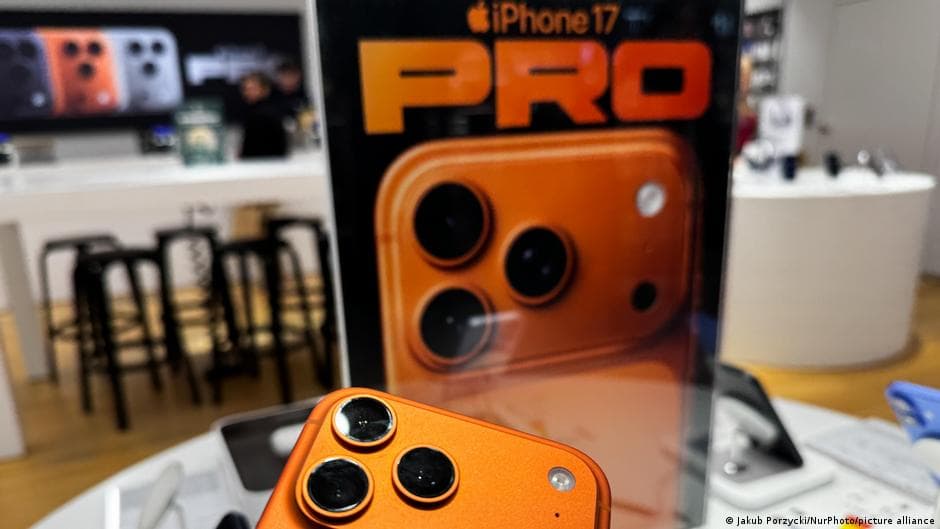
After fourteen years of playing second fiddle to a conglomerate that occasionally produces washing machines that explode, Apple has once again clawed its way to the top of the global smartphone heap. Let us all pause and offer a moment of silence for the collective intelligence of the human race, which has decided that the pinnacle of its achievement is choosing which brand of tracking device they’d like to keep in their pockets for twenty hours a day. It is a monumental shift in the tech landscape, we are told, as if the color of the velvet rope outside the digital prison makes any difference to the inmates inside. For nearly a decade and a half, Samsung reigned supreme, largely by being the only company with a supply chain massive enough to satisfy the bottomless hunger for distraction. But the tides have turned, and the fruit-branded behemoth from Cupertino has regained its crown, proving that if you charge enough money for a product and cultivate a sufficiently cult-like devotion, the peasantry will eventually come home to roost.
This isn't a victory of innovation; it is a masterclass in the Stockholm Syndrome of consumerism. Apple’s ascent to the top spot isn’t because they’ve solved any of humanity's actual problems. They haven’t ended world hunger or figured out how to make a battery last through a long weekend. Instead, they’ve perfected the art of the incremental upgrade—shaving a millimeter off a bezel here, adding a slightly more intrusive camera lens there—and calling it a revolution. The public, ever the gluttons for punishment, has responded by handing over their paychecks with a grin. Samsung, meanwhile, has spent the last few years throwing everything at the wall—curved screens, styluses, and enough bloatware to choke a supercomputer—only to find that the public ultimately prefers the gilded, locked-down cage of the iOS ecosystem. It turns out that people don’t actually want choice; they want to be told what to buy by a company that markets its products like a religious experience.
But don’t think for a second that this is a stable duopoly. The report highlights the looming presence of Chinese rivals, companies like Xiaomi and Huawei, who are breathing down the necks of the established giants. These firms represent the logical conclusion of the smartphone era: the commodification of the human experience at such a scale that the hardware becomes almost irrelevant. The 'battle for the next billion users' is nothing more than a race to see who can harvest the data of the developing world most efficiently. These companies aren't competing to make better phones; they are competing to see who can integrate themselves most deeply into the central nervous system of global commerce and surveillance. It’s a race to the bottom where the prize is total oversight of every human interaction, from a street corner in Nairobi to a boardroom in London.
Then we have the 'new battlegrounds': foldables and advanced AI. Let’s address the foldable phone for what it truly is: a technological mid-life crisis. It is an expensive, fragile solution to a problem that does not exist. No one was actually clamoring for a phone that creases like a cheap suit after six months of use, yet the industry has decided this is the 'future' because they’ve run out of actual ideas. It’s the tech equivalent of putting fins on a Cadillac—pointless, ostentatious, and a sign of terminal creative exhaustion. And as for the 'advanced AI' integrated into these devices, it is the final surrender of the human mind. We’ve already outsourced our memory to the cloud and our navigation to satellites; now we’re outsourcing our very thoughts to algorithms that are essentially just fancy autocorrect features with a marketing budget. We are being promised phones that can 'think' for us, which is a terrifying prospect considering how little thinking we seem to be doing for ourselves lately.
The global smartphone market is a mirror of our own decline. We’ve reached a point where the most significant news in the world is which multi-billion dollar corporation sold more glass rectangles to people who can’t look up from them long enough to notice the world is burning. Whether the logo on the back is a bitten apple or a stylized ellipsis, the result remains the same: a society of hunched-over zombies, doom-scrolling toward an inevitable obsolescence. Apple’s return to the top is not a sign of progress; it is a reminder of the repetitive, cyclical nature of our own stupidity. We trade one master for another, celebrate the shift in market share as if it were a democratic victory, and then wait for the next model to come out so we can do it all over again. It’s not just a phone market; it’s a symptom of a species that has finally found a way to bore itself to death.
This story is an interpreted work of social commentary based on real events. Source: DW