The Radiance of Resilience: East Palestine’s Three-Year Trek Through the Toxic Tundra

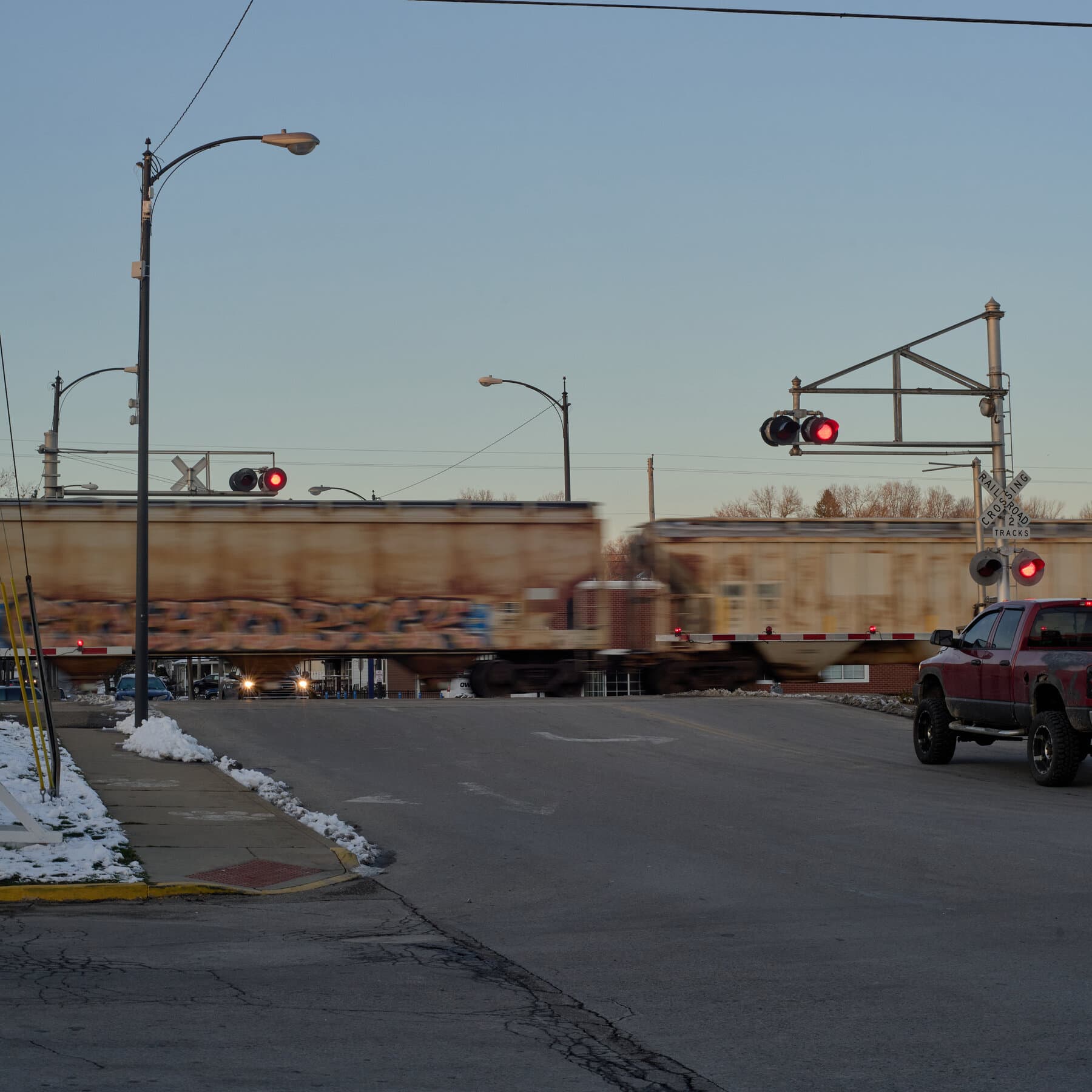
I sit here, staring at the latest attempt to polish the rusted, irradiated turd that is the American infrastructure narrative, and I find myself wondering when the word 'resilience' became a euphemism for 'total institutional abandonment.' We are now three years removed from the moment Norfolk Southern decided to treat East Palestine, Ohio, to a surprise chemical baptism, and the media is back to serve us a lukewarm plate of 'revitalization' stories. The original headline claims the town was 'punched in the face.' If that is the case, then the American railway system is a heavyweight boxer with a gambling addiction, and the federal regulatory state is a referee who has been blindfolded, gagged, and bribed with a stale ham sandwich. I look at these reports of a town 'fighting its way back,' and all I see is the grim, predictable choreography of a society that has forgotten how to actually fix anything, preferring instead to paint murals over the cracks in the foundation.
Let us dissect the 'punch' itself. Norfolk Southern—a corporate entity that treats the transport of hazardous chemicals with the same cavalier whimsy a toddler applies to a game of Hot Potato—decided that safety protocols were merely expensive suggestions. When the derailment occurred, and the sky over Ohio turned into a scene from a low-budget apocalyptic thriller, the response was a 'controlled burn.' I have always loved that phrase. It is a masterpiece of linguistic deception. It suggests intention. It suggests a plan. In reality, it was the panicked realization that they had no idea how to clean up their mess, so they decided to turn the town into a giant, toxic chimney for vinyl chloride. I suppose it was 'controlled' only in the sense that they controlled the matches. I can only imagine the boardroom meeting where lighting a massive pile of poison on fire was deemed the 'environmentally conscious' option. It is the kind of logic that only a corporate lawyer or a deeply concussed politician could love.
In the wake of the plume, we were treated to a masterclass in performative empathy. Every politician with a functioning pulse and a desire for a three-second clip on the nightly news descended upon East Palestine like vultures to a particularly iridescent carcass. The Right screamed about 'forgotten Americans' while simultaneously being the very architects of the deregulation that allowed the trains to rot on the tracks. The Left wept for the environment while their own agencies stood around with clipboards, assuring everyone that the water was perfectly safe to drink, provided you didn't mind your internal organs undergoing a spontaneous, glowing mutation. It was a bipartisan circus where the only thing missing was the integrity. Both sides used the town as a backdrop for their respective grievances, then packed up their suits and retreated to the air-conditioned safety of D.C. the moment the air started to smell like burnt plastic again.
And now, three years later, we are told the town is 'fighting back.' I find this 'revitalization' narrative to be particularly nauseating. The reports speak of new businesses, of downtown grants, and of local officials trying to 'rebrand' a town that the rest of the world only remembers as a chemical crater. It is the height of American delusion. You cannot 'rebrand' the fact that a freight train vomited poison into your backyard. You can paint all the murals you want, but they won't filter the groundwater. It is like putting a 'Live, Laugh, Love' sticker on a tombstone; it doesn’t change the fundamental reality, it just makes the tragedy look more pathetic. The 'fight' itself is a farce. What exactly are they fighting? They are fighting a corporate entity that has more lawyers than the town has residents. They are fighting a federal government that has the attention span of a goldfish on meth. To call this a 'fight' is to insult the very concept of conflict. This isn't a fight; it's a slow-motion liquidation of human dignity overseen by a PR firm.
I am tired of being told to find inspiration in these stories. I see no inspiration in a community forced to reinvent itself because a multi-billion-dollar company couldn't be bothered to check its wheel bearings. I see no 'resilience' in people begging for air that doesn't taste like a chemical factory. I see only the predictable, grinding machinery of a system that views human beings as 'externalities.' The town isn't 'fighting back'; it is being managed. It is being pacified with community centers and park improvements while the fundamental rot that caused the disaster remains untouched. The trains are still rolling, the tracks are still crumbling, and the next East Palestine is currently rumbling through some other unsuspecting zip code while we all pat ourselves on the back for 'supporting' the last one.
The true punch in the face isn't the disaster itself. It's the three years of gaslighting that followed. It's the insistence that everything is fine now because we’ve reached the 'recovery' phase of the news cycle. I, for one, am not buying it. I will keep my cynical distance, watching as the paint on those new murals begins to peel, revealing the soot underneath. Because in this country, we don't fix problems; we just wait for them to become old news. And East Palestine? It’s already ancient history, gift-wrapped in a ribbon of toxic resilience.
This story is an interpreted work of social commentary based on real events. Source: NY Times