Apocalypse à la Carte: Europe’s Newfound Lust for the Unthinkable

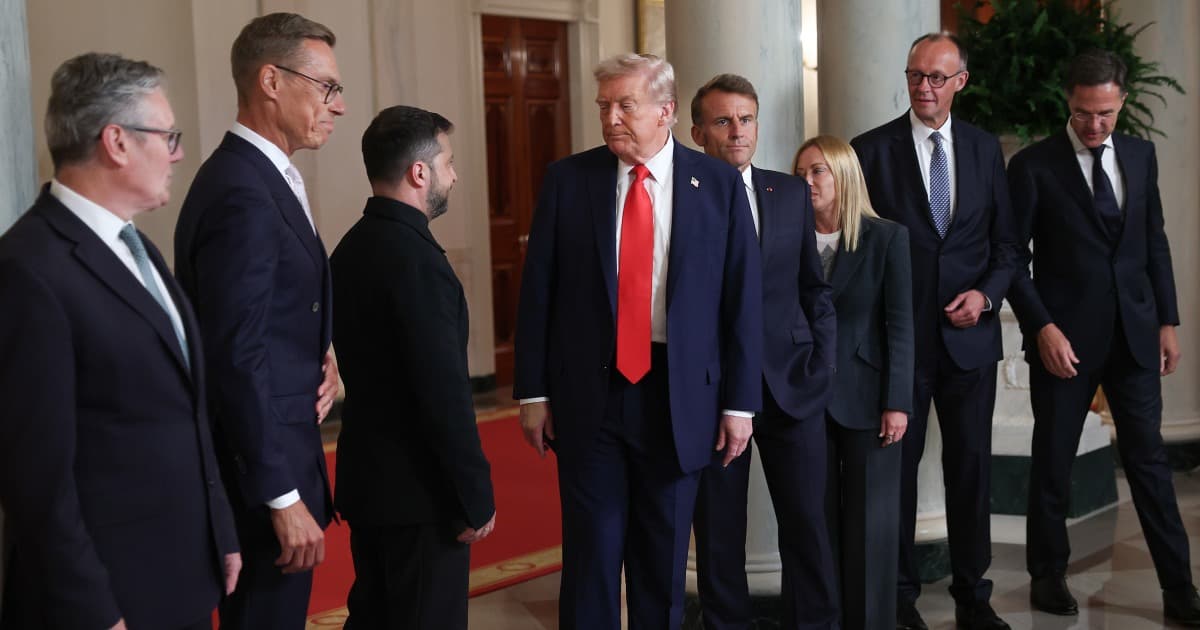
There is something profoundly poetic about the way the European project—that grand, multi-decade experiment in paper-pushing, borderless cheese distribution, and the meticulous regulation of vacuum cleaner decibels—has finally arrived at its inevitable mid-life crisis. Having spent the better part of seventy years lounging beneath the frayed canopy of the American security umbrella, the Continent has suddenly looked up to find the fabric is not only moth-eaten but currently being used as a prop in a particularly deranged American vaudeville act. The realization has dawned, with all the grace of a leaden soufflé, that the ‘shining city on a hill’ is currently preoccupied with its own structural collapse, leaving the sophisticated salons of Paris and Berlin to contemplate a future that involves less diplomacy and significantly more fissile material.
One must admire the surgical irony of the situation. For decades, the European intelligentsia viewed the nuclear deterrent as a gauche American eccentricity, a relic of a primitive era that we, in our enlightened post-historical state, had surely outgrown. We preferred the soft power of trade agreements and sternly worded letters from Brussels. Yet, as the tectonic plates of global hegemony shift and the Potomac begins to resemble a fever dream of isolationist rhetoric, the old world is rediscovering its atavistic impulses. The talk in the corridors of power has shifted from carbon credits to kilotons. It appears that when the protector across the Atlantic begins to treat NATO like a protection racket run by a capricious landlord, even the most dedicated pacifist starts to wonder where they left the blueprints for a medium-range ballistic missile.
The current discourse regarding a ‘European nuclear deterrent’ is a tragicomic spectacle of bureaucratic incompetence meeting existential dread. The logistical nightmare alone is enough to induce a migraine in anyone with a functioning cerebellum. One can only imagine the committee meetings required to authorize a launch. Would there be a quota for the number of nations required to sign off on a retaliatory strike? Would the launch sequence be delayed because the Polish delegation had a quibble with the environmental impact of the fallout, or because the Italians insisted the warheads be painted a more aesthetically pleasing shade of azure? The vision of a ‘Euro-bomb’ is the ultimate bureaucratic absurdity: a weapon of mass destruction designed by a committee that cannot even agree on a standardized charger for a mobile phone.
Behind this sudden interest in the ‘unthinkable’ lies a deep, world-weary disdain for the American electoral cycle. It is truly a testament to the state of modern geopolitics that the collective security of a continent with several thousand years of bloody history now rests on the whims of a few thousand voters in a place called Pennsylvania. Europe has finally realized that relying on the United States for protection is akin to trusting a bipolar arsonist to guard a fireworks factory. The ‘resolve’ that was once the bedrock of the Atlantic alliance has been replaced by a flickering uncertainty, a flickering that looks suspiciously like a dying lightbulb in a condemned building. Thus, the scramble for strategic autonomy. If the Americans are going to retreat into their gated community of continental isolation, then Europe must, it seems, build its own high-tech bunkers and dust off the plutonium.
The French, of course, are having a marvelous time. Emmanuel Macron has spent years suggesting that Europe needs to be able to defend itself, a sentiment usually met with polite yawns and requests for more American-made fighter jets. Now, he gets to wear the ‘I told you so’ expression that the French have spent centuries perfecting. The ‘Force de Frappe’ is no longer a gaullist vanity project; it is the only thing standing between the European Union and a very unpleasant conversation with a revanchist Kremlin. The British, meanwhile, remain huddled around their Trident submarines like Victorian orphans around a guttering candle, praying that the Americans will keep providing the maintenance manuals even as they retreat from the world stage.
In the end, we are witnessing the final death of the ‘End of History’ myth. The belief that we had transcended the crude mechanics of power politics has been exposed as a luxury of the comfortable. We are returning to a world where the only thing that commands respect is the ability to incinerate a city from three thousand miles away. It is a depressing regression, but one that is perfectly consistent with the trajectory of our species. We have spent millennia building cathedrals and composing symphonies, only to realize that we still need a very big stick to keep the neighbors from burning down the gallery. As Europe looks to bolster its own nuclear arsenal, the message is clear: the theater of the absurd has entered its final act, and the audience is starting to look for the exits. Or, failing that, a very deep hole in the ground.
This story is an interpreted work of social commentary based on real events. Source: NBC News