The Tallahassee Tableau: A Masterclass in Performative Accountability

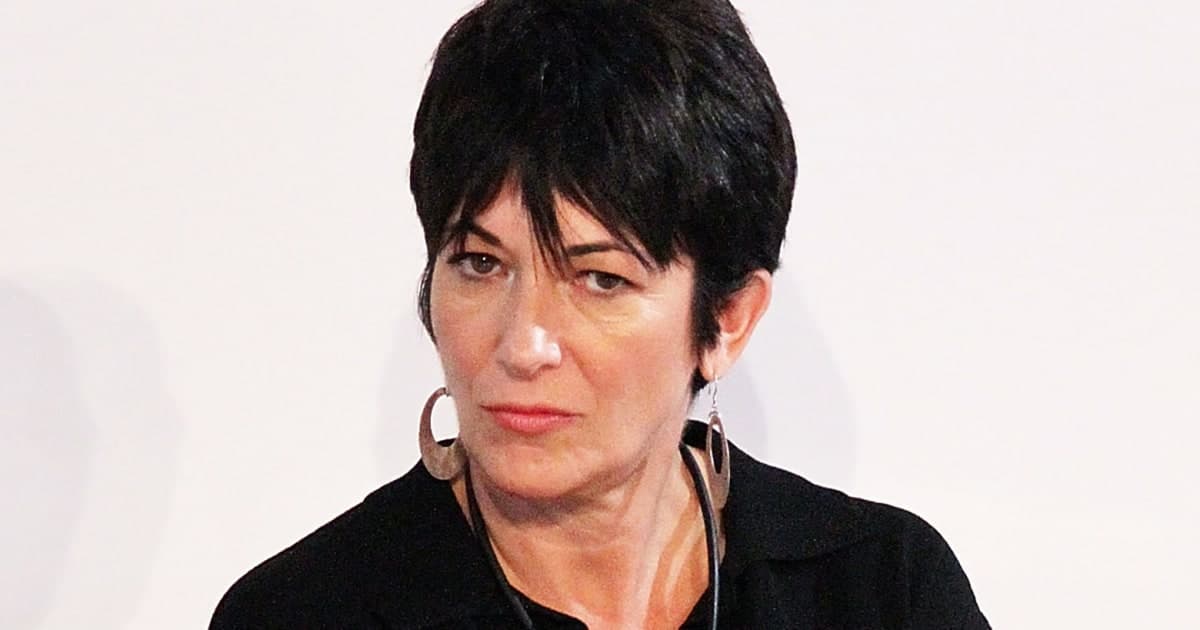
There is something deliciously recursive about the American political machine, a self-eating Ouroboros that manages to turn even the most sordid chapters of its history into a series of scheduled, televised matinees. We find ourselves, yet again, at the threshold of another ‘pivotal’ deposition. Representative James Comer, the current impresario of the House Oversight Committee, has announced with all the gravity of a Victorian funeral director that his panel is set to depose Ghislaine Maxwell on February 9th. One can almost hear the collective, weary sigh emanating from the salons of Europe, where we have long understood that when an American politician promises a ‘deep dive,’ they are usually just checking the depth of the shallow end to ensure they don't bruise their egos.
The setting for this particular drama is, of course, the federal correctional institution in Tallahassee. It is a fitting backdrop—a humid, swampy corner of the Republic where the air is as thick as the irony. Maxwell, the socialite who once navigated the upper echelons of global power with the grace of a shark in silk, now finds herself the captive audience for a group of congressmen who have discovered that the Epstein name still possesses enough electoral juice to power a few more news cycles. It is, to put it plainly, a pantomime of justice. The Oversight Committee, an entity that has historically proven itself more adept at generating soundbites than solving systemic corruption, is now attempting to play the role of the grand inquisitor.
Let us analyze the motives with the surgical precision they deserve. For Mr. Comer and his cohort, this is not merely an investigation; it is a carefully curated production. By invoking the specter of Maxwell and her infamous, yet curiously elusive, list of associates, the committee manages to signal a commitment to ‘accountability’ without the inconvenient risk of actually achieving any. After all, the American legal system has already had its way with Maxwell. She is safely tucked away behind bars, her utility as a social bridge between the worlds of high finance and low morals now strictly archival. The deposition on February 9th is less about uncovering new truths and more about the aesthetic of the chase. It is a way for the committee to pretend they are peering into the abyss, while carefully ensuring the abyss doesn’t stare back long enough to recognize anyone on the dais.
From a purely intellectual standpoint, one must admire the sheer gall of the endeavor. The House Oversight Committee is essentially attempting to mine a depleted quarry. Whatever Maxwell knows, she has had ample time to weigh against the cold reality of her sentence. The idea that she will suddenly provide a roadmap to the dark heart of the global elite for a handful of politicians—who, let’s be honest, represent the very system that allowed Epstein to flourish for decades—is beyond optimistic; it is delusional. But then, delusion has always been a primary export of the American political class. They treat the Epstein case like a recurring seasonal drama, a ‘Greatest Hits’ of scandal that can be trotted out whenever the public’s attention begins to drift toward more pressing issues like a crumbling infrastructure or the terminal decline of civil discourse.
I find a particular, albeit dark, joy in deconstructing the bureaucratic incompetence that will inevitably follow. We can expect the usual flurry of redacted transcripts, the theatrical ‘no comments’ from counsel, and the subsequent press conferences where Comer will declare the deposition either a ‘bombshell’ or a ‘cover-up,’ depending on which narrative better serves the evening’s fundraising emails. It is a closed loop of futility. We are witnessing the transformation of a horrific criminal conspiracy into a standardized administrative procedure. The American genius lies in its ability to take the visceral and turn it into the vapid.
As we approach February 9th, do not expect a revelatory breakthrough. Expect instead a masterclass in the art of the bureaucratic stall. The deposition will be conducted, the lawyers will bill their hours, and the members of the House Oversight Committee will return to their offices, satisfied that they have played their parts in the theater of the absurd. Meanwhile, the actual mechanics of power—the ones that allowed Maxwell and her associates to operate with impunity for so long—remain entirely unbothered. It is, as I have always maintained, the grandest of ‘I told you so’ moments. Accountability is a beautiful word, but in the hands of the House Oversight Committee, it is merely a prop in a play that has been running for far too long. We watch because we must, but we do not watch because we expect the truth. The truth, much like Maxwell’s former dignity, was discarded long ago.
This story is an interpreted work of social commentary based on real events. Source: NBC News